Photography
Canon EOS 90D DSLR Camera: A Comprehensive Review
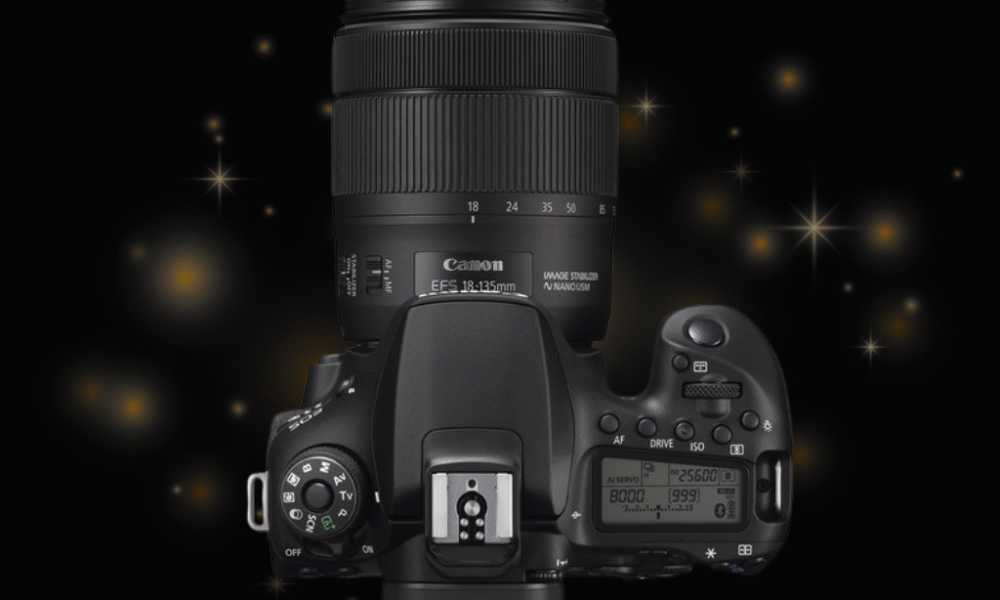
The Canon EOS 90D represents a fascinating position in Canon’s DSLR lineup—a camera that arrived at a time when mirrorless systems were rapidly gaining ground, yet managed to remind us why the traditional DSLR format still has plenty to offer. As someone who’s spent considerable time with this camera across various shooting scenarios, I can confidently say that the 90D is a powerhouse that deserves serious consideration, especially for photographers who value versatility, speed, and the optical viewfinder experience.
Build Quality and Ergonomics

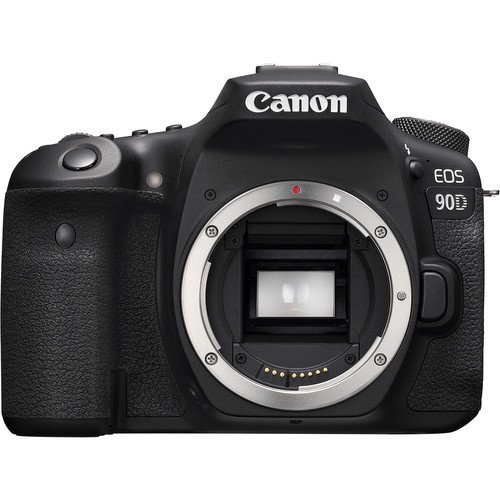
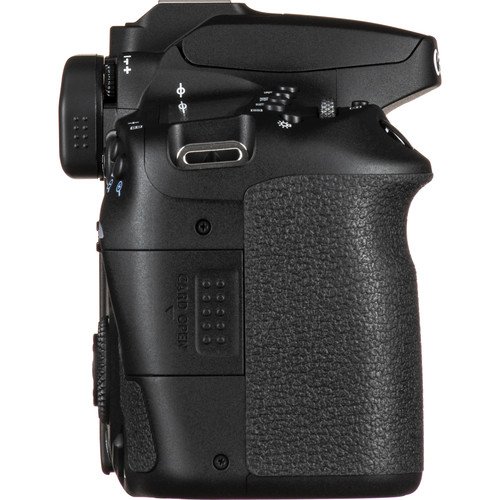
The first thing you notice when picking up the 90D is its solid, confidence-inspiring build. Canon has equipped this camera with a weather-sealed magnesium alloy body that feels substantial without being overly heavy. At approximately 701 grams with battery and card, it strikes a nice balance between durability and portability. The camera sits comfortably in hand, with a deep grip that accommodates larger lenses without causing strain during extended shooting sessions.
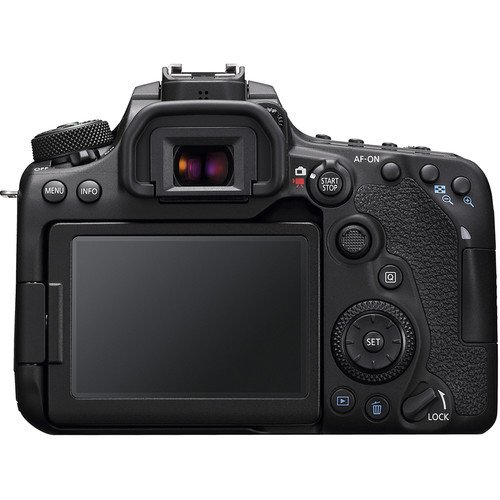
The button layout is quintessentially Canon, which means if you’re familiar with their ecosystem, you’ll feel right at home immediately. The controls are logically placed and fall naturally under your fingers. The rear joystick for quick autofocus point selection is particularly well-positioned, and the top LCD display provides essential shooting information at a glance. The mode dial has a locking mechanism to prevent accidental changes, and the dedicated ISO and exposure compensation buttons on top make quick adjustments effortless.
One aspect I particularly appreciate is the articulating touchscreen. Unlike a fully articulating screen, this vari-angle design flips out to the side, making it invaluable for shooting at awkward angles, whether you’re going low for a macro shot or holding the camera overhead in a crowd. The touchscreen functionality itself is responsive and intuitive, allowing you to tap to focus and even navigate through menus with ease.
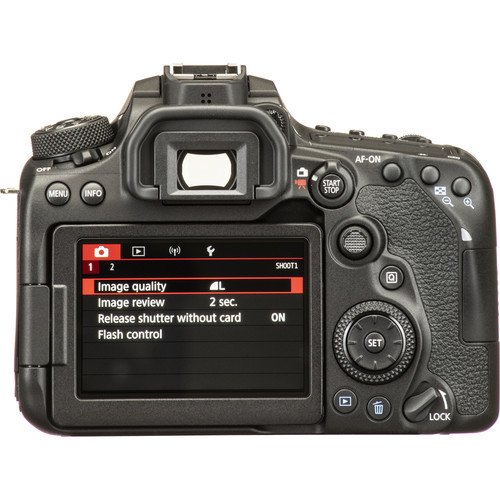
Image Quality and Sensor Performance
At the heart of the 90D lies a 32.5-megapixel APS-C CMOS sensor—the highest resolution APS-C sensor Canon has ever produced for their DSLRs. This impressive resolution delivers exceptional detail and provides plenty of room for cropping without sacrificing image quality. When paired with quality glass, the images from this sensor are remarkably sharp with excellent color reproduction that Canon is renowned for.
The dynamic range is quite good for an APS-C sensor, though it doesn’t quite match what you’d find in some competing cameras or full-frame alternatives. In practical terms, you have decent latitude for recovering highlights and shadows in post-processing, though you’ll want to be mindful of not blowing out highlights in high-contrast situations. The camera handles a wide range of lighting conditions admirably, from bright outdoor scenes to more challenging indoor environments.
Color science is an area where Canon traditionally excels, and the 90D is no exception. Straight out of camera, JPEGs display pleasing, natural-looking colors that often require minimal editing. Skin tones, in particular, are rendered beautifully, making this camera an excellent choice for portrait photography. For those who prefer to shoot RAW, the files provide substantial flexibility for post-processing while maintaining clean, detailed images.
Autofocus System and Performance
The 90D features Canon’s 45-point all cross-type autofocus system when shooting through the optical viewfinder. This phase-detection system is fast, accurate, and reliable even in challenging lighting conditions. The coverage area is reasonable, though not edge-to-edge, which is typical for DSLR systems. In real-world use, I found the autofocus to be consistently reliable for general photography, portraits, and even action shots.
When you switch to Live View mode, the camera utilizes Canon’s Dual Pixel CMOS AF system, which is arguably one of the best features of this camera. The Dual Pixel AF provides 5,481 selectable autofocus positions covering approximately 88% of the frame horizontally and vertically. Face and eye detection work remarkably well, making portrait photography in Live View an absolute pleasure. The autofocus smoothly tracks subjects across the frame with impressive accuracy.
For video shooters and those who prefer composing shots on the rear screen, the Dual Pixel AF is a game-changer. It’s smooth, confident, and rarely hunts—characteristics that make it suitable for both photography and serious video work.
Continuous Shooting and Buffer
One of the 90D’s standout specifications is its continuous shooting speed of 10 frames per second when using the optical viewfinder. This makes it an excellent choice for action, sports, and wildlife photography. The camera can maintain this speed for approximately 58 RAW files or unlimited JPEGs before the buffer fills up, which is quite impressive and should satisfy most shooting scenarios.
The combination of fast continuous shooting and reliable autofocus makes the 90D a capable tool for capturing fast-moving subjects. Whether you’re photographing birds in flight, sports action, or energetic children, the camera gives you the tools to freeze the moment reliably.
Video Capabilities
The Canon EOS 90D is a genuinely competent video camera, offering uncropped 4K recording at up to 30 frames per second. The fact that it shoots 4K without a crop is significant for an APS-C camera, as it means your lenses maintain their intended field of view. The 4K footage is sharp and detailed, though it’s worth noting that continuous autofocus during 4K recording is available but limited to contrast-detection AF rather than the superior Dual Pixel AF system used in 1080p mode.
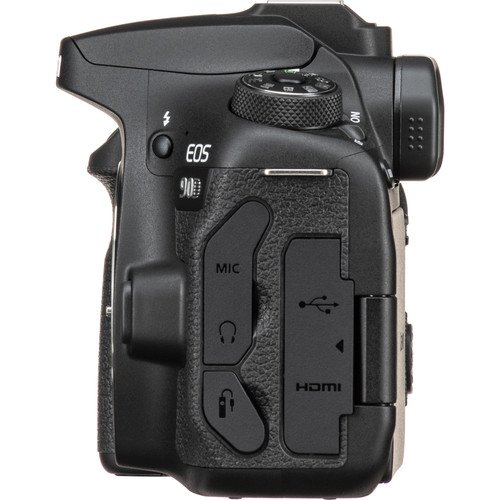
For 1080p recording, you have options up to 120 frames per second, perfect for creating smooth slow-motion footage. The Dual Pixel AF in 1080p mode is excellent, providing smooth and reliable focus tracking that rivals many dedicated video cameras. The articulating screen, headphone jack, and microphone input make this a well-equipped camera for content creators and videographers.
One limitation to be aware of is the lack of in-body image stabilization. You’ll need to rely on optically stabilized lenses for steady handheld footage, or use a gimbal for more dynamic movement. Additionally, there’s a 30-minute recording limit per clip, which is common among cameras to avoid European taxation rules, but can be restrictive for some video applications.
ISO Performance and Low Light
The 90D offers a native ISO range of 100-25,600, expandable to 51,200. Low-light performance is solid, with clean, usable images up to around ISO 3200. As you push into the higher ISO ranges, noise becomes more apparent, but it remains well-controlled and maintains an appealing grain structure rather than looking splotchy or color-shifted.
For most everyday shooting scenarios, the high ISO performance is more than adequate. I’ve successfully shot indoor events and evening scenes at ISO 6400 with results that clean up nicely with a bit of noise reduction in post. While it may not match the low-light prowess of newer full-frame cameras, it performs admirably for its class.
Battery Life
The 90D uses Canon’s LP-E6N battery, and battery life is another area where DSLRs still hold an advantage over mirrorless cameras. The official CIPA rating is approximately 1,300 shots per charge when using the optical viewfinder, which is excellent. In real-world use, especially if you’re mixing viewfinder and Live View shooting, you can expect to get through a full day of moderate shooting on a single battery. If you’re shooting video extensively, you’ll want to have spare batteries on hand as video recording drains the battery much faster.
Who Should Buy the Canon EOS 90D?
The 90D is ideally suited for several types of photographers. Enthusiasts looking to upgrade from an entry-level DSLR will find a significant step up in performance, features, and build quality. Wildlife and sports photographers on a budget will appreciate the fast continuous shooting speed and the effective focal length multiplier that comes with the APS-C sensor. The camera is also excellent for content creators who need both strong photo and video capabilities in a single package.
The high-resolution sensor makes it appealing for landscape photographers who want maximum detail, while the reliable autofocus and good color science make it a strong choice for portrait work. Parents documenting growing families will find it has more than enough power for all occasions while remaining relatively approachable to use.
Final Thoughts
The Canon EOS 90D is a mature, refined DSLR that represents the culmination of decades of Canon’s experience in building cameras of this type. It may not represent the cutting edge of camera technology in an era increasingly dominated by mirrorless systems, but it offers a compelling package of features, performance, and value that shouldn’t be overlooked.
The combination of 32.5 megapixels, 10fps shooting, excellent autofocus systems, and strong video capabilities makes this an incredibly versatile tool. The optical viewfinder provides a direct, lag-free view of your subject, and the substantial battery life means less worry about running out of power at critical moments. For photographers invested in Canon’s EF and EF-S lens ecosystem, the 90D is a natural choice that lets you leverage your existing glass without adapters.
While it’s true that mirrorless cameras offer certain advantages in size, weight, and cutting-edge features, the 90D proves that there’s still life in the DSLR format. It’s a camera that gets out of your way and lets you focus on capturing great images, and sometimes that’s exactly what you need. Whether you’re a dedicated enthusiast, a professional needing a reliable backup, or someone who simply prefers the DSLR shooting experience, the Canon EOS 90D delivers the goods with confidence and capability.


Read all our amazing Photography Reviews here