Photography
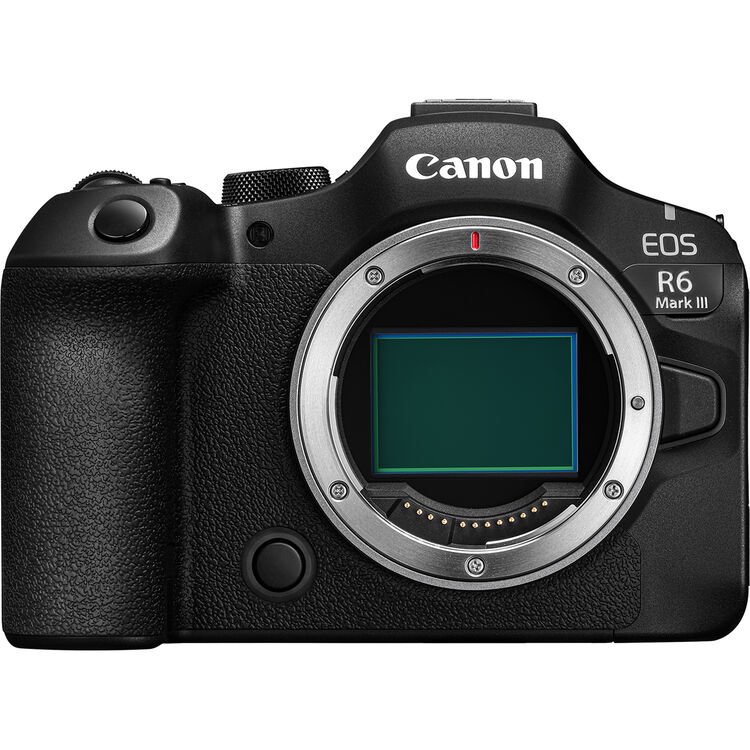
Canon EOS R6 Mark III Anticipated Review: The Hybrid Powerhouse

Introduction: The Weight of Expectation
The Canon EOS R6 series has consistently defined the accessible “workhorse” segment of the full-frame mirrorless market. The original R6 offered incredible speed and autofocus, and the R6 Mark II refined this with a new 24.2MP sensor and significant video upgrades. Now, the anticipation surrounding the EOS R6 Mark III is immense. It is expected to not just iterate, but to fundamentally shift the balance of power in the hybrid shooter space, challenging the segment dominance long held by Sony’s A7 line.
The Mark III is rumored to incorporate key technologies previously reserved for higher-tier cameras, bringing a truly professional feature set—especially concerning speed and advanced video codecs—to a price point accessible to serious enthusiasts, wedding photographers, videographers, and content creators needing a single, reliable body. If the rumors hold true, the R6 Mark III will solidify Canon’s position as the leading innovator in high-performance hybrid systems.

1. Core Technological Leap: The Sensor and Processor
The heart of the R6 Mark III is speculated to be a new sensor and processor pairing that dramatically elevates its performance ceiling.
The Sensor: Speed, Resolution, and Rolling Shutter
The primary rumor suggests an evolution of the 24.2MP full-frame sensor seen in the R6 II, possibly transitioning to a partially stacked or backside-illuminated (BSI) design coupled with the latest DIGIC X processor.
- Expected Resolution: While some speculation points to a jump to 30MP or 32MP to match the R5’s resolution territory, the more likely scenario for a speed-focused “6” series is maintaining a pixel density near 26MP to 28MP. This preserves the excellent low-light performance and high readout speed critical for video and rapid shooting.
- The Rolling Shutter Challenge: The most significant expected upgrade is a dramatically reduced rolling shutter effect when using the electronic shutter. By leveraging faster sensor readout times (a hallmark of stacked designs), the R6 III aims to make the 40fps electronic shutter mode truly usable for sports, events, and action photography without the characteristic distortion of vertical lines.

Processing Power: DIGIC X Advancement
Canon is expected to employ a next-generation or highly optimized iteration of the DIGIC X processor. This enables two crucial features:
- High-Bitrate Codecs: Necessary for the rumored 6K video capability and higher frame rates in 4K.
- Advanced Deep Learning AF: Providing the computational horsepower for the latest iteration of Canon’s subject detection system.
2. Unrivaled Autofocus and Speed
The R6 Mark III is expected to cement its reputation as a performance beast, specifically through advancements in focusing and sustained burst rates.
Dual Pixel CMOS AF II: The AI Generation
Canon’s Dual Pixel CMOS AF II system is already best-in-class, but the Mark III is anticipated to introduce a new layer of subject detection, likely on par with or exceeding the capabilities of the EOS R5.
- Expanded Subject Recognition: Beyond humans (eye, face, body), animals (dogs, cats, birds), and vehicles (cars, motorcycles), the R6 III is rumored to include new detection categories, potentially encompassing niche subjects like planes, trains, and more diverse fauna. This intelligence significantly reduces focus hunting and improves tracking reliability.
- Low-Light Sensitivity: Expect an improvement over the R6 II’s already impressive -6.5 EV sensitivity, pushing closer to -7.0 EV or beyond, making focusing in near-dark conditions almost instantaneous.
Shooting Speed: Sustaining the Frenzy
While the R6 Mark II offered a blistering 40fps electronic shutter, the Mark III is expected to focus on sustainability and usability at those speeds.
| Shooting Mode | R6 Mark II | R6 Mark III (Expected) | Improvement Focus |
|---|---|---|---|
| Electronic Shutter | 40 fps | 40 fps (with reduced Rolling Shutter) | Image Quality / Distortion Reduction |
| Mechanical Shutter | 12 fps | 15 fps | Incremental Burst Rate Increase |
| Buffer Depth | Approx. 100+ RAW/JPEG | Significantly Deeper (300+ RAW) | Sustained Professional Use |
A vastly improved buffer is critical for professional use cases like photojournalism and sports, ensuring the camera doesn’t slow down during peak action. The integration of dual, high-speed CFexpress Type B slots (or at least one CFexpress B slot paired with a fast SD UHS-II) is a possibility to manage the massive data load generated by high-resolution, high-frame-rate shooting.

3. Video Specifications: The 6K Evolution
This is where the R6 Mark III is expected to make its most significant jump, positioning it as a serious contender against dedicated cinema cameras for small-scale productions.
The Move to 6K
The most persistent rumor is the inclusion of 6K DCI/UHD video recording, likely oversampled from the full sensor width. This would be a massive leap in creative flexibility, allowing for reframing, cropping to 4K, and delivering superior image quality in the final output.
| Feature | R6 Mark II | R6 Mark III (Expected) |
|---|---|---|
| Max Resolution | 4K 60p (Uncropped) | 6K 60p (Full Width Oversampled) |
| High Frame Rate 4K | 4K 120p (Cropped/Line-Skipped) | 4K 120p (Full Width, Higher Quality) |
| Internal Codecs | 10-bit 4:2:2 C-Log 3 | Internal RAW/CRM Light (5K/6K) |
| Overheating | Excellent, but can warm up at 4K/120p | Improved Thermal Management |
Internal RAW and Codec Depth
The ability to record Internal Cinema RAW Light at 6K, even with minor frame rate limitations, would be a game-changer. This high-efficiency RAW format gives filmmakers maximum dynamic range, color grading flexibility, and post-production latitude, eliminating the need for bulky external recorders for many high-quality shoots.
Thermal Management
Crucially, Canon has refined its thermal strategies since the R5 launch. The R6 Mark III is expected to offer class-leading heat dissipation, enabling extended 4K 60p and perhaps even 6K 30p recording sessions without the forced shutdowns that plagued earlier generation mirrorless cameras.
4. Ergonomics, IBIS, and Connectivity
The EOS R6 Mark III will likely maintain the highly praised ergonomic language of the R6 series while adding subtle, workflow-enhancing improvements.
In-Body Image Stabilization (IBIS)
While the R6 II offered up to 8 stops of stabilization with coordinated control (IBIS + OIS), the R6 III is expected to feature a more advanced, computationally assisted IBIS system. This rumored system may leverage sensor-shift capabilities not just for static stabilization but also for features like Pixel-Shift Multi-Shot mode, offering ultra-high-resolution files (e.g., 100MP+) for still-life and landscape applications—a feature currently seen in competitors.

Physical Design and EVF
The physical form factor will be familiar, emphasizing the deep grip and robust, weather-sealed build. Rumored changes include:
- Higher Resolution EVF: A jump from the R6 II’s 3.69 million dots to a sharper 5.76 million dot electronic viewfinder would provide a noticeably clearer and more immersive shooting experience, particularly crucial for checking focus accuracy.
- Improved Rear Screen: While the fully articulating screen will remain, a brighter, higher-resolution panel is expected for better outdoor visibility.
Connectivity
The R6 III is expected to fully embrace the modern connected workflow:
- Dual-Band Wi-Fi (5GHz): Essential for fast wireless transfer of large video and RAW files to cloud services or client devices.
- USB-C 3.2 Gen 2: Enabling rapid tethered shooting and faster in-camera battery charging.
- Pro-Grade Ports: Full-size HDMI output for reliable external monitoring, professional audio inputs, and timecode synchronization capabilities would round out its pro video credentials.
5. Detailed Pros and Cons Analysis
This chart summarizes the anticipated strengths and weaknesses of the Canon EOS R6 Mark III based on current speculation and competitive trends.
| Category | Pros (Anticipated Strengths) | Cons (Anticipated Weaknesses) |
|---|---|---|
| Sensor & Speed | – Ultra-low rolling shutter, making 40fps e-shutter fully usable. | – Resolution may be capped at 26-28MP, potentially less than some rivals. |
| – Vastly improved buffer depth (300+ RAW) for sustained action. | – Likely higher price point than the R6 Mark II launch price. | |
| Autofocus | – Next-generation AI-powered Deep Learning AF with expanded subject tracking (Planes, Trains). | – Dual Pixel AF, while superb, requires dedicated RF lenses for max performance. |
| – Exceptional low-light AF sensitivity (-7.0 EV or better). | – Potential complexity of new AF menus for first-time users. | |
| Video | – Internal 6K 60p (Full-sensor oversampled). | – 6K Internal RAW recording will generate extremely large file sizes. |
| – Internal Cinema RAW Light for maximum grading flexibility. | – Heat management, while improved, will remain a concern for continuous 6K recording in extreme environments. | |
| – High-quality 4K 120p full-sensor readout. | – Crop likely necessary for 4K 120p at the very highest quality settings. | |
| Ergonomics & Build | – Proven, comfortable R-series ergonomics and deep grip. | – Lacks the integrated vertical grip or professional connectivity ports of the R3/R5 C. |
| – High-resolution 5.76M-dot EVF and improved rear LCD. | – Still requires a separate battery grip for extended portrait shooting. | |
| Miscellaneous | – Potential inclusion of Pixel-Shift Multi-Shot mode for ultra-high-res stills. | – Dependence on the growing but still expensive RF lens ecosystem. |
6. Competitor Comparison Chart
The R6 Mark III is positioned to directly compete with the strongest hybrid cameras from Sony and Nikon in the $2,500 – $3,500 USD body-only bracket. We compare the anticipated R6 Mark III specs against the current established benchmark, the Sony a7 IV, and the anticipated Nikon Z6 III.
| Feature | Canon EOS R6 Mark III (Anticipated) | Sony Alpha a7 IV (Current) | Nikon Z6 III (Anticipated) |
|---|---|---|---|
| Sensor Resolution | 26-28MP BSI/Partially Stacked | 33.0MP BSI-CMOS | 24.5MP BSI-CMOS (Possible Partial Stack) |
| Max Still Speed (e-shutter) | 40 fps (Low Rolling Shutter) | 10 fps (Compressed RAW/JPEG) | 20 fps (Lossless/High-Efficiency RAW) |
| Max Video Resolution | 6K 60p (Internal RAW Light) | 4K 60p (S35 Crop) | 6K 60p (N-RAW/ProRes RAW) |
| High Frame Rate 4K | 4K 120p (Full Width) | 4K 60p (S35 Crop) | 4K 120p (Full Width) |
| Autofocus System | Deep Learning Dual Pixel AF II (Expanded Subject Recognition) | Real-Time Tracking AF (Deep Learning) | 3D Tracking AF (Expanded AI Subject Detection) |
| EVF Resolution | 5.76 Million Dots | 3.69 Million Dots | 5.76 Million Dots |
| Card Slots | Dual SD UHS-II or 1x CFexpress B / 1x SD UHS-II | 1x CFexpress A / 1x SD UHS-II | 1x CFexpress B / 1x SD UHS-II |
| Log/RAW Video | C-Log 3, Internal RAW Light | S-Log 3, 10-bit S-Cinetone | N-Log, Internal N-RAW/ProRes RAW |
| Primary Advantage | Unrivaled Speed & Superior Internal Video Codecs | High 33MP Resolution & Vast Lens Ecosystem | Excellent Ergonomics & Dedicated Video Focus (Pending) |
7. Analysis of Market Positioning and Value
If the anticipated features—especially internal 6K RAW and the highly reduced rolling shutter at 40fps—are delivered, the R6 Mark III will command a premium price point, likely launching above $2,800 USD body-only.
Hybrid Performance Redefined
The key differentiator for the R6 III lies in its ability to deliver true professional video codecs and speed in a compact body. The introduction of 6K Internal RAW means that users no longer have to compromise on grading latitude or image quality. This feature, traditionally found in much more expensive cinema cameras (like the R5 C), brings Hollywood-level post-production flexibility to the masses.

The Ecosystem Advantage
Canon’s RF lens ecosystem has matured rapidly, offering a compelling blend of high-end L-series primes and zooms alongside affordable, high-quality non-L lenses (e.g., the RF 24-105mm f/4-7.1 IS STM). The R6 Mark III will benefit from this rich, deep lens lineup that offers fast apertures and exceptional optical performance, which is paramount to leveraging the camera’s cutting-edge AF and sensor.
Conclusion: The New Hybrid Standard
The Canon EOS R6 Mark III is shaping up to be more than just an iteration; it’s an evolution that borrows heavily from the flagship R3 and R5 lines, packaging professional-grade speed, resolution, and video capability into Canon’s most popular form factor.
For the advanced enthusiast or the full-time hybrid professional—the wedding shooter, the documentarian, or the high-volume event photographer—the R6 Mark III promises to be the single most versatile tool on the market. The combination of a 40fps electronic shutter with minimal rolling shutter, coupled with internal 6K RAW recording, effectively eliminates the need to choose between a dedicated photo camera and a dedicated video camera.
While the exact pricing and confirmed specs are pending, the consensus is clear: the R6 Mark III will not just meet expectations, it will redefine them, setting the new benchmark for the hybrid mirrorless segment.
Final Verdict:
Verdict: The Canon EOS R6 Mark III, if it fulfills the promise of internal 6K RAW and ultra-fast, low-rolling-shutter performance, will be the undisputed champion of the hybrid camera segment, offering the best balance of speed, video capability, and professional ergonomics in its class. It is the camera professionals will upgrade to, and the benchmark competitors will be chasing.


Read all our amazing Photography Gear Reviews here