Smart Phones
Google Pixel 9a Review: The New Mid-Range Champion Has Arrived

For years, the smartphone mid-range market has been a battlefield of compromises. You could get a great screen but a mediocre camera. You could get a powerful processor but a clunky software experience. You could get a premium design but a price tag that crept uncomfortably close to flagship territory. With every new release, we’ve asked the same question: can one phone truly deliver a flagship-level experience without the flagship-level cost?
In 2025, Google has answered with a resounding “Yes.”
Welcome to our in-depth review of the Google Pixel 9a. Following the legacy of its predecessors, the 9a isn’t just another iteration; it’s a statement. Google has taken the core DNA of its flagship Pixel 9—the groundbreaking Tensor G4 chip, the AI-powered camera magic, and the pristine Android experience—and packaged it into a device that is accessible to everyone. But does it live up to the immense hype? We’ve spent the last week putting the Google Pixel 9a through its paces to find out if it’s truly the new king of the mid-range.
Google Pixel 9a: At a Glance (Key Specs)
Before we dive deep, let’s get a quick overview of what the Google Pixel 9a brings to the table. This spec sheet reads less like a mid-ranger and more like a “flagship-lite,” setting a new standard for the category.
| Feature | Specification |
|---|---|
| Processor | Google Tensor G4 |
| Display | 6.2-inch “Actua” OLED, FHD+ (2400×1080), 120Hz refresh rate, 1800 nits peak brightness, Gorilla Glass Victus |
| RAM | 8GB LPDDR5 RAM |
| Storage | 128GB / 256GB UFS 3.1 |
| Rear Cameras | 64MP Octa PD wide camera (f/1.8, OIS), 13MP ultrawide camera (f/2.2, 120° FoV) |
| Front Camera | 13MP (f/2.2, 95° ultrawide FoV) |
| Battery | 4,600 mAh (typical) |
| Charging | 25W wired charging, 7.5W wireless charging (Qi-certified) |
| Build | Matte composite back, matte aluminum frame, IP67 dust/water resistance |
| Software | Android 15 with 7 years of OS, security, and Feature Drop updates |
| Colors | Porcelain, Bay Blue, Lime Pop |
| Price | Starting at $519 |
Design and Build Quality: Premium Feel, Mid-Range Price
The first thing you notice when you pick up the Google Pixel 9a is how refined it feels. Google has moved away from the glossy backs of past generations, opting for a sophisticated matte composite finish that feels soft to the touch and is impressively resistant to fingerprints. It’s a practical choice that exudes a quiet confidence.
The frame is crafted from 100% recycled matte aluminum, with flat, comfortably chamfered edges that provide a secure grip. This design language, clearly inherited from the flagship Pixel 9 series, makes the phone feel modern and substantial. The iconic camera bar has also evolved. Instead of a visor stretching from edge to edge, the 9a features a more contained, pill-shaped camera housing. It still provides that signature Pixel look and keeps the phone stable on a tabletop, but with a more elegant and less imposing profile.
At 6.2 inches, the display strikes a perfect balance. It’s large enough for immersive content consumption but remains manageable for one-handed use. The bezels are pleasingly thin and uniform, contributing to a high-end aesthetic that punches well above its price point. With an IP67 rating for water and dust resistance, the Google Pixel 9a is also built to withstand the rigors of daily life—a peace-of-mind feature that isn’t always a given in this category.
Available in three colors—the classic Porcelain, a deep Bay Blue, and a vibrant, fun Lime Pop—there’s a choice for every personality. Overall, the design and build of the Google Pixel 9a don’t feel like a compromise. They feel intentional, smart, and undeniably premium.
The Display: A Bright and Buttery-Smooth Experience

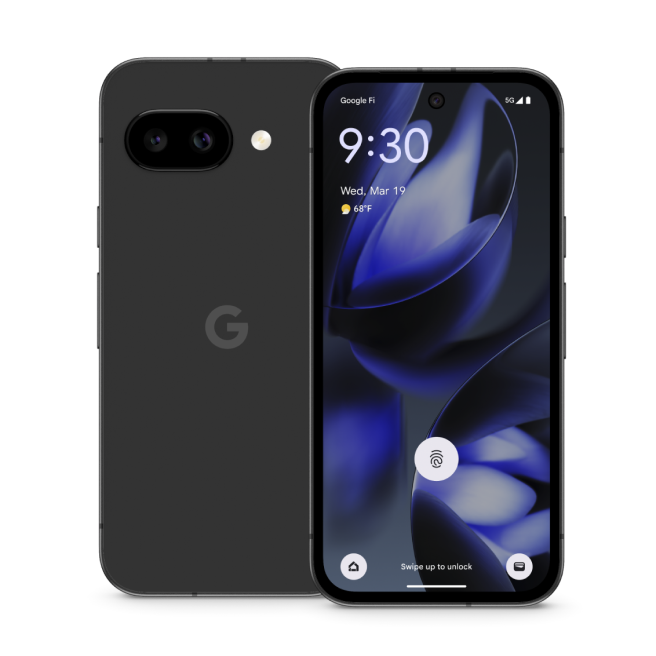
A phone’s display is its window to the world, and Google has fitted the Pixel 9a with a truly excellent one. The 6.2-inch “Actua” OLED panel is a joy to behold. Colors are vibrant and punchy without being oversaturated, and blacks are deep and inky, as expected from OLED technology. With an FHD+ resolution of 2400×1080, text is crisp, and images are tack-sharp.
The two biggest upgrades this year are the refresh rate and brightness. The move to a 120Hz refresh rate is a game-changer for the ‘a’ series. Scrolling through social media, navigating the UI, and playing supported games feels incredibly fluid and responsive. It’s a feature that was once reserved for expensive flagships, and its inclusion here makes the entire user experience feel faster and more polished.
Furthermore, with a peak brightness of 1800 nits, outdoor visibility is superb. Even on a bright, sunny day, the screen remains perfectly legible, making it easy to frame a photo or reply to a message without squinting. This high brightness also enhances HDR content, making movies and videos on platforms like Netflix and YouTube look stunningly dynamic. For a mid-range device, this display is simply exceptional, rivaling panels on phones that cost hundreds of dollars more.
The Camera System: The Unfair Advantage of the Google Pixel 9a
If there’s one reason to choose a Pixel over any other phone, it has always been the camera. With the Google Pixel 9a, that advantage has become even more pronounced. It’s not just about the hardware; it’s about the seamless integration of that hardware with the computational power of the Tensor G4 chip.
The Hardware: What’s New?
The main camera is a new 64MP Octa PD (Phase Detection) sensor. While megapixel counts aren’t everything, this larger, more light-sensitive sensor captures incredible detail and dynamic range. Using pixel-binning technology, it produces stunning 16MP photos by default, but the extra resolution allows for a high-quality 2x crop zoom that is nearly lossless. This “Super Res Zoom” leverages Google’s advanced algorithms to deliver sharp, clear shots from a distance, effectively giving you a telephoto lens without the extra hardware and cost.
Complementing the main sensor is a 13MP ultrawide camera with a 120-degree field of view. It’s perfect for capturing sweeping landscapes, architectural shots, or fitting everyone into a group photo. Edge distortion is well-controlled, and color science remains consistent with the main lens, ensuring a seamless transition between the two.
The AI Magic: Tensor G4’s Photographic Prowess
The real star of the show is the software, powered by the Tensor G4. This is where the Google Pixel 9a leaves its competitors in the dust. You get access to the full suite of AI-powered tools that were once exclusive to the most expensive Pixels:
- Magic Editor: This generative AI tool is transformative. It allows you to do more than just remove unwanted objects. You can tap and hold on a subject to move or resize them, change the color of the sky, or fill in gaps in your photo. It feels like having a professional photo editing suite in your pocket, and it’s astonishingly intuitive to use.
- Best Take: The ultimate solution to group photo chaos. Best Take lets you swap out individual faces in a series of burst shots to create one perfect photo where everyone is smiling with their eyes open. It’s a feature that will save countless family portraits.
- Dynamic Unblur & Photo Unblur: This feature is a lifesaver. It can sharpen photos that are blurry due to subject motion (Dynamic Unblur) or camera shake (Photo Unblur). It can even be used on old photos in your Google Photos library, breathing new life into cherished memories.
- Night Sight: Google’s low-light photography mode continues to be best-in-class. The Pixel 9a captures bright, clean, and detailed photos in conditions where other phones would produce a dark, grainy mess.
- Real Tone: Google’s commitment to accurately representing all skin tones continues to be a core part of the Pixel camera experience, ensuring that portraits look natural and authentic for everyone.
The combination of solid hardware and industry-leading software makes the camera on the Google Pixel 9a not just the best in the mid-range, but a true contender against flagships that cost twice as much.
Performance and Software: The Pure Google Experience
This is where the value proposition of the Google Pixel 9a truly crystallizes. For years, mid-range phones have used mid-range chips, leading to compromises in performance, longevity, and feature availability. Google has shattered that paradigm.
Tensor G4 Power in a Mid-Range Device
The Google Pixel 9a is powered by the very same Tensor G4 chip found in the flagship Pixel 9 and Pixel 9 Pro. This is an unprecedented move that has massive implications. It means you are not getting a watered-down experience. Day-to-day performance is flawless. Apps open instantly, multitasking with the 8GB of RAM is a breeze, and the entire system feels incredibly responsive.
But the true benefit of Tensor is its prowess in machine learning and AI. This chip is what enables all the camera magic, powers the lightning-fast Google Assistant, provides highly accurate voice-to-text typing, and facilitates real-time language translation. These are not gimmicks; they are genuinely useful features that make the phone smarter and more helpful. By including its top-tier silicon, Google ensures that the 9a is not just fast today, but will remain capable of handling new AI-powered features for years to come.
Android 15 and the Pixel Promise
The other half of the performance equation is the software. The Pixel 9a runs a pure, unadulterated version of Android 15. There is no bloatware, no duplicate apps, and no clunky third-party skin slowing things down. It is Android as Google intended: clean, intuitive, and beautiful.
The most significant commitment, however, is Google’s update promise. The Google Pixel 9a comes with a guarantee of 7 years of OS upgrades, security updates, and regular “Feature Drops.” This is simply unmatched in the Android world and even rivals Apple. It means your phone will not only stay secure but will continue to get new features and improvements long after you buy it, making it an incredibly smart long-term investment.
Battery Life and Charging: All-Day Power?
With a 4,600 mAh battery, the Pixel 9a sees a modest but welcome increase in capacity over its predecessor. In our testing, this translated to solid all-day performance. On a typical day of moderate to heavy use—including social media, photography, some light gaming, and streaming music—we consistently ended the day with 20-30% battery remaining. Power users might need a top-up before a night out, but for the vast majority of users, the Pixel 9a will comfortably get you from morning to night.
When it comes to charging, the Pixel 9a is competent but not class-leading. It supports 25W wired charging, which can take the battery from empty to 50% in about 30 minutes. While this is fast enough for most, it lags behind competitors from Chinese brands that offer blistering charging speeds.
The welcome addition of 7.5W wireless charging adds a layer of convenience, making it easy to top up your phone on a charging pad at your desk or bedside table. It’s a premium feature that further cements the Pixel 9a’s incredible value.
Who is the Google Pixel 9a For?
This phone has a remarkably broad appeal, but it will particularly resonate with a few key groups:
- The Smart Photographer: If you want to take the best possible photos without needing to understand manual controls or spend over $1000, this is your phone. The point-and-shoot experience is second to none.
- The Software Purist: If you value a clean, fast, and up-to-date Android experience free from bloatware, the Pixel 9a is a dream come true. The 7-year update promise is the icing on the cake.
- The Value-Driven Tech Enthusiast: If you want 80% of the flagship experience for 50% of the price, this is the smartest buy on the market. The inclusion of the Tensor G4 chip is a massive win for this crowd.
How Does the Google Pixel 9a Compare to the Competition?
The mid-range market is fierce, but the Pixel 9a is uniquely positioned.
Google Pixel 9a vs. Samsung Galaxy A56
Samsung’s latest mid-ranger, the Galaxy A56 (a logical successor to the A55), is the Pixel’s most direct rival. The Samsung will likely boast a slightly more vibrant (and perhaps brighter) display and a more versatile camera hardware setup, potentially including a dedicated macro lens. However, the Google Pixel 9a wins in two crucial areas: camera processing and software. While the A56 takes great photos, the Pixel’s AI-powered features produce smarter, more consistent, and often more impressive results, especially in challenging lighting. Furthermore, the clean, bloat-free Android experience and the 7-year update guarantee on the Pixel are significant advantages over Samsung’s One UI and its shorter support window.
Google Pixel 9a vs. iPhone SE (2025)
This is a classic ecosystem battle. The latest iPhone SE will likely feature a very powerful Apple A-series chip, offering raw performance that might even edge out the Tensor G4 in traditional benchmarks. However, the SE is a device built on compromise. It will almost certainly recycle an older design with large bezels, feature a less impressive LCD screen, and be limited to a single rear camera. The Google Pixel 9a is a far more modern and versatile package. It offers a superior OLED display, a more capable dual-camera system, and a contemporary design, all while providing its own brand of AI-powered smarts that are absent from the more basic iPhone SE.
The Verdict: Is the Google Pixel 9a Worth Buying?
Absolutely. The Google Pixel 9a is not just a great mid-range phone; it’s a phenomenal phone, period. Google has been strategic and ruthless in its decision-making, cutting costs in areas that have a minimal impact on the user experience (like using a composite back instead of glass) while doubling down on what truly matters: the processor, the camera intelligence, and the software.
By equipping the 9a with the flagship Tensor G4 chip, Google has fundamentally changed the value equation. You are no longer punished with a slower, less capable device for spending less money. You get the same brain, the same AI magic, and the same long-term software commitment as someone who buys the top-of-the-line Pixel 9 Pro.
The camera is, without exaggeration, revolutionary for this price point. The display is beautiful and fluid. The build quality is excellent. While the charging speeds could be faster, it’s a minor quibble in an otherwise outstanding package. The Google Pixel 9a is the new benchmark for what a mid-range smartphone can and should be. It’s the smartest choice for the savvy buyer in 2025.
Final Scorecard
- Design: 9/10
- Display: 9.5/10
- Camera: 10/10
- Performance: 9.5/10
- Battery: 8.5/10
- Software: 10/10
- Value: 10/10