Photography
Insta360 Ace Pro 2 + Ace Pro Explored Kit: Transforming Action Cameras into Street Photography Powerhouses
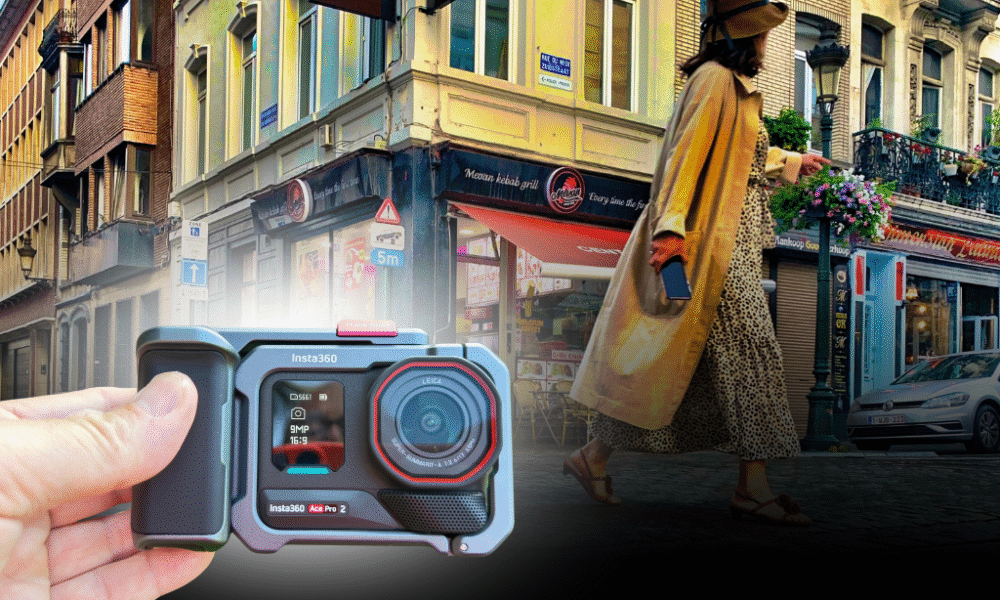
I’ve been shooting street photography for years, cycling through countless cameras in search of the perfect balance between image quality, portability, and invisibility. The Insta360 Ace Pro 2 paired with the Ace Pro Explored kit has genuinely transformed my workflow in ways I didn’t expect from what’s ostensibly an action camera. This isn’t just about strapping a GoPro alternative to your helmet—this combination represents a fundamental rethinking of how we approach candid urban photography.
The Foundation: Ace Pro 2 Core Specifications
Let’s start with what makes the Ace Pro 2 special. At its heart is a massive 1/1.3-inch sensor capable of capturing 8K video at 30fps and 4K at 120fps. For still photography, you’re looking at 48-megapixel frame grabs that genuinely hold up under scrutiny. The sensor is paired with a wide f/2.6 aperture lens with a 157-degree field of view, which can be adjusted digitally to narrower perspectives depending on your shooting needs.
The co-engineering partnership with Leica isn’t just marketing speak. The color science and processing pipeline show Leica’s influence, particularly in how the camera handles skin tones and mixed lighting scenarios. The PureVideo technology combines a proprietary ISP with AI noise reduction that processes in real-time, and you can see the difference in challenging lighting conditions.
The flip-up 2.4-inch OLED touchscreen is bright at 1,100 nits and responsive even in direct sunlight. There’s also a secondary 1.4-inch rear touchscreen for quick settings access. Stabilization comes via FlowState technology with horizon lock, delivering gimbal-smooth footage without the bulk. The camera is waterproof to 12 meters without any housing, and it’s dustproof and freeze-proof as well.
Storage is handled via microSD cards up to 1TB, and the 1,650mAh battery provides roughly 100 minutes of 4K recording or about 300-400 still shots depending on usage. USB-C charging supports quick charging, taking the battery from empty to full in about an hour.

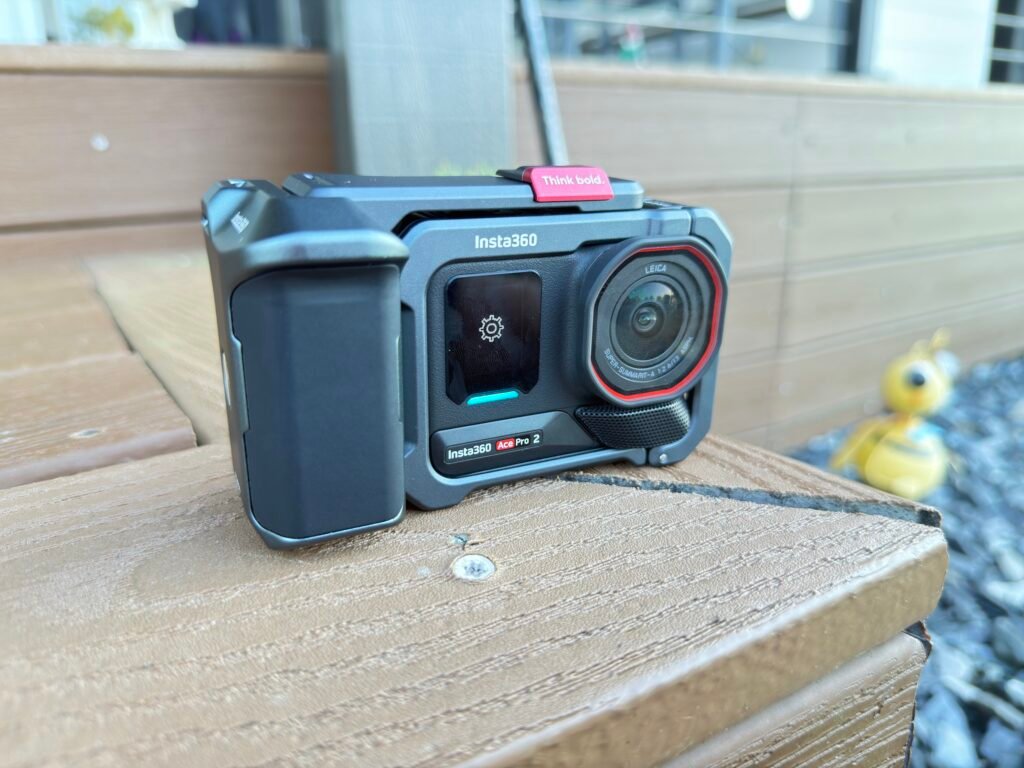
Camera Settings: Dialing In for Street Photography
This is where the Ace Pro 2 reveals its versatility beyond typical action camera use. The Pro mode gives you manual control over ISO (50-12,800), shutter speed (1/8000 to 1 second), white balance, and exposure compensation. For street photography, I typically shoot in aperture priority mode with ISO capped at 3200 during the day and 6400 at night, letting the camera handle shutter speed while I focus on composition and timing.
The Active HDR mode is phenomenal for high-contrast urban scenes. It brackets exposures in real-time and merges them on the fly, preserving detail in both deep shadows and blown-out highlights. Walking through a covered market into bright sunlight? The camera handles it without breaking a sweat.
Color profiles include Standard, Vivid, and Flat (LOG) modes. For street work, I’ve settled on Standard with slight adjustments: contrast dropped to -1, saturation at +1, and sharpness at -1. This gives images a slightly softer, more film-like quality that I can push in post-processing without artifacts. The Flat profile is ideal if you’re planning extensive color grading, preserving maximum dynamic range at the cost of flat-looking initial footage.
The AI-powered subject tracking is surprisingly good. Enable it in settings, tap your subject on the screen, and the camera maintains focus even as they move through the frame. For following a subject through a crowded street, it’s almost magical how well it works.
Frame rate options are extensive: 8K at 24/30fps, 5.3K at 60fps, 4K at 120fps, and 1080p up to 240fps for slow-motion sequences. For street photography stills, I shoot 8K 30fps and pull frames, giving me the highest resolution possible. The rolling shutter is minimal even at 8K, so fast-moving subjects don’t warp unnaturally.
The Explorer Kit: From Action Cam to Street Shooter
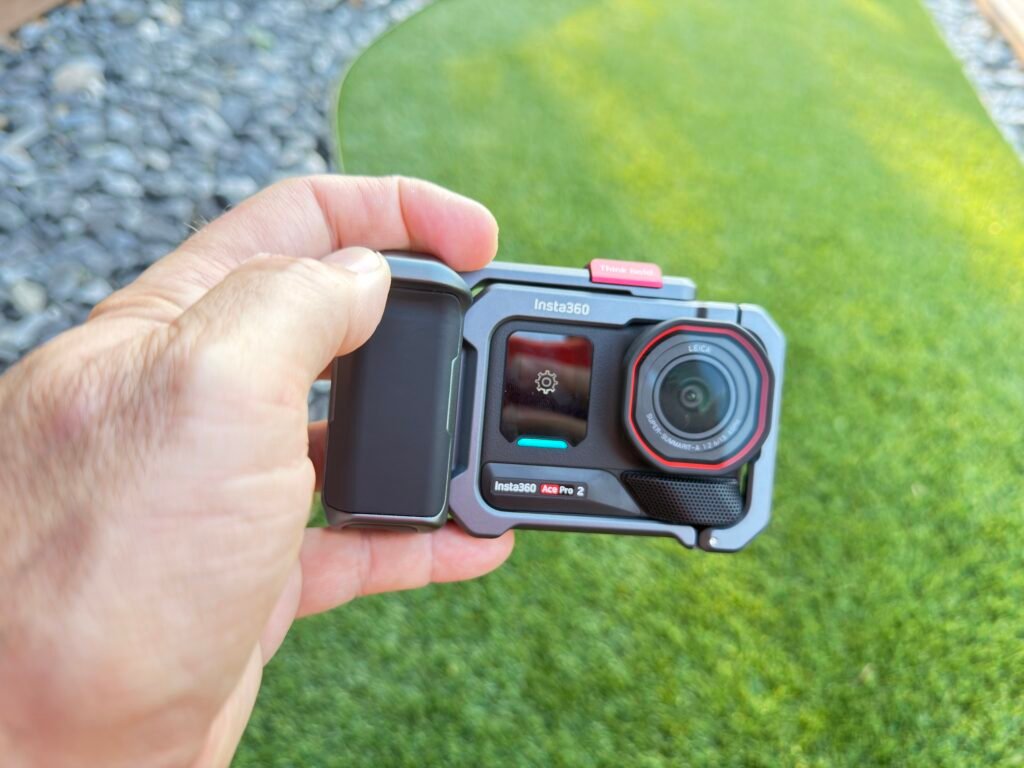
Here’s where everything changes. The Ace Pro Explored kit doesn’t just add accessories—it fundamentally transforms how you can use this camera for street photography. The kit includes a handlebar mount, chest mount, magnetic pendant, headband mount, GPS smart remote, lens guard, quick-release mounting adapter, and a versatile handheld grip/tripod combo.
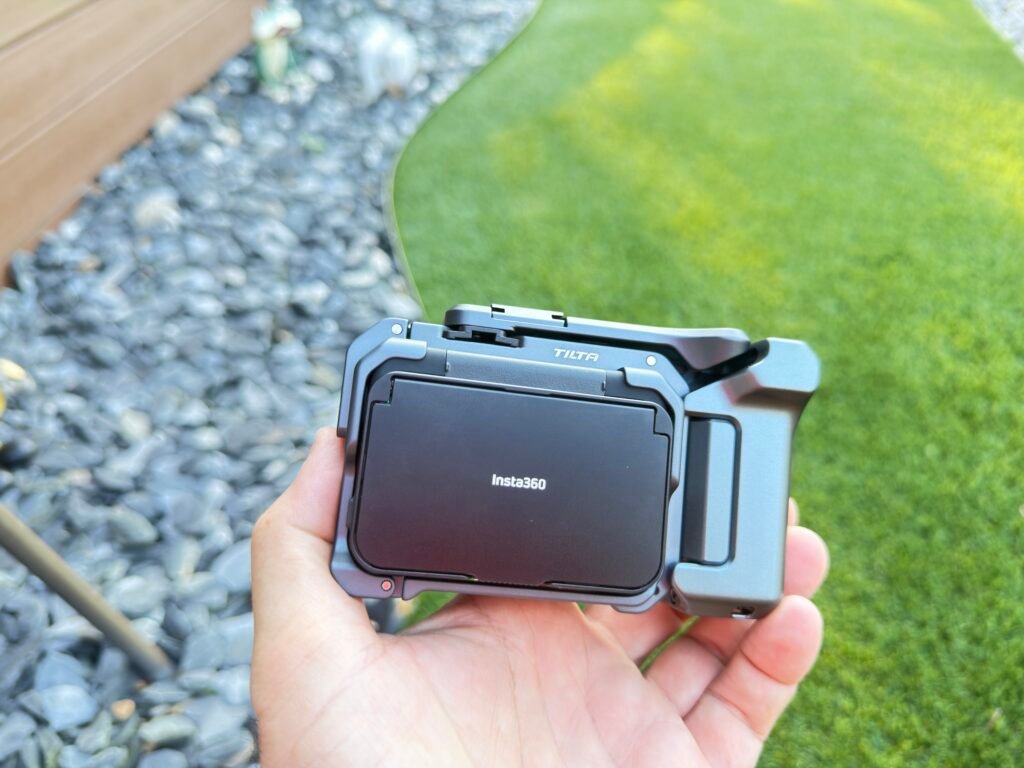
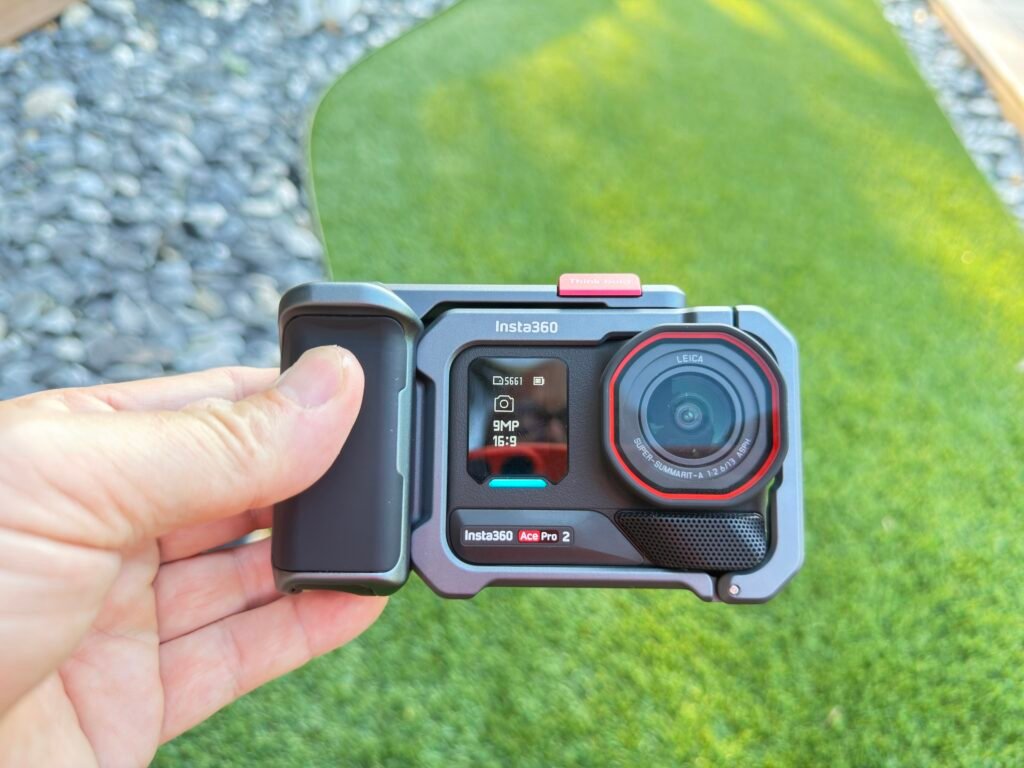
The handheld grip is the star of the show for street work. It’s a telescoping rod that extends from 7 to 9 inches, with a built-in tripod base that folds out for stable shots. The grip itself is textured rubber with a comfortable thumb rest and a trigger button that’s perfectly positioned for one-handed shooting. This single accessory takes the Ace Pro 2 from an action camera you mount somewhere into a handheld mini street shooter that feels purpose-built for candid photography.
The quick-release system means I can switch mounting configurations in under three seconds. Start the morning with the camera on the handheld grip for traditional shooting. See an opportunity for a unique POV shot? Pop it onto the chest mount. Want to capture your bike ride through the city? Click it onto the handlebar mount. This flexibility means I’m never locked into one shooting style, and I can adapt to whatever the street throws at me.
The GPS smart remote deserves special mention. This wrist-worn controller lets you trigger recording, take photos, and adjust basic settings without touching the camera. For street photography, this is revolutionary. Mount the camera on your chest, aim generally toward your subject, and trigger shots with the remote while maintaining natural body language and eye contact with your environment. People don’t register you as a photographer, and the candid moments you capture reflect that.
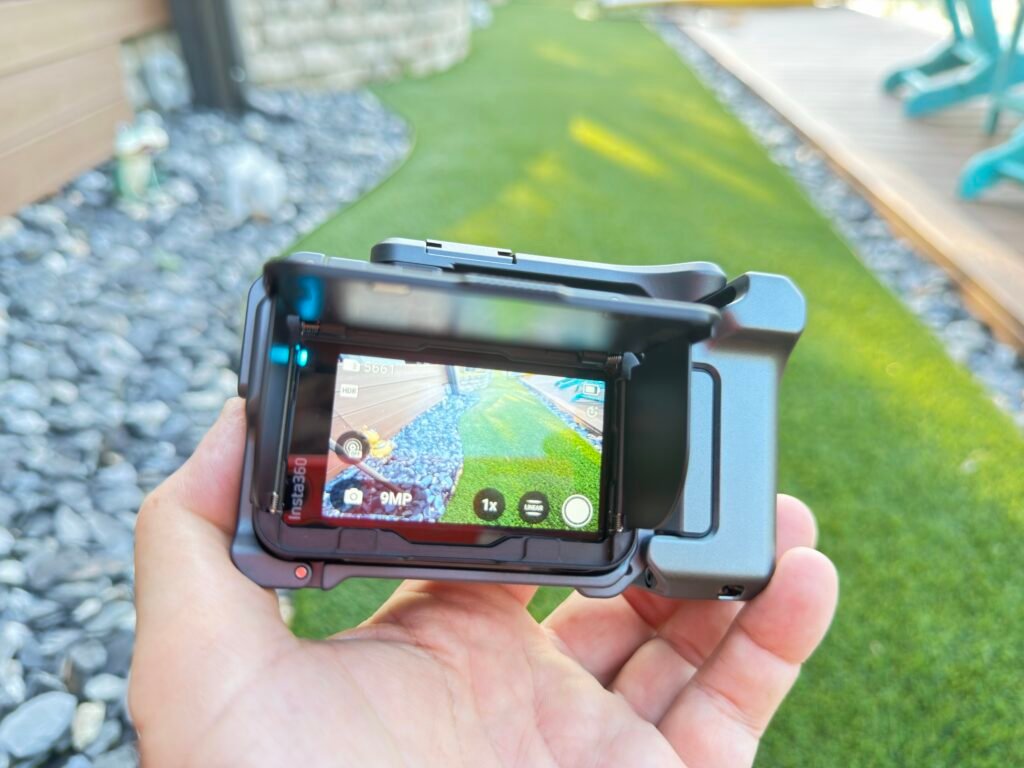
The magnetic pendant is another game-changer. It’s a small magnetic mount that clips to your shirt or jacket, holding the camera at chest level with the flip screen up for framing. Combined with the GPS remote, you become an invisible photographer. I’ve captured some of my most authentic street moments using this setup, because subjects simply don’t perceive the small camera clipped to my chest as a threat or intrusion.
Real-World Street Photography Performance
The 8K sensor delivers surprisingly crisp frame grabs that hold up beautifully for still photography. I’ve printed images at 16×24 inches that show excellent detail and color accuracy. The wide field of view means you can get close to your subjects without feeling like you’re invading their space, and the digital zoom capabilities let you punch in to tighter compositions without significant quality loss up to about 2x.
The flip-up screen is perfect for discreet low-angle shots and waist-level shooting, which is essential for candid street work. People don’t perceive you as “taking their picture” when you’re not holding the camera to your face, and that authenticity shows in the results. I’ve shot entire sessions holding the camera at hip level, glancing down occasionally to check framing, and the images capture a naturalistic energy that’s hard to achieve with a traditional camera stance.
Night street photography is where the AI noise reduction really shines. The co-engineered chip with Leica processes noise reduction algorithms that preserve detail while smoothing out grain in shadows. Street scenes shot at ISO 6400 that would normally be unusable come out with impressive detail and manageable grain. The wide aperture helps, but the computational photography doing the heavy lifting here.
The PureVideo technology makes a real difference in mixed lighting conditions, which is basically every urban environment. Neon signs, streetlights, car headlights, storefronts—the camera balances these competing light sources with impressive sophistication. There’s minimal color fringing or haloing around high-contrast edges, and the overall exposure stays consistent even as you move through dramatically different lighting zones.
FlowState stabilization means you can shoot while walking, running, or even cycling without tripod-smooth results. For street photography, this opens up kinetic, first-person perspectives that would be impossible to capture with traditional cameras without expensive gimbal rigs. I’ve shot entire walking tours through neighborhoods with the camera mounted to the chest rig, creating immersive POV documentation that feels viscerally present.
The 157-degree field of view initially feels extreme, but you adapt quickly. It forces you to get close to your subjects, and that proximity creates intimacy in your images. The distortion at the edges is minimal in the center 60% of the frame, and you can always crop to a more standard perspective in post. Alternatively, the camera offers digital lens options that narrow the field of view to 122 or 88 degrees if you prefer a more natural perspective.
Battery Life and Practical Considerations
Battery life is decent but not exceptional when shooting in 8K. I get about 90-100 minutes of continuous recording, or roughly 300-350 still photos in a mixed shooting session. For a full day of street photography, I carry two spare batteries. The good news is that batteries are small, inexpensive, and charge quickly via USB-C. I’ve charged batteries using portable power banks while shooting, which extends my working time considerably.
The camera runs warm during extended 8K recording sessions, but never uncomfortably hot. There’s no overheating protection that kicks in and stops recording, which some competitors suffer from. In ambient temperatures up to 85°F, I’ve never experienced thermal throttling or shutdown.
The menu system takes some getting used to. It’s organized logically, but there are many options buried in submenus. After a week of daily use, muscle memory kicks in and navigation becomes intuitive. The touchscreen is responsive, and the secondary rear screen provides quick access to the most common settings without diving into full menus.
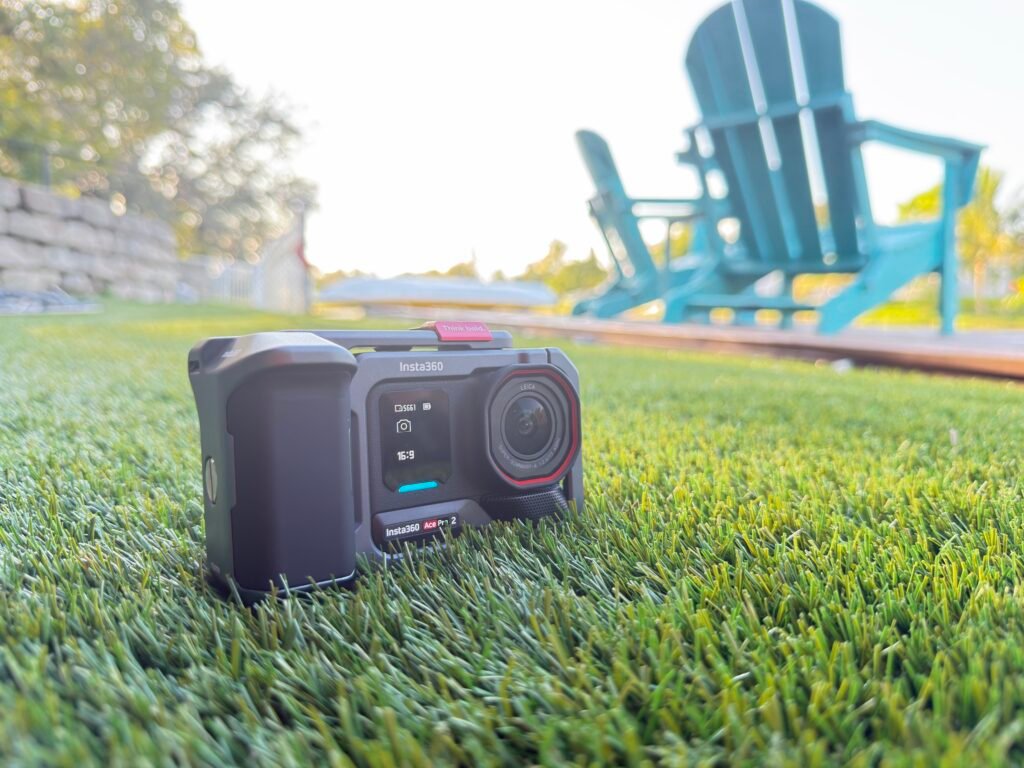
Image Quality: The Pixel-Peeping Verdict
Let’s be honest about what this camera is and isn’t. It won’t replace a dedicated mirrorless camera with a premium lens for pixel-peepers or large-format prints. The sensor is good, but it’s still a 1/1.3-inch sensor competing against APS-C and full-frame alternatives. At ISO 100-400, images are sharp with excellent color and minimal noise. At ISO 800-1600, quality remains very good with controlled grain. Above ISO 3200, you’ll see noise, but it’s manageable and has a pleasant, film-like texture rather than the splotchy color noise of lesser cameras.
Dynamic range is approximately 12-13 stops, which is respectable but not class-leading. Active HDR mode extends this effectively, but at the cost of slight ghosting in very fast-moving subjects. For most street photography applications, the dynamic range is more than sufficient.
Color accuracy out of camera is excellent. Skin tones are natural, blues and greens are vibrant without being oversaturated, and reds don’t clip as easily as some action cameras. The Leica color science influence is most apparent in how the camera renders subtle gradations in shadow tones—there’s nuance and depth rather than crushed blacks.
Sharpness is very good in the center of the frame, with slight softness at the extreme edges due to the wide lens design. For street photography where your subject is typically center-frame or in the center two-thirds, this isn’t an issue. The lens shows minimal chromatic aberration, and what’s there is easily corrected in post.
Post-Processing and Workflow
The Insta360 app is powerful and surprisingly full-featured. You can transfer files wirelessly to your phone, edit with intuitive touch controls, and export finished images ready for social media. The app includes AI-powered editing tools that can identify the best moments in your footage, auto-frame them, and even add transitions and music if you’re creating video content.
For serious editing, the camera outputs standard MP4 files for video and JPEG for photos, both of which work in any professional editing software. I use Lightroom for stills and Premiere Pro for video, and files import without issues. The metadata includes GPS coordinates if you’ve paired the remote, which is helpful for organizing location-based shoots.
The Flat color profile gives you significant latitude in color grading. I’ve pushed exposure adjustments of ±2 stops without significant quality degradation, and the color information holds up well under aggressive grading. If you’re familiar with LOG workflows, you’ll feel at home here.
Who Is This For?
The Insta360 Ace Pro 2 with the Explorer Kit is perfect for street photographers who want to experiment with new perspectives, capture video alongside stills, and travel light. It’s ideal for documentary photographers, travel photographers, and anyone who values spontaneity and flexibility over absolute image quality perfection.
It’s also fantastic for photographers who want to maintain a low profile. The small form factor, combined with unconventional mounting options, lets you capture authentic moments that would disappear the instant you pulled out a “real” camera. For photojournalists working in sensitive environments, this camera could be invaluable.
If you’re a hybrid shooter who wants to capture both stunning stills and smooth video without carrying multiple devices, this combination delivers. The learning curve is gentle, and the creative possibilities are genuinely exciting.
Room for Improvement
No camera is perfect, and the Ace Pro 2 has quirks. The menu system, while comprehensive, feels overcomplicated for common tasks. A customizable quick menu would be welcome. The mobile app occasionally loses connection mid-transfer, requiring a restart. And while waterproofing is excellent, the flip-up screen feels slightly fragile and I worry about long-term durability.
I’d love to see a future firmware update that adds focus peaking in manual mode and zebra patterns for exposure checking—standard features in professional cameras that would make manual shooting more precise. Raw photo capability would be transformative for serious photographers, even if it required a paid upgrade.
Battery life, while adequate, leaves room for improvement. An optional extended battery grip would be a popular accessory.
The Bottom Line
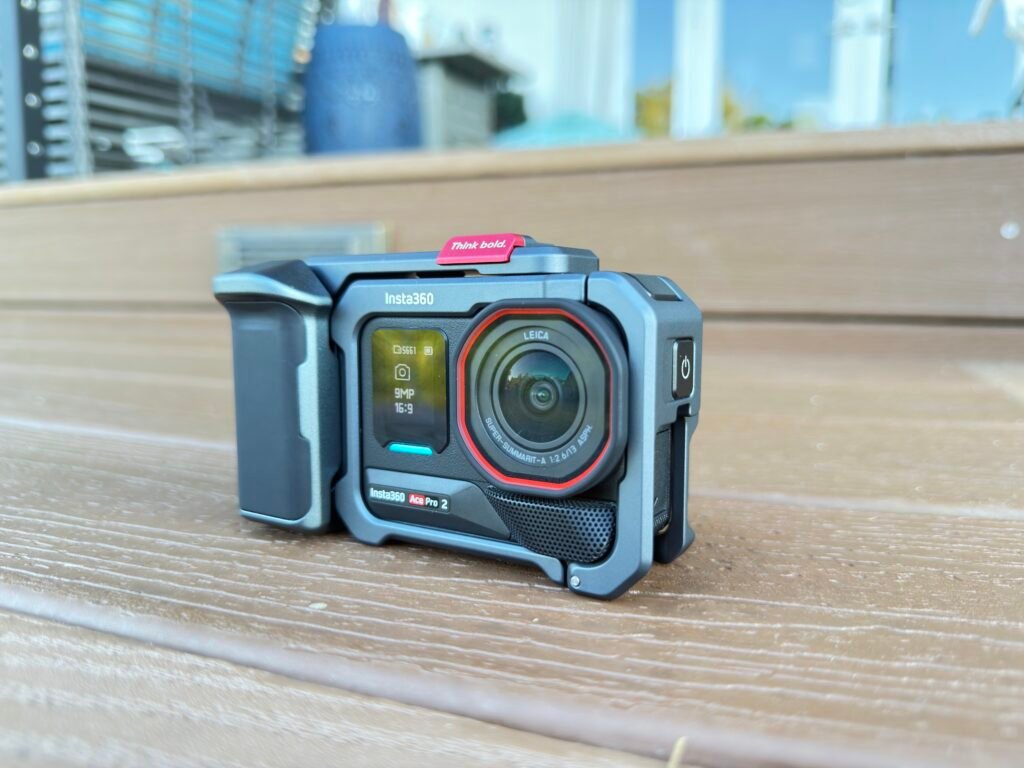
For street photographers who want to experiment with new perspectives, capture video alongside stills, and travel light, this combo is genuinely exciting. The Insta360 Ace Pro 2 is already a capable action camera, but the Ace Pro Explored kit transforms it into something more: a handheld mini street shooter that feels purpose-built for candid urban photography.
It’s liberated me to shoot in situations where pulling out a big camera would kill the moment. The candid energy I’m capturing now feels more authentic, more alive. There’s an intimacy to the images that comes from the camera’s invisibility and versatility. I’m capturing angles and perspectives I never would have attempted with traditional gear, and that creative expansion is worth far more than marginal improvements in pixel-level sharpness.
Is it perfect? No. Will it replace your primary camera? Probably not. But as a complementary tool for expanding your creative vision, for documenting street life from unconventional angles, and for capturing authentic moments without the intimidation factor of professional gear, the Insta360 Ace Pro 2 with the Explorer Kit punches far above its weight class.
At its price point, this combination offers exceptional value. You’re getting a versatile, high-quality imaging system with professional-level stabilization, excellent low-light performance, and a mounting ecosystem that enables creative approaches to street photography that simply weren’t possible before. For photographers willing to embrace its quirks and explore its possibilities, this could be the most exciting addition to your kit in years.
Highly recommended for adventurous street photographers ready to see their city from new perspectives.


Thinking about your next digital camera? Read about it here at TheTechReview for all your awesome Digital Camera reviews