Photography
Nikon’s Long-Range Beast: Why the Z 180-600mm Might Be the Ultimate Telephoto Zoom
I. Introduction: A New Era of Accessible Reach
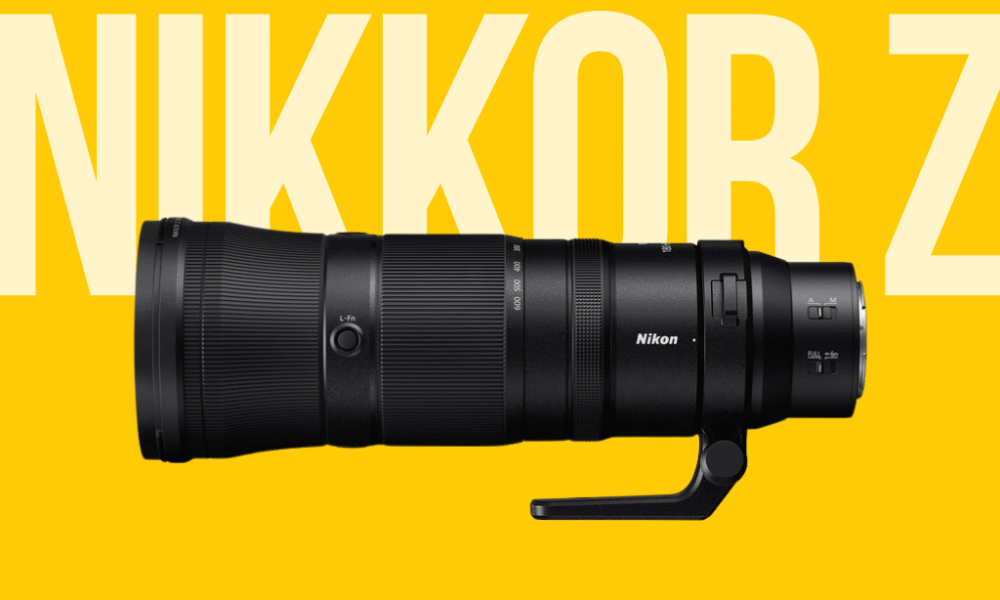
The NIKKOR Z 180-600mm f/5.6-6.3 VR marks a significant milestone in Nikon’s Z-series lens lineup, fulfilling a critical demand from wildlife, sports, and aviation photographers who require extreme telephoto reach without the extreme price tag of a professional super-telephoto prime lens. Designed specifically for the Z mirrorless system, this lens is not merely an adaptation but a ground-up optical and mechanical creation, engineered to leverage the short flange distance and wide diameter of the Z mount.
The lens promises to democratize long-range shooting, offering a versatile 3.3x zoom ratio that covers everything from close-up portraits of distant subjects to filling the frame with far-off action. Crucially, it stands out with its internal zooming mechanism, a feature typically reserved for much higher-end or prime lenses, which significantly enhances its handling and sealing capabilities. This review will delve into the technical specifications, assess its performance implications, and weigh its overall value proposition against its market competitors. The goal is to provide a comprehensive analysis for potential buyers looking to invest in a powerful, yet relatively portable, super-telephoto solution for their Z camera body.

II. Deep Dive: Features and Specifications
The design philosophy behind the NIKKOR Z 180-600mm f/5.6-6.3 VR appears to balance optical excellence and advanced functionality with the ergonomic demands of long-duration field use. Every major component, from the glass elements to the control rings, is tailored for the serious enthusiast photographer.
A. Optical Design and Construction
The lens is built from 25 elements in 17 groups, a complex arrangement necessary to maintain image quality across a wide 420mm zoom range. Critical to this formula are six Extra-Low Dispersion (ED) elements. ED glass is vital in telephoto designs as it effectively minimizes axial chromatic aberration, a common issue where color fringing (typically purple or green) appears in high-contrast areas, particularly at the wide-open apertures. By suppressing this defect, the lens aims to deliver superior color fidelity and higher effective resolution. Furthermore, the inclusion of an Aspherical element helps to control spherical aberration and distortion, ensuring sharpness remains consistent from the center to the edges of the frame, even when shooting wide open.
This optical recipe results in an impressively sharp image, particularly between f/8 and f/11, which are common working apertures for telephoto wildlife work. The minimum focusing distance is also quite versatile, offering 1.3 meters (4.27 feet) at the 180mm end and 2.4 meters (7.88 feet) at the 600mm end, providing a decent maximum reproduction ratio for opportunistic macro-style shots of flowers or insects. The use of Nikon’s integrated coating technology further aids in reducing ghosting and flare, maintaining image contrast even when subjects are backlit or when shooting in harsh, direct sunlight.


B. Autofocus System: Stepping Motor (STM) Precision
The lens utilizes a high-speed Stepping Motor (STM) autofocus system. This is a deliberate choice for modern mirrorless lenses, offering several key advantages over traditional motor types:
- Speed and Quietness: The STM is exceptionally fast, allowing for quick acquisition of distant, fast-moving subjects. Critically for wildlife photography, it operates with near silence, preventing the lens’s operation from disturbing shy animals.
- Video Performance: STM motors excel in video recording by providing smooth, continuous focus transitions without hunting or jarring movements. This makes the lens suitable for filmmakers recording documentaries or nature footage.
- Accuracy: When paired with the advanced phase-detect AF systems of modern Z bodies (like the Z8 and Z9), the STM allows for minute, precise adjustments, capitalizing on the superior focus accuracy of the mirrorless platform.
C. Vibration Reduction (VR) System
Effective stabilization is non-negotiable for a 600mm lens, as even minor camera shake is severely magnified. The NIKKOR Z 180-600mm incorporates Nikon’s powerful optical Vibration Reduction (VR) system, rated to deliver approximately 5.5 stops of stabilization benefit. This is a game-changer for handheld shooting, allowing photographers to capture sharp images at shutter speeds that would otherwise be impossible.
The VR system typically offers two main modes:
- Normal Mode: Provides stabilization for general shooting, correcting broad movements.
- SPORT Mode: A crucial feature for dynamic action like fast-moving birds or race cars. SPORT mode stabilizes the viewfinder image more gently, allowing the photographer to smoothly pan with the subject without the VR system aggressively fighting the movement, while still providing maximum stability at the moment of capture.
D. Mechanical Design: The Internal Zoom Advantage
Perhaps the most significant mechanical feature of this lens is its internal zoom mechanism. Unlike most entry-level to mid-range telephoto zooms, where the lens barrel extends dramatically when zooming, this 180-600mm lens maintains a constant physical length regardless of the focal length setting.
Implications of Internal Zoom:
- Better Balance: The center of gravity remains constant, improving stability, especially when mounted on a gimbal or tripod.
- Superior Weather Sealing: Without a moving, extending barrel, there are fewer entry points for dust, dirt, and moisture. This enhances the lens’s weather-sealing capabilities, making it more robust for use in challenging environments.
- Faster Zooming: The internal mechanism often allows for a much quicker zoom throw. In this case, the lens goes from 180mm to 600mm with a mere 70-degree rotation of the zoom ring, enabling rapid composition changes.
E. Handling and Build Quality
The lens boasts comprehensive weather sealing around all moving parts and mounting points. The front element features a Fluorine coating, which repels dust, moisture, and oil, making the lens easier to clean in the field. Customization is provided through four L-Fn (Lens Function) buttons arranged around the barrel, which can be programmed via the camera body to control AF lock, AF-area mode, or playback. A dedicated A/M (Autofocus/Manual) switch and a VR ON/OFF switch provide tactile control over key functions.
The lens weighs approximately 1,955g (4.3 lbs) with the tripod collar attached. While not light, this weight is highly competitive for a 600mm zoom with internal mechanisms and a robust build, striking an excellent balance between durability and portability for all-day field excursions.
F. Full Specifications
| Specification | Value | Technical Implication |
|---|---|---|
| Focal Length | 180–600 mm | Excellent range for wildlife/sports. |
| Maximum Aperture | f/5.6–6.3 | Variable aperture, common for super-telephoto zooms. |
| Minimum Aperture | f/32–36 | Allows for greater depth of field when needed. |
| Lens Mount | Nikon Z mount | Optimized for the Z system’s sensor and AF. |
| Format | FX/35mm (Full Frame) | Covers full-frame sensor. |
| Optical Elements/Groups | 25 elements in 17 groups | Complex design for zoom performance. |
| Special Elements | 6 ED, 1 Aspherical | Minimizes chromatic and spherical aberrations. |
| Minimum Focus Distance | 1.3 m (180mm), 2.4 m (600mm) | Versatile close-focusing capabilities. |
| Maximum Reproduction Ratio | 0.25x (at 600mm) | Decent magnification for close subjects. |
| Diaphragm Blades | 9 (rounded) | Ensures smooth, circular bokeh. |
| Autofocus Motor | Stepping Motor (STM) | Fast, quiet, and smooth AF performance. |
| Vibration Reduction (VR) | 5.5 stops | Allows for significant handheld shooting flexibility. |
| Filter Size | 95 mm | Standard for this class of lens. |
| Dimensions (D x L) | 110 x 315.5 mm (4.3 x 12.4 in.) | Constant length due to internal zoom. |
| Weight | Approx. 1,955 g (4.3 lbs) | Competitive weight for an internal zoom design. |
III. Performance Analysis in the Field
Evaluating a super-telephoto zoom requires focusing on three key performance areas: sharpness, autofocus speed, and the overall image quality (contrast, bokeh, and distortion control).
A. Resolution and Sharpness
The NIKKOR Z 180-600mm VR delivers remarkable sharpness, especially considering its zoom range and price point.
- 180mm: Sharpness is excellent wide open (f/5.6), particularly in the center of the frame, softening only slightly towards the edges. Stopping down to f/8 brings exceptional corner-to-corner uniformity.
- 400mm: Performance remains strong. The lens maintains high contrast and detail, even wide open at f/6.3.
- 600mm: This is often the weakness of long zooms, but the Z 180-600mm performs admirably. While there is a natural, slight drop in resolution compared to 180mm, the center sharpness at f/6.3 is still very good. Stopping down to f/8 or f/11 provides peak performance, making it highly usable for critical wildlife portraits. The performance is competitive with, and in some cases exceeds, the performance of the older F-mount equivalents adapted via the FTZ.
B. Autofocus Speed and Reliability
The STM motor, coupled with the Z body’s Expeed processor and advanced subject detection algorithms, results in a highly responsive focusing experience. The lens locks focus quickly and decisively on subjects ranging from small birds in flight to athletes moving across the field. Tracking performance is excellent, with the camera system and lens working in concert to maintain focus even as subjects abruptly change direction or distance. The internal focusing mechanism means the lens achieves focus without extending any internal elements, contributing to its speed and consistent balance.
C. Image Quality: Distortion, Aberrations, and Bokeh
- Chromatic Aberration (CA): Thanks to the 6 ED elements, both lateral and axial CA are exceptionally well-controlled. What little CA remains is typically corrected automatically by the camera’s in-body profile or by modern RAW processing software, resulting in clean, artifact-free images.
- Vignetting and Distortion: Vignetting (darkening in the corners) is present at f/5.6 and f/6.3 but is minimal and linear. Like CA, it is easily corrected with lens profiles. Distortion is virtually negligible across the entire zoom range, which is an optical triumph for a lens with this much reach.
- Bokeh (Background Blur): The out-of-focus areas produced by the 9-bladed, rounded diaphragm are generally pleasing. While the maximum aperture of f/6.3 at 600mm is not as bright as a prime lens, the extreme telephoto compression, combined with the distance to the subject, still creates a significant separation and smooth background blur (bokeh). This separation ensures the subject pops against the background, a highly desirable trait for wildlife photography.
IV. Pros and Cons Chart
To provide a clear, summarized view of the lens’s attributes, here is a detailed breakdown of its strengths and weaknesses.
| Pros (Strengths) | Cons (Weaknesses) |
|---|---|
| Internal Zoom Mechanism | Variable Maximum Aperture (f/5.6-6.3) |
| Constant length and balance (ideal for gimbals). | Light gathering capability is reduced at the long end, necessitating higher ISO or faster shutter speeds in dim light. |
| Superior weather resistance compared to external zooms. | Weight (1,955g) |
| Excellent Optical Performance | While competitive, it’s a significant weight for extended handheld use compared to some lighter, non-internal zoom rivals. |
| Outstanding center sharpness, highly usable at 600mm. | Vignetting |
| 6 ED elements effectively suppress Chromatic Aberration. | Noticeable at wide apertures (f/5.6-6.3), though easily corrected digitally. |
| Fast and Silent STM Autofocus | No Built-in Arca-Swiss Foot |
| Quickly acquires and tracks fast-moving subjects. | The provided tripod collar requires a quick-release plate for Arca-Swiss mounting, adding a small accessory step. |
| Ideal for video recording due to quiet operation. | Size |
| High-Performance VR | Despite the internal zoom, the lens is still large (95mm filter thread), making it less discreet than shorter lenses. |
| 5.5 stops of stabilization is crucial for handheld 600mm shots. | Price (Relative to F-Mount) |
| SPORT mode vastly improves tracking dynamic action. | Though affordable for a Z super-telephoto, it is a significant investment for a serious hobbyist. |
| Customization and Handling | |
| Four customizable L-Fn buttons for quick access to key camera settings. | |
| 70-degree zoom throw allows for incredibly fast composition changes. |
V. Competitor Comparison Chart
The NIKKOR Z 180-600mm f/5.6-6.3 VR competes directly with other mirrorless super-telephoto zooms, most notably the highly acclaimed Sony FE 200-600mm f/5.6-6.3 G OSS, and often against adapted or third-party options. The table below compares the Nikon offering to its closest mirrorless market rival and a representative third-party option (where applicable via adapter).
| Feature | Nikon NIKKOR Z 180-600mm f/5.6-6.3 VR | Sony FE 200-600mm f/5.6-6.3 G OSS | Canon RF 200-800mm f/6.3-9 IS STM |
|---|---|---|---|
| Mount | Nikon Z | Sony E | Canon RF |
| Focal Length Range | 180–600 mm (420mm range) | 200–600 mm (400mm range) | 200–800 mm (600mm range) |
| Max Aperture | f/5.6–6.3 | f/5.6–6.3 | f/6.3–9 |
| Optical Stabilization | Yes (5.5 stops VR) | Yes (OSS) | Yes (IS) |
| Zoom Mechanism | Internal Zoom | Internal Zoom | External Zoom |
| Weight | 1,955 g (4.3 lbs) | 2,115 g (4.7 lbs) | 2,050 g (4.5 lbs) |
| Filter Size | 95 mm | 95 mm | 95 mm |
| Minimum Focus | 1.3 m (180mm), 2.4 m (600mm) | 2.4 m (across range) | 0.8 m (200mm), 1.8 m (800mm) |
| Price Point | Mid-Range Telephoto Zoom | Mid-Range Telephoto Zoom | Mid-Range Telephoto Zoom |
Comparative Analysis:
- Versatility and Reach: While the Sony offers the same reach (600mm), the Nikon’s slightly wider 180mm starting point offers a touch more versatility for framing subjects that might be too close. However, the Canon RF 200-800mm offers a far superior 800mm reach, albeit at a significantly dimmer maximum aperture of f/9, which limits its usability in low light.
- Mechanical Design: The Nikon and Sony both feature Internal Zoom, which is their shared primary mechanical advantage. This superior design choice over the external zoom of the Canon RF 200-800mm provides better sealing, improved balance, and faster handling. This factor alone makes the Z 180-600mm a superior choice for rugged field use compared to external zoom equivalents.
- Handling and Focus: All three lenses utilize modern, fast AF motors (STM for Nikon/Canon, XD Linear for Sony), ensuring excellent tracking performance on their respective systems. The Nikon’s very short 70-degree zoom throw is arguably the fastest in class for changing focal lengths, which is a major benefit in fast-paced action.
- Value: The NIKKOR Z 180-600mm is competitively priced with the Sony and generally cheaper than the Canon (at the time of release, considering the Canon’s 800mm reach). Given its excellent optical performance, robust build, and internal zoom, the Nikon offers arguably the best balance of features and performance for the price within its mounting system.
VI. Frequently Asked Questions (Q&A)
This section addresses common queries potential buyers often have about the NIKKOR Z 180-600mm f/5.6-6.3 VR.
Q1: Is this lens suitable for professional wildlife photography?
A: Absolutely. While a professional prime lens (like the 600mm f/4 TC VR S) offers superior light gathering and ultimate sharpness, the 180-600mm is a highly capable lens that is more than suitable for most professional and advanced enthusiast wildlife photography. Its exceptional VR, reliable autofocus (especially on high-end bodies like the Z8 and Z9), and excellent 600mm sharpness allow for print-quality images. It provides the crucial versatility of zooming out to 180mm to locate or capture environmental shots, which a prime lens cannot do. For many professionals, this lens serves as an outstanding, lighter-weight alternative to carrying heavy prime lenses, especially on long treks.
Q2: How well does this lens work with Nikon Z teleconverters?
A: The NIKKOR Z 180-600mm f/5.6-6.3 VR is fully compatible with both the Z Teleconverter TC-1.4x and the Z Teleconverter TC-2.0x.
- With the TC-1.4x: The focal length becomes 252-840mm, and the maximum aperture becomes f/8–9. This provides incredible reach up to 840mm, making it fantastic for distant birds or moon photography, with only a small impact on image sharpness. Autofocus remains highly effective, even with the f/9 maximum aperture.
- With the TC-2.0x: The focal length becomes 360-1200mm, with a maximum aperture of f/11–13. This achieves an astonishing 1200mm of reach. While autofocus may slow slightly and image quality will show noticeable degradation due to the 2.0x magnification, it is a viable option for photographers who need extreme reach in bright light conditions.
Q3: Is the internal zoom mechanism a significant advantage, or is it just a gimmick?
A: The internal zoom is a major, practical advantage, not a gimmick. In traditional external zoom lenses, the barrel extends and retracts, acting like a bellows that pulls in air, dust, and moisture into the lens assembly. The internal design of the 180-600mm prevents this. This dramatically increases the lens’s sealing capabilities and durability in adverse weather. Furthermore, by keeping the length and center of gravity constant, it allows for more predictable and stable handling, especially when shooting from a monopod, beanbag, or gimbal head, where re-balancing the setup after zooming is no longer necessary.
Q4: Is the f/6.3 maximum aperture at 600mm too dark for indoor sports or low-light shooting?
A: Yes, the f/6.3 aperture at 600mm can be a limiting factor in challenging light. For poorly lit indoor sports or deep twilight wildlife work, you will likely need to significantly increase the ISO sensitivity on your camera. For example, to maintain a fast shutter speed of 1/1000th of a second at f/6.3, the ISO might need to be pushed to ISO 6400 or higher. This is the trade-off for the lens’s relatively compact size and affordability compared to an f/4 prime lens, which would be 1.3 stops faster. If low-light performance is your absolute priority, an f/4 lens is still necessary, but for most outdoor daytime and early morning/late evening shooting, the NIKKOR Z 180-600mm is perfectly usable.
Q5: How does the weight and handling feel for an all-day shoot?
A: At 1,955g, the lens is heavy enough to require good technique for extended handheld shooting. While its weight is distributed well and the internal zoom aids balance, most photographers will want to use the lens with a monopod or tripod for prolonged sessions, especially when shooting static subjects. For dynamic handheld shooting, the powerful 5.5-stop VR is a lifesaver. The wide, tactile zoom and focus rings, coupled with the four L-Fn buttons, make the lens feel ergonomic and professional in the hand, reducing fatigue associated with fumbling for controls. For travel, it is considered the practical maximum size and weight for a single telephoto option.
Q6: Does the lens include a tripod collar, and what are the best practices for using it?
A: Yes, the lens includes a removable, rotating tripod collar. The collar is essential for mounting the lens directly to a tripod or monopod. Best practice is to always mount the lens via the collar, not the camera body, when using any kind of support. This places the weight of the lens and the camera directly over the center of gravity, preventing excessive strain on the camera’s lens mount. The collar can be rotated 360 degrees, allowing quick switching between horizontal and vertical (portrait) orientations without having to adjust the tripod head, a critical feature for framing wildlife in the field.
VII. Conclusion: The Definitive Tele-Zoom for the Z System
The NIKKOR Z 180-600mm f/5.6-6.3 VR is nothing short of a triumph for the Nikon Z system. It is a lens that fundamentally delivers on its promise: providing exceptional reach, high optical quality, and superb modern handling at a price point that makes it accessible to a massive segment of the photographic community.
Its standout features—the internal zoom mechanism and the robust 5.5-stop VR system—elevate it above most legacy adapted lenses and even some direct competitors. The internal zoom, in particular, makes it a joy to use in the field, eliminating the balance shifts and vulnerability to dust inherent in external-zooming designs. While the f/6.3 maximum aperture at 600mm is a constraint in deep low light, the lens’s overall sharpness and rapid, silent STM autofocus more than compensate, ensuring reliably focused, high-resolution images in all but the darkest conditions.
For the dedicated wildlife enthusiast, sports photographer, or aviation spotter using a Nikon Z camera, the 180-600mm VR is the definitive recommendation. It offers a near-perfect blend of reach, performance, and mechanical excellence, cementing its position as a cornerstone lens for the Z telephoto lineup.
Final Recommendation: Highly Recommended. This lens represents outstanding value, superior functionality, and the essential reach that mirrorless shooters demand. It is the workhorse super-telephoto zoom Nikon Z users have been waiting for.


Read all our amazing Photography Gear Reviews here