Photography
Sony a7R V Mirrorless Camera: A Comprehensive Review
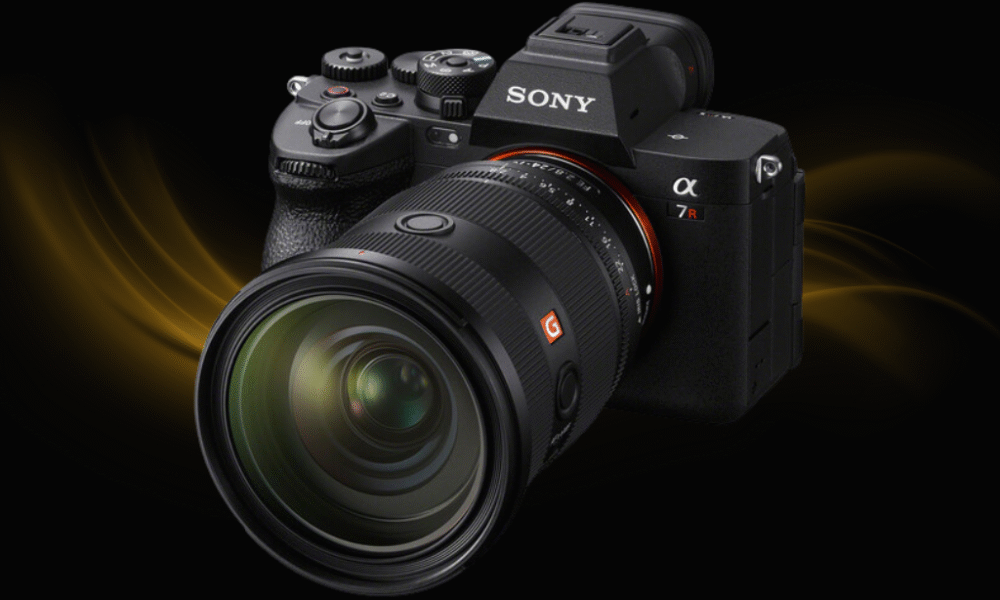
The Sony a7R V represents the pinnacle of Sony’s high-resolution mirrorless camera lineup, building upon the already impressive foundation laid by its predecessor, the a7R IV. Released in late 2022, this camera targets professional photographers and serious enthusiasts who demand exceptional image quality, advanced autofocus capabilities, and robust build quality. After extensive use across various shooting scenarios, it’s clear that Sony has crafted a camera that pushes the boundaries of what’s possible in the mirrorless format.
Image Quality and Sensor Performance
At the heart of the a7R V lies a 61-megapixel back-illuminated full-frame CMOS sensor, the same resolution as its predecessor but with significant improvements in processing and readout speed. This massive resolution delivers extraordinary detail and provides extensive flexibility for cropping and large-format printing. The images produced are nothing short of stunning, with exceptional sharpness, rich color rendition, and impressive dynamic range that rivals and often exceeds competing systems.
The dynamic range performance is particularly noteworthy, offering roughly 15 stops of latitude that allows photographers to recover detail from both deep shadows and bright highlights with remarkable ease. This makes the camera exceptionally well-suited for landscape photography, where high-contrast scenes are common, and for commercial work where maximum post-processing flexibility is essential.
Low-light performance, while not the primary focus of a high-resolution camera, is surprisingly competent. The native ISO range extends from 100 to 32,000, expandable to ISO 50-102,400. While noise does become visible at higher ISOs as expected with such a dense sensor, the noise characteristics remain relatively fine-grained and manageable in post-processing. At ISO 3200 and below, image quality remains excellent, and usable images can be captured even at ISO 12,800 with proper noise reduction techniques.
Autofocus Revolution
Perhaps the most significant upgrade in the a7R V is its completely redesigned autofocus system, which Sony claims uses AI-based processing to recognize and track subjects with unprecedented accuracy. The camera features 693 phase-detection AF points covering approximately 79% of the frame, but more importantly, it introduces advanced subject recognition that goes far beyond simple face and eye detection.
The AF system can now recognize and track a wide variety of subjects including humans, animals, birds, insects, cars, trains, and airplanes. The human recognition has been refined to identify not just faces and eyes, but also body poses and skeletal structures, allowing the camera to maintain focus even when the subject’s face is turned away or partially obscured. This is transformative for wedding photographers, event shooters, and anyone working with dynamic, unpredictable subjects.
Bird and animal detection works remarkably well, with the camera able to identify and lock onto the eyes of wildlife subjects with impressive consistency. During testing with various bird species, from small songbirds to larger raptors, the hit rate for sharp, well-focused images was exceptionally high, even when subjects were moving erratically. The insect recognition mode is a welcome addition for macro photographers, though it requires the subject to be sufficiently large in the frame to be detected.
The autofocus system performs admirably in low light, rated to -4 EV, which means it can achieve focus in conditions that would challenge many competing systems. Real-world performance backs up these specifications, with the camera confidently locking onto subjects in dimly lit environments.
Body Design and Ergonomics
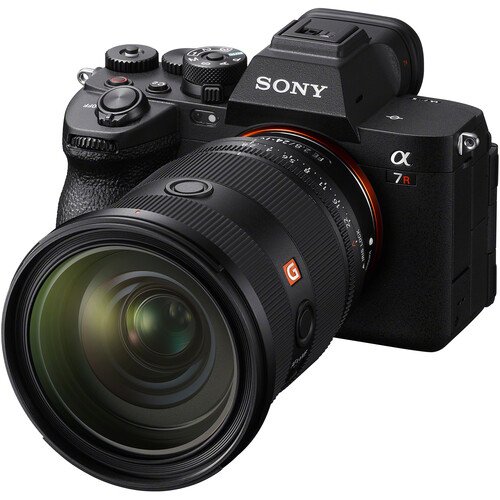
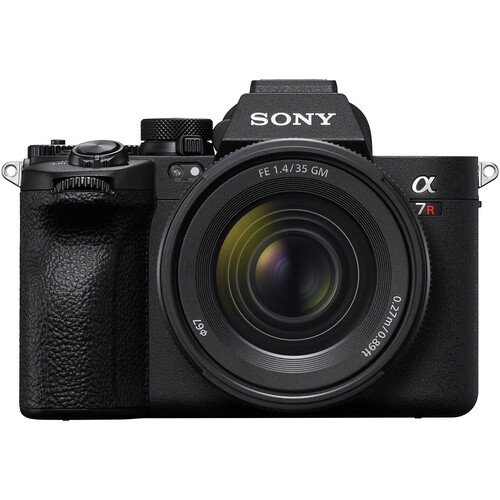
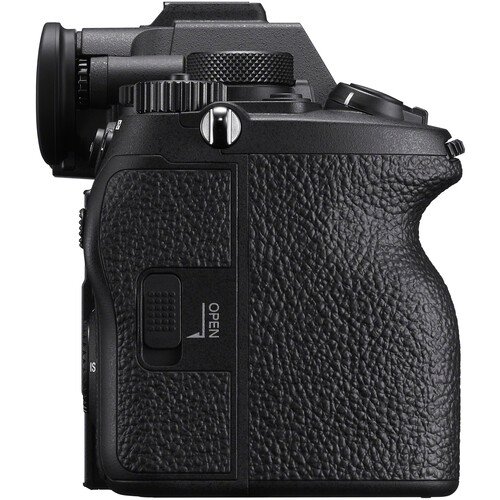
Sony has made thoughtful refinements to the body design with the a7R V, addressing some of the ergonomic concerns that plagued earlier a7R models. The camera features a deeper grip that provides more secure handling, especially important when mounting larger telephoto lenses. The body is weather-sealed and built to professional standards, with magnesium alloy construction that feels robust without being excessively heavy at approximately 723 grams.
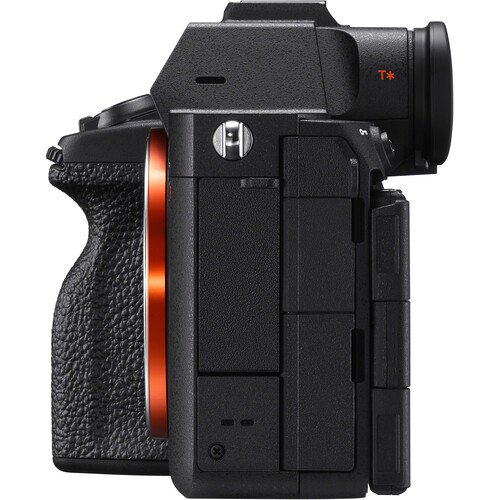
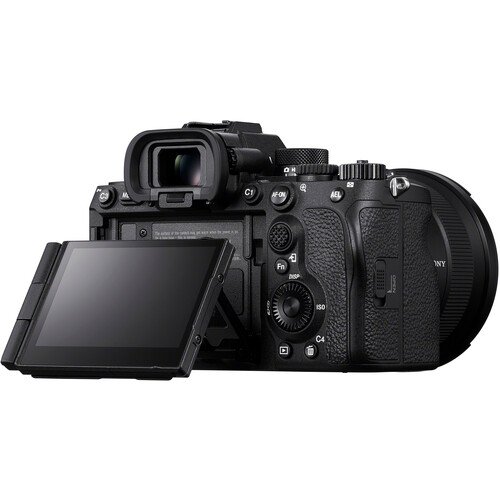
One of the most significant physical changes is the introduction of a new four-axis multi-angle LCD screen. Unlike the traditional tilting screens found on most cameras, this design allows the screen to be positioned in various configurations, including flipped out to the side for vlogging or high/low angle shots, while still maintaining the ability to tilt for traditional shooting. This provides exceptional flexibility without the bulk of a fully articulating screen, and importantly, the screen remains centered with the lens axis when tilted, which is preferred by many photographers.
The electronic viewfinder is a standout feature, utilizing a high-resolution 9.44-million-dot OLED panel with 0.90x magnification. The image is bright, clear, and remarkably lifelike, with minimal lag even when panning quickly. This is among the best EVFs currently available and makes composition and manual focusing a genuine pleasure.
Button layout is logical and customizable, with Sony providing numerous programmable buttons that allow photographers to tailor the camera to their specific workflow. The menu system, while improved from previous generations, still retains some of Sony’s characteristic complexity. However, once configured, the most frequently used settings are easily accessible through custom buttons and the quick menu.
In-Body Image Stabilization
The a7R V features a highly effective 5-axis in-body image stabilization (IBIS) system rated for up to 8 stops of compensation when used with compatible lenses. In practice, this system works exceptionally well, allowing handheld shooting at shutter speeds that would have been impossible without stabilization. This is particularly valuable given the camera’s high resolution, which makes even minor camera shake more visible.
The stabilization system also includes a pixel-shift multi-shooting mode that captures and combines multiple frames with slight sensor shifts to create images with even greater resolution and color accuracy. This feature is primarily useful for static subjects like products, architecture, or artwork reproduction, where it can deliver exceptional results. The camera can capture up to 16 frames in pixel-shift mode, which are then combined in post-processing to create a final image with remarkable detail and color fidelity.
Video Capabilities
While the a7R V is primarily marketed toward still photographers, Sony has included substantial video capabilities that make it a versatile hybrid tool. The camera can record 8K video at 24/25fps in 10-bit 4:2:2 using the full width of the sensor, providing extraordinary resolution and detail for professional video work. Oversampled 4K recording is available at up to 60fps, delivering exceptional image quality with minimal aliasing or moire.
The video autofocus performs admirably, utilizing the same AI-based subject recognition available for stills. Focus transitions are smooth and natural, and the tracking reliability makes the camera suitable for solo operators and documentary work. However, the camera does crop the sensor when recording 4K at 60fps in Super 35 mode, which may be limiting for some users.
Heat management is a consideration when shooting video with the a7R V. Extended 8K recording sessions can cause the camera to become quite warm, and while Sony has implemented automatic temperature monitoring, users planning lengthy video shoots should be aware of potential recording time limitations in warmer environments.
Performance and Handling
The a7R V is equipped with Sony’s latest BIONZ XR image processor, which provides snappy performance throughout the camera’s operations. Startup time is quick, and the camera feels responsive when navigating menus or reviewing images. The processor also enables impressive continuous shooting speeds of up to 10fps with the mechanical shutter or electronic shutter, which is remarkable given the massive file sizes being generated.
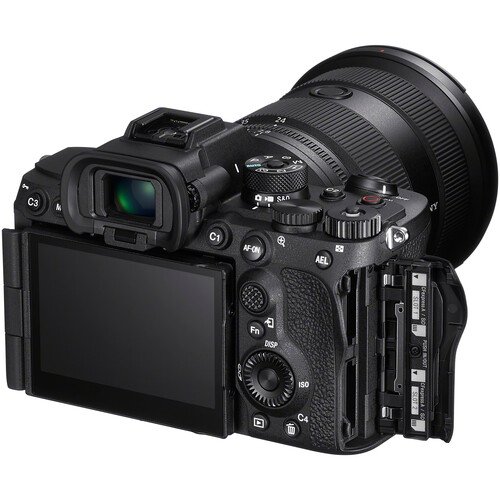
Buffer depth is generous, allowing photographers to capture approximately 583 compressed RAW images or an unlimited number of JPEGs in a single burst when using a fast UHS-II SD card or CFexpress Type A card. The camera features dual card slots supporting both SD UHS-II and CFexpress Type A formats, providing flexibility and redundancy for professional work.
Battery life is rated at approximately 530 shots per charge using the rear LCD or 440 shots using the EVF, based on CIPA standards. Real-world usage will vary significantly based on shooting style, but the camera can comfortably handle a full day of moderate shooting on a single battery. The inclusion of USB-C charging and power delivery is convenient, allowing the camera to be charged or powered externally during extended shooting sessions.
Lens Compatibility and Ecosystem
The a7R V benefits from Sony’s extensive and mature E-mount lens ecosystem, which includes dozens of native lenses ranging from ultra-wide to super-telephoto options. The FE mount lenses are generally excellent, with many achieving outstanding optical performance that can fully exploit the camera’s high-resolution sensor. Third-party manufacturers like Sigma, Tamron, and Samyang also offer excellent E-mount options at various price points.
The camera’s high resolution does demand high-quality lenses to realize its full potential. Lower-quality glass or older lens designs may show their limitations when used with the a7R V, making lens selection an important consideration for photographers investing in this system.
Who Should Buy the Sony a7R V?
The Sony a7R V is not for everyone, and its substantial price point reflects its professional positioning. This camera is ideally suited for landscape photographers who need maximum resolution and dynamic range, commercial photographers requiring extensive cropping flexibility and large-format output, wildlife photographers who will benefit from the advanced autofocus and bird detection, and studio photographers who need exceptional detail for fashion, product, or portrait work.
The camera may be overkill for casual enthusiasts, event photographers who prioritize speed over resolution, or videographers who need extended recording times without overheating concerns. The large file sizes also require robust computer systems for post-processing and substantial storage solutions.
Final Verdict
The Sony a7R V represents a remarkable achievement in mirrorless camera technology, combining exceptional image quality with cutting-edge autofocus performance and professional build quality. The improvements in subject recognition and tracking are genuinely transformative, making this one of the most capable cameras for challenging shooting scenarios involving moving subjects.
While the camera commands a premium price and requires high-quality lenses to fully exploit its capabilities, professionals and serious enthusiasts who need the best possible image quality and most advanced features will find the a7R V to be an outstanding investment. Sony has successfully refined and enhanced its high-resolution platform, creating a camera that sets new standards for versatility and performance in the full-frame mirrorless category.
For photographers who can justify the cost and who regularly need the capabilities this camera offers, the a7R V is an easy recommendation and arguably the best all-around high-resolution camera currently available. It successfully balances resolution, speed, autofocus performance, and handling in a package that, while not perfect, comes remarkably close to being the ultimate tool for professional photography.


Read all our amazing Photography Reviews here