Computers
The Innovation Deficit: How Apple Surrendered Its Revolutionary Edge to Bolder Competitors
For years, Apple didn’t just lead the tech industry—it reimagined it. The company that gave us the iPhone, MacBook Air, and iPad didn’t iterate on existing ideas; it created entirely new categories that fundamentally changed how we interact with technology. But somewhere between the passing of Steve Jobs and today’s quarterly earnings calls, Apple transformed from a company that thought different into one that thinks safe. While competitors push boundaries with foldable devices, AI-integrated hardware, and genuinely novel form factors, Apple has settled into a predictable rhythm of marginal upgrades wrapped in premium pricing.
The contrast has never been starker, and for longtime Apple enthusiasts, it’s becoming increasingly difficult to justify the brand loyalty that once seemed unshakeable.
The M-Chip Monotony: When Your Best Innovation Is What’s Inside

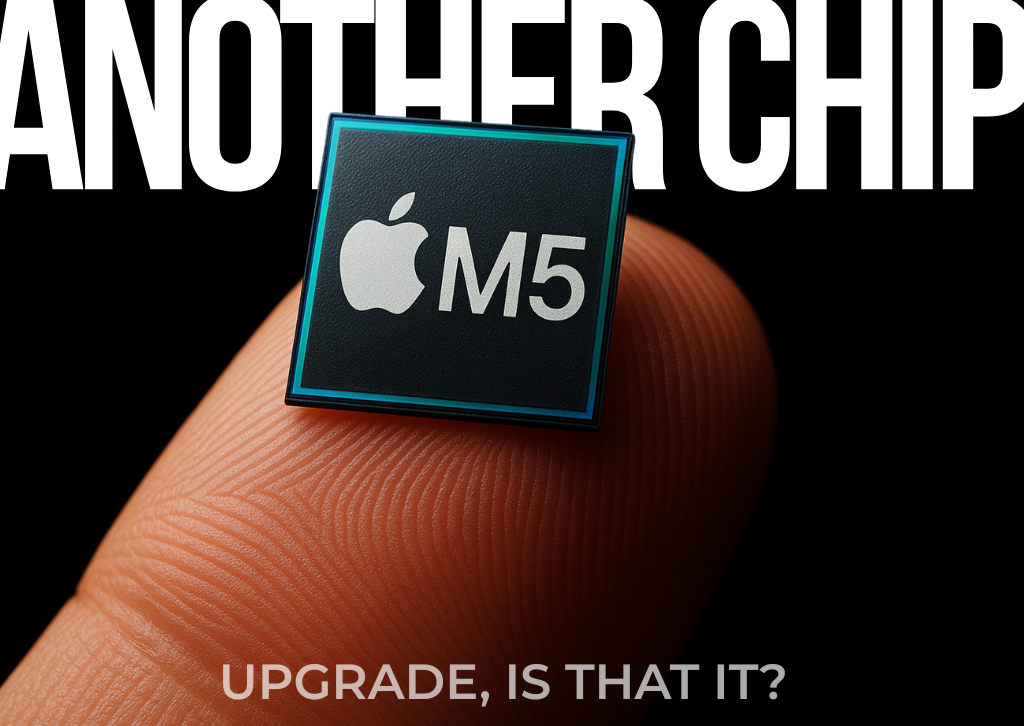
Apple’s transition to its own silicon marked a genuine technological achievement. The M-series chips deliver impressive performance and efficiency, representing years of engineering excellence. But here’s the problem: a faster processor doesn’t constitute innovation when the device housing it remains fundamentally unchanged.
Consider the recent iPad lineup refresh with the M5 chip. Yes, it’s more powerful. Yes, benchmarks will show impressive gains. But what problem does this solve for actual users? The previous generation was already overpowered for the software ecosystem Apple provides. iPadOS remains frustratingly limited, unable to take full advantage of the hardware capabilities underneath. It’s like installing a Formula 1 engine in a minivan and calling it revolutionary.

The same pattern repeats across the MacBook line. The latest MacBook Pro arrives with the M5 chip, but only in a 14-inch configuration at launch—a size that feels increasingly cramped for professional workflows in an era where screen real estate directly correlates to productivity. Many professionals and creative users want larger displays for video editing, design work, and multitasking. The industry has moved toward recognizing that serious work often demands serious screen space, yet Apple seems content to delay larger options, forcing users to wait or compromise.
This is the innovation strategy of a company playing it safe: take the same device, swap the chip, adjust the marketing materials, and ship it. There’s no reimagining of what these devices could be, no bold bets on new form factors, no willingness to take the risks that once defined Apple.
The Apple Watch: Treading Water in a Sea of Possibilities
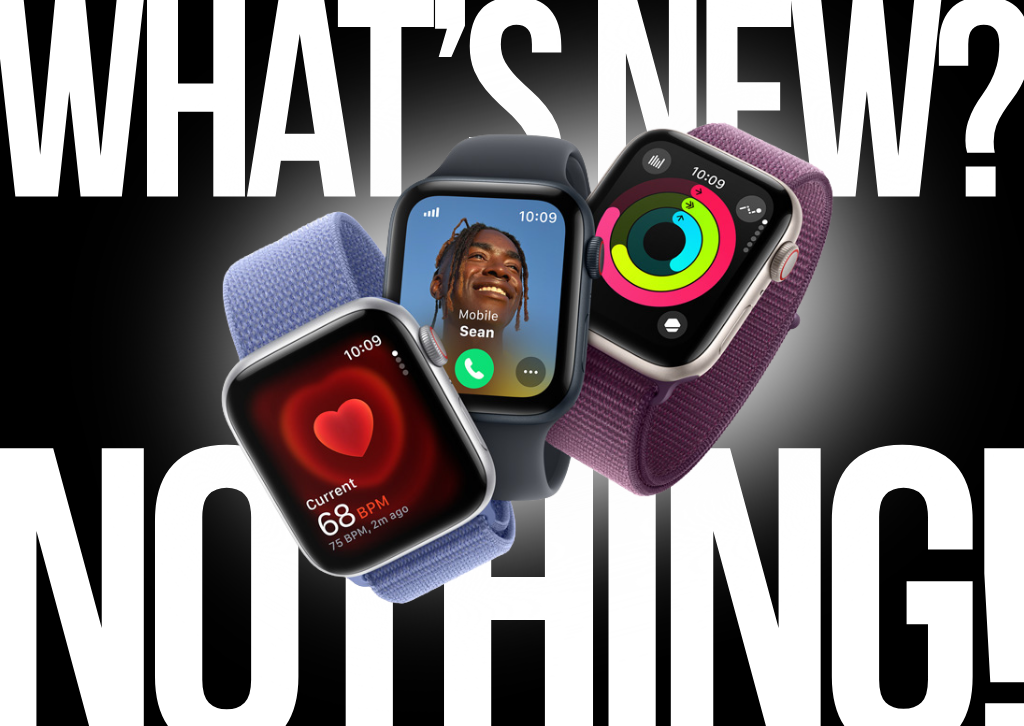
When the Apple Watch launched in 2015, it promised to do for wearables what the iPhone did for smartphones. Nearly a decade later, it remains essentially the same rectangular screen strapped to your wrist, with incremental sensor additions and slightly refined cases.
Compare this to the innovation happening elsewhere in wearables. Companies are experimenting with circular displays, advanced health monitoring that goes beyond heart rate and blood oxygen, and integration with broader smart home ecosystems. Samsung’s Galaxy Watch line has pushed into new territory with rotating bezels, longer battery life, and more open app ecosystems. Google’s Pixel Watch brings together Fitbit’s health tracking heritage with deeper Android integration.
Meanwhile, Apple’s updates feel like ticking boxes on a spec sheet rather than solving real problems. A slightly faster processor. A minor redesign. Another health sensor that works only in limited circumstances. Where’s the innovation that makes you say “I need to upgrade”? Where’s the feature that fundamentally changes how we think about wearable technology?
The Apple Watch has become the perfect metaphor for modern Apple: competent, polished, expensive, and utterly predictable.
The Foldable Future Apple Refuses to Embrace
Perhaps nowhere is Apple’s innovation deficit more glaring than in its complete absence from the foldable device market. While competitors have spent years iterating, improving, and refining foldable technology, Apple watches from the sidelines, apparently content to let others define the future of mobile computing.
Huawei’s Mate X series has evolved through multiple generations, with devices like the Mate X5 and Mate XT Ultimate Design offering stunning displays that fold seamlessly, providing tablet-sized screens in phone-sized packages. These aren’t concept devices or expensive experiments—they’re increasingly mainstream products that millions of users have adopted.
Samsung’s Galaxy Z Fold and Z Flip lines have matured considerably, with the latest iterations featuring durable hinges, minimal creasing, and software optimized for multitasking across multiple screen configurations. The Galaxy Z Fold 7 represents the culmination of years of refinement, offering a genuinely versatile device that adapts to different use cases throughout the day.
Google has entered the space with the Pixel Fold, bringing its computational photography expertise and clean Android experience to a foldable form factor that feels thoughtfully designed rather than gimmicky.
These devices represent genuine innovation—the willingness to experiment with new form factors that might fundamentally change how we use technology. They’re not perfect, but they represent progress, evolution, and most importantly, courage.
Apple, meanwhile, releases rumors and patents about foldable devices while shipping yet another rectangular glass slab. The iPhone remains trapped in a design language established over a decade ago, with changes so incremental that cases from multiple generations often remain compatible. Where Samsung users can choose between traditional smartphones or devices that unfold into tablets, Apple users get to choose between three sizes of essentially the same phone.
The message is clear: Apple will wait until foldables are safe, proven, and commodified before entering the market. This is the opposite of the company that launched the iPhone when the entire industry thought smartphones needed keyboards.
Vision Pro: A Billion-Dollar Miscalculation

If Apple’s incremental updates demonstrate a lack of ambition, the Vision Pro represents ambition utterly disconnected from market reality. Priced at $3,499, Apple’s entry into mixed reality feels like a product designed by engineers who never asked whether anyone actually wanted it.
The Vision Pro is undeniably impressive from a technical standpoint. The display resolution is remarkable, the eye-tracking technology works well, and the industrial design maintains Apple’s premium aesthetic. But none of this addresses the fundamental question: what problem does this solve that justifies its existence?
Users sit alone, isolated by the headset, navigating interfaces that work better on traditional screens. The device is heavy, uncomfortable for extended use, and prohibitively expensive for all but the most devoted early adopters or professionals with specific use cases. The app ecosystem remains sparse, and the use cases that would justify the investment remain elusive.
Meanwhile, Meta took a completely different approach with Ray-Ban Meta smart glasses. Rather than trying to replace our devices with an isolated VR experience, Meta created glasses that augment reality while maintaining social connection and normal interactions. You can capture photos and videos from your perspective, take calls, listen to music, and access AI assistance—all while still engaging with the world around you. They look like normal glasses, cost a fraction of the Vision Pro’s price, and solve actual problems people have in their daily lives.
The contrast couldn’t be clearer. Apple swung for the fences with a product virtually no one needs at a price almost no one can afford. Meta created something genuinely useful, accessible, and integrated into normal life. Which approach sounds more like the revolutionary Apple of old?
The iPhone’s Incremental Infinity
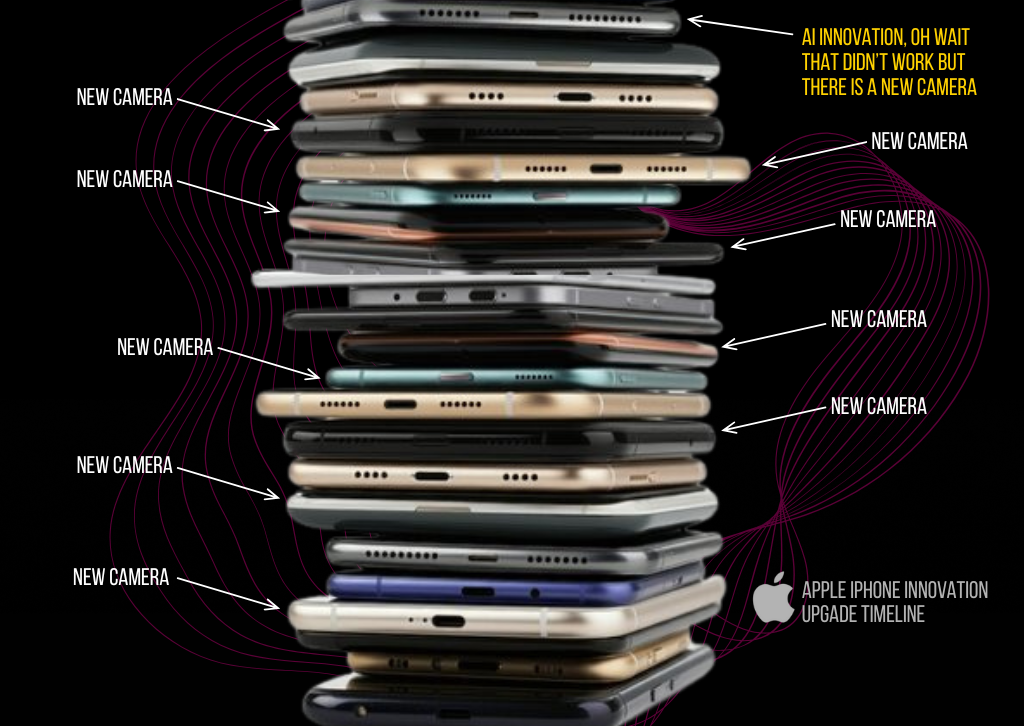
Perhaps nothing exemplifies Apple’s innovation problem more than the iPhone’s evolution over the past decade. Each year brings a new model with marginal improvements presented as revolutionary breakthroughs. A slightly better camera system. A modestly faster processor. A minor design tweak. And that’s about it.
The iPhone 17 Pro cameras are excellent—among the best in the industry. But so were the cameras on the iPhone 16 Pro. And the 15 Pro before that. The improvements between generations have become so subtle that most users would struggle to identify which phone took which photo in a blind comparison.
Compare this to the innovation happening in the Android ecosystem. Samsung’s Galaxy S series integrates AI features that genuinely enhance the user experience, from real-time translation in phone calls to advanced photo editing capabilities. Google’s Pixel phones leverage computational photography to deliver stunning results from more modest hardware, demonstrating that innovation isn’t just about bigger sensors.
Foldable phones aside, competitors are experimenting with under-display cameras, advanced zoom capabilities, and AI integration that goes beyond simple filters. They’re taking risks, some of which fail, but failure is part of innovation.
Apple, meanwhile, has settled into a comfortable pattern: take last year’s phone, improve the camera slightly, bump the processor, maybe adjust the color options, and call it a new generation. This isn’t innovation; it’s iteration for the sake of maintaining a release cycle.
The Tim Cook Era: Operational Excellence Over Revolutionary Vision
It’s impossible to discuss Apple’s innovation challenges without addressing leadership. Tim Cook is an operations genius who transformed Apple into the most valuable company in the world. Under his leadership, Apple’s supply chain efficiency, profit margins, and market capitalization have reached unprecedented heights.
But operational excellence isn’t visionary leadership. Cook’s Apple is a company that perfects existing products rather than imagining new categories. It protects market share rather than creating new markets. It looks to China for manufacturing efficiency and market expansion rather than focusing on creating products so compelling that global demand becomes inevitable.
The emphasis on China is particularly noteworthy. While expanding into the world’s largest market makes obvious business sense, the focus sometimes feels disproportionate to innovation efforts. Resources and attention directed toward navigating Chinese regulations, manufacturing relationships, and market positioning might be better spent on breakthrough products that would sell themselves globally.
Steve Jobs’ Apple took massive risks. It killed successful products to make room for better ones. It entered markets where it had no presence with products that redefined categories. It was willing to be wrong, to fail, to learn, and to try again.
Tim Cook’s Apple calculates risk to six decimal places and proceeds only when success seems virtually guaranteed. This makes shareholders happy and keeps the stock price climbing, but it doesn’t change the world.
What Real Innovation Looks Like
To understand what Apple has lost, look at what competitors are achieving.
Meta is making massive bets on AI and mixed reality, creating products like the Quest headsets that democratize VR and smart glasses that integrate seamlessly into daily life. These aren’t guaranteed winners, but they represent genuine attempts to pioneer new categories.
Google continues to push boundaries with AI integration across its hardware ecosystem. The Pixel phones showcase what’s possible when software and hardware are designed together with AI as a foundational element, not an afterthought. Features like Magic Eraser, Best Take, and Audio Magic Eraser demonstrate innovation in user experience rather than just specifications.
Samsung’s foldable devices have evolved from curiosities to legitimate mainstream options, with each generation addressing previous limitations. The Galaxy Z Flip brings foldable technology to a more accessible price point, while the Z Fold caters to power users wanting maximum versatility. Samsung took risks, weathered criticism about early durability issues, and persevered to create genuinely innovative products.
Huawei, despite facing significant geopolitical challenges, continues to push technological boundaries. The Mate series showcases advanced camera systems, foldable displays, and integration with broader ecosystem devices. The company’s willingness to experiment with form factors like the tri-fold Mate XT demonstrates the kind of bold thinking that Apple once embodied.
These companies are making bets. They’re trying new things. Some will succeed, others will fail, but they’re all moving forward while Apple seems content to optimize yesterday’s ideas.
The Cost of Playing It Safe
Apple’s current strategy is financially successful—no one can argue with the numbers. But financial success and innovation aren’t the same thing, and the cost of prioritizing the former over the latter is starting to show.
The tech industry’s most exciting developments are happening without Apple’s involvement. Foldable devices, AI integration, mixed reality glasses, advanced camera systems that use computational photography rather than just bigger sensors—these innovations are coming from companies willing to risk failure in pursuit of breakthrough products.
Apple used to set the agenda. Other companies responded to what Apple created. Now, Apple responds to what others create, entering markets only after competitors have absorbed the risks and proven the concepts.
This might be a sustainable business strategy, but it’s not the Apple that changed the world. It’s not the company that had the courage to remove the floppy drive, the CD drive, and the headphone jack because it saw a better future. It’s not the company that bet everything on a touchscreen phone when the entire industry thought physical keyboards were essential.
What Apple Could Be
The frustration with Apple comes from knowing what the company is capable of achieving. Apple has the resources, talent, and ecosystem to create genuinely revolutionary products. The M-series chips prove it still has engineering excellence. The ecosystem integration shows it understands how devices should work together. The brand loyalty demonstrates users trust Apple to get things right.
Imagine an Apple that brought that excellence to foldable devices, creating the most refined, polished foldable phone on the market. Imagine Apple’s industrial design expertise applied to truly innovative wearables that go beyond the watch form factor. Imagine if Apple approached AI integration with the same thoughtfulness it once brought to touch interfaces.
These products might exist in Cupertino laboratories. The engineers probably have prototypes that would amaze us. But somewhere between the lab and the keynote stage, courage gives way to caution, and revolutionary becomes incremental.
The Path Forward
Apple doesn’t need to copy competitors, but it does need to remember what made it special. The company that changed personal computing, mobile phones, and tablets didn’t succeed by being careful. It succeeded by having vision, courage, and a willingness to risk failure in pursuit of breakthrough products.
The tools are there. The talent exists. The resources are unlimited. What’s missing is the hunger to create something that doesn’t exist yet, the willingness to be wrong, and the courage to bet big on bold ideas.
Until that changes, we’ll keep getting new iPads with faster chips, MacBooks in limited configurations, watches with incremental improvements, and phones that look identical to their predecessors. We’ll keep watching competitors pioneer new categories while Apple perfects last decade’s ideas.
The revolution won’t be televised at an Apple keynote anymore. It’s happening everywhere else, created by companies hungry enough to risk it all on an idea that might change everything.
For those of us who remember what Apple once was, that’s the most frustrating thing of all. We’re not angry because Apple is bad—we’re frustrated because it could be so much more than merely good. The gap between Apple’s potential and its current ambitions represents the greatest innovation failure of the decade: the choice not to innovate when innovation matters most.


The best tech-related articles and reviews are here at www.thetechreview.net