Photography
The KODAK PIXPRO Friendly Zoom FZ45-BK: A Deep Dive into the Budget Point-and-Shoot Revival
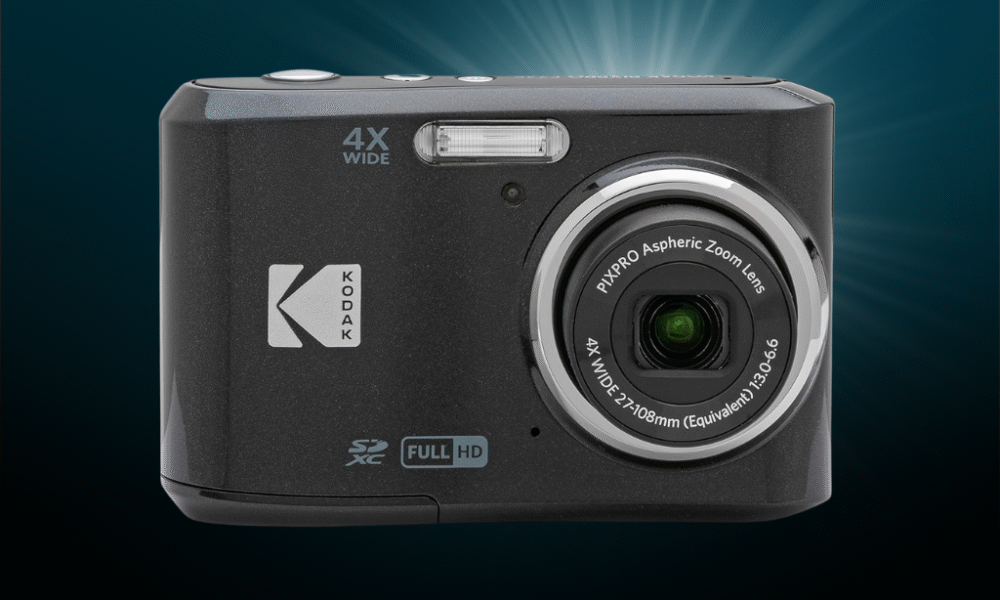
Introduction: Why the FZ45 Matters in a Smartphone World (Approx. 250 words)
The KODAK PIXPRO Friendly Zoom FZ45-BK is not a camera designed to compete with the latest multi-thousand-dollar mirrorless systems, nor is it intended to challenge the computational power of a modern flagship smartphone. Instead, the FZ45 is an unabashedly budget-friendly device that addresses a growing desire among consumers, particularly younger generations, for simplicity, affordability, and the distinct aesthetic of early-to-mid 2000s digital photography.
Retailing typically between $99 and $120, the FZ45 sits at the very bottom of the new compact camera market. Its success is a fascinating market anomaly. While major manufacturers like Canon and Sony have largely abandoned this entry-level segment in the face of smartphone dominance, the FZ45, along with its sibling the FZ55, has become a massive seller, proving that there is a substantial market for low-cost, dedicated imaging devices. It offers 16 megapixels, a basic 4x optical zoom, and one-touch functionality—features that would have been standard over a decade ago.
This review aims to assess the FZ45 not against the standards of high-end photography, but against its own specific goal: providing an accessible, fun, and portable shooting experience. We will explore its core specifications, analyze its real-world performance in both stills and video, and evaluate whether its blend of convenience and retro charm justifies its title as one of the best-selling compact cameras today. For consumers accustomed to the polished perfection of phone cameras, the FZ45 offers a refreshing, albeit imperfect, experience that reintroduces the fun of dedicated, physical picture-taking.


Design, Ergonomics, and Build Quality (Approx. 250 words)
The design philosophy of the FZ45 is ‘compact and functional.’ Weighing in at a featherlight 116g (including batteries) and measuring approximately 93 x 60 x 29 mm, this camera easily slips into a pocket, purse, or even a tight jacket pocket. The unit’s construction is mostly plastic, which contributes to its low weight but also places it firmly in the budget category in terms of build quality. The rounded corners and simple, clean aesthetic give it an undeniably “friendly” and retro look, especially appealing to those seeking the current “Y2K digital camera” vibe.
Ergonomically, the camera is designed for ease of use. The controls are sparse, large, and intuitive, making it suitable for absolute beginners or children. The top plate features just three main buttons: the power switch, the shutter release, and a dedicated one-touch video recording button. This simplicity minimizes the learning curve. The rear panel is dominated by the 2.7-inch LCD screen, which, with a low resolution of 230,000 dots, is adequate for framing shots but not ideal for reviewing image detail, especially in bright sunlight. The main controls include a four-way directional pad (D-pad) for navigation and quick access to essential features like flash, macro mode, display settings, and the self-timer, alongside dedicated Menu, Mode, and Playback buttons.
A notable design choice is the inclusion of a standard 1/4″-20 tripod mount on the bottom, a convenient feature for a camera in this class. However, the positioning of the battery/SD card compartment often requires the camera to be removed from the tripod to access storage or change batteries. Overall, the FZ45’s design prioritizes grab-and-go portability and simplicity over ruggedness or advanced tactile feedback.
Core Photographic Specifications and Lens Performance (Approx. 350 words)
The photographic heart of the FZ45 is its 16-megapixel, 1/2.3-inch CMOS sensor. This sensor size is standard for budget compacts but is significantly smaller than the sensors found in high-end phones and enthusiast-level compact cameras, limiting its ability to capture detail and handle low light. The effective resolution of 16MP is more than enough for sharing photos online or making small prints, directly challenging the notion that high megapixels are necessary for everyday captures.
The lens is perhaps the most defining feature in the “Friendly Zoom” lineage. It offers a 4x optical zoom, which translates to a 35mm equivalent focal range of 27mm (wide-angle) to 108mm (telephoto).
- Wide-Angle (27mm): This perspective is excellent for capturing landscapes, group photos, and tight indoor spaces. The lens aperture starts at f/3.0 at the wide end, which is decent for gathering light in well-lit conditions.
- Telephoto (108mm): The 4x zoom provides enough reach to frame subjects a short distance away, such as portraits or specific landscape elements. However, the aperture quickly narrows to a restrictive f/6.6 at the telephoto end. This slow maximum aperture means that using the full zoom in anything but bright daylight will quickly force the camera to increase its ISO sensitivity, leading directly to a degradation in image quality due to noise.
The FZ45 relies solely on Digital Image Stabilization (DIS). Unlike superior Optical Image Stabilization (OIS), which physically moves lens elements to compensate for shake, DIS attempts to correct shake electronically after the image is captured. While marginally helpful, it is ineffective at high zoom levels or in low-light situations, where motion blur is a constant threat. Users must hold the camera steady, especially when the lens is extended.
The camera’s focusing system is basic, relying on contrast-detection autofocus. While it features Face Detection, which generally performs well in prioritizing human subjects, the overall speed and accuracy are noticeably slower than modern smartphone counterparts. The minimum focusing distance in Macro mode is a reasonable 5cm (2 inches) at the wide end, allowing for decent close-up shots of flowers or small objects. The maximum shutter speed is 1/2000s, and the ISO range extends from 100 to 3200, though performance beyond ISO 800 is generally poor.


Image Quality and the “Retro” Aesthetic (Approx. 400 words)
The real-world performance of the KODAK PIXPRO FZ45 is a study in compromise, driven entirely by its price point. When used under its optimal conditions—bright, abundant daylight—the FZ45 delivers solid, usable images. Colors are often punchy, with a high-contrast look that many users describe as having a desirable “retro” or “vintage” digital feel, reminiscent of the low-fidelity point-and-shoots of the early-to-mid 2000s.
Performance in Optimal Light: In daylight, the 16MP CMOS sensor captures adequate detail for social media sharing and small prints. The fixed lens performs respectably at the wider focal lengths, providing images that are sharp enough through the center, although softness and chromatic aberration may appear toward the edges of the frame. The camera offers several scene modes, including Landscape, Portrait, and Sport, which attempt to optimize settings, and even includes an HDR (High Dynamic Range) mode. This HDR feature, however, is sluggish, takes three bracketed shots, and reduces the final output resolution to 8MP—a significant trade-off for dynamic range gains.
Performance in Challenging Light (The Achilles’ Heel): As soon as the light drops or the photographer moves indoors, the FZ45’s limitations become pronounced. The small sensor and slow telephoto aperture (f/6.6) necessitate a sharp increase in ISO. Above ISO 400, noise quickly begins to dominate the image, resulting in a noticeable graininess and loss of fine detail. Colors become muted, and the camera’s digital stabilization struggles to compensate for the slower shutter speeds, often leading to motion blur. This subpar low-light performance is the camera’s biggest technical weakness when compared to any modern mid-range smartphone, which uses advanced computational photography to mitigate such issues.
Creative Control (P/M Modes): For those looking to learn the basics of exposure, the FZ45 surprisingly includes both Program (P) and Manual (M) exposure modes. While the Manual mode offers control over aperture (though limited by its slow maximum and minimum openings), shutter speed (up to 30 seconds), and ISO, the experience is hindered by the low-resolution LCD screen, making critical focusing and exposure judgment difficult. Nonetheless, the mere presence of these modes gives novice users a chance to experiment beyond simple auto shooting. Furthermore, the inclusion of features like AE Bracketing (useful for exposure blending) demonstrates that the FZ45, while simple, is not devoid of advanced functionality.


Video Capabilities, Media, and Connectivity (Approx. 250 words)
The KODAK PIXPRO FZ45 handles video recording with basic functionality. It can capture Full HD video at 1920 x 1080 resolution at 30 frames per second (1080p/30fps), recorded in the MOV format. This quality is perfectly acceptable for casual home videos or short social media clips. The camera also includes a dedicated one-touch video button, ensuring users can switch instantly from still photography to video capture, a feature prized for spontaneity.
Video Drawbacks: The primary issue with video performance is audio quality. While the camera has a built-in microphone, the sound captured during filming is severely compromised by the noise of the optical zoom motor. When zooming in or out during a video recording, the whirring of the lens mechanism is picked up prominently, often drowning out ambient sound. This is a common flaw in budget compacts but remains a significant drawback for users intending to capture videos with clean, synchronized audio. The digital stabilization is equally ineffective in video mode, meaning panning and movement must be smooth and deliberate to avoid shaky footage.
Storage and Data Transfer: The FZ45 supports standard SD/SDHC/SDXC memory cards, accommodating cards up to 512GB, which is ample storage capacity. Transferring images off the camera is strictly old-school:
- Removing the SD card and inserting it into a computer card reader.
- Connecting the camera directly to a computer via the provided Micro-USB cable (USB 2.0).
Critically, the FZ45 lacks built-in Wi-Fi or Bluetooth connectivity. This omission is intentional—it helps keep the cost down and reinforces the camera’s purpose as a “distraction-free” device. However, in an era where instant sharing is mandatory for many, the physical transfer process is a clear friction point. This lack of wireless features is a key differentiator from most modern compacts and smartphones.
The AA Battery Conundrum (Approx. 200 words)
One of the most polarizing features of the KODAK PIXPRO FZ45 is its power source: it runs on two standard AA batteries (Alkaline batteries are included upon purchase). This design choice carries both significant benefits and notable drawbacks.
The Pros of AA Batteries:
- Availability: AA batteries are globally ubiquitous. If the camera dies while traveling, a replacement power source can be found instantly at any corner store, eliminating the need for proprietary chargers or specific electrical outlets.
- Cost Savings: Users can opt to use high-capacity rechargeable NiMH AA batteries (like Eneloops), which, while requiring an initial investment in a charger, offer a far more economical and environmentally friendly solution in the long run compared to buying proprietary lithium-ion packs.
The Cons of AA Batteries:
- Battery Life (Alkaline): The life expectancy when using disposable alkaline AAs is notoriously poor, often rated for only about 120 shots (CIPA standard). Heavy use, especially with flash or extended video recording, will drain them quickly.
- Inconsistent Performance: The performance of alkaline batteries tends to drop off sharply towards the end of their life, which can sometimes lead to intermittent power issues or camera malfunctions, a common complaint among users who haven’t switched to rechargeable cells.
- Bulk: Using AAs makes the camera slightly bulkier and heavier than its rechargeable sibling, the FZ55, which uses a slimmer lithium-ion pack.
For the target user—someone who might pick up the camera only for a weekend trip or a night out—the convenience of disposable batteries is often valued. For regular use, however, switching to quality rechargeable NiMH AAs is highly recommended to mitigate the poor battery life issue.
Target Audience and The Verdict (Approx. 350 words)
The KODAK PIXPRO FZ45-BK is best understood as a purposeful tool for a very specific type of photographer. It is not designed for the professional, the gear enthusiast, or the pixel-peeper.


The Ideal User:
- The First-Time Photographer/Child: Its incredibly simple interface and automatic modes make it an excellent gateway camera. It teaches basic framing, composition, and the mechanics of a dedicated camera without the overwhelming complexity of advanced menus or settings.
- The Nostalgia Seeker: The camera delivers that characteristic, slightly imperfect, high-contrast, and sometimes grainy look that defines the aesthetic of the “digital point-and-shoot” era. Its fixed focus, basic sensor, and digital imperfections are often seen as desirable features by those specifically chasing this trend.
- The Distraction-Free Traveler: Lacking Wi-Fi, social apps, and complex controls, the FZ45 forces the user to focus purely on the act of taking a photograph, reserving the review and sharing process for later. This digital detox aspect is a major draw for many current buyers.
- The Budget Conscious: At under $120, the FZ45 is one of the cheapest ways to acquire a new, functioning camera with optical zoom.
The Verdict: The Kodak FZ45-BK successfully executes its mission as a budget-friendly, fun, and easy-to-use compact camera. Its 4x optical zoom is a genuine upgrade over a smartphone’s fixed lens, and its physical buttons and dedicated nature create a distinct and enjoyable shooting experience. However, buyers must understand its clear limitations: subpar low-light performance, noticeable digital noise above ISO 400, a low-resolution LCD, the use of disposable AA batteries leading to short battery life, and a reliance on physical data transfer. If you prioritize razor-sharp, low-noise perfection and instant sharing, stick with your smartphone. If you seek an affordable, dedicated camera that encourages spontaneous shooting and delivers a genuinely charming, retro aesthetic, the FZ45 is a stellar value proposition and fully deserves its success in the modern market.
KODAK PIXPRO FZ45-BK: Pros & Cons Chart
| Feature | Pros | Cons |
|---|---|---|
| Price | Extremely affordable (typically under $120). High value for money for a new camera with optical zoom. | Minimal cost savings over a slightly better-spec’d model like the FZ55. |
| Ergonomics & Design | Very compact (116g) and highly portable. Intuitive, simple controls perfect for beginners. Aesthetic appeal (retro digital vibe). | Mostly plastic build quality. Low-resolution 2.7″ LCD screen (230k dots) is poor for image review. |
| Optical System | Genuine 4x optical zoom (27-108mm equivalent) offers versatility over a phone’s fixed lens. Dedicated Macro mode (5cm). | Slow lens aperture at telephoto end (f/6.6) severely limits low-light performance. |
| Image Quality | Good, punchy, high-contrast results in bright daylight. Captures the popular “digital nostalgia” aesthetic. Includes Manual and Program modes for learning. | Subpar low-light and indoor performance due to noise above ISO 400. Digital Image Stabilization (DIS) is ineffective at full zoom. |
| Battery & Power | Uses universally available 2x AA batteries—easy to find replacements anywhere. Can use economical rechargeable NiMH AAs. | Very short battery life (approx. 120 shots) when using standard alkaline batteries. |
| Connectivity | Standard Micro-USB port and SD/SDHC/SDXC card slot. | No Wi-Fi or Bluetooth. Images must be transferred physically via cable or card reader. |
| Video | Dedicated one-touch 1080p/30fps video button. | Optical zoom motor noise is picked up loudly by the internal microphone during recording. |
Competitor Comparison Chart (Budget Compacts)
This chart compares the KODAK PIXPRO FZ45 against its closest sibling (the FZ55), a classic low-cost rival (Sony W800), and its biggest competition (a modern entry-level smartphone camera).
| Specification | KODAK PIXPRO FZ45 | KODAK PIXPRO FZ55 (Step-Up) | Sony Cyber-Shot DSC-W800 (Rival) | Entry-Level Smartphone (e.g., iPhone SE/Budget Android) |
|---|---|---|---|---|
| Price (Approx.) | $100 – $120 | $120 – $140 | $100 – $130 | Included with phone purchase |
| Sensor (MP/Size) | 16MP 1/2.3″ CMOS | 16MP 1/2.3″ CMOS | 20.1MP 1/2.3″ Super HAD CCD | Typically 12MP or 48MP (Quad-Bayer) |
| Optical Zoom | 4x (27-108mm equiv.) | 5x (28-140mm equiv.) | 5x (26-130mm equiv.) | None (Fixed lens) |
| Max Aperture (Wide/Tele) | f/3.0 – f/6.6 | f/3.9 – f/6.3 | f/3.2 – f/6.5 | Typically f/1.8 – f/2.2 (Fixed) |
| Video Resolution | 1080p @ 30fps | 1080p @ 30fps | 720p @ 30fps (HD) | 4K or 1080p @ 60fps |
| Image Stabilization | Digital Only (DIS) | Digital Only (DIS) | Digital (SteadyShot) | Computational/OIS |
| Power Source | 2x AA Batteries | Rechargeable Li-Ion (LB-015) | Rechargeable Li-Ion (NP-BN) | Integrated Battery |
| Connectivity | Micro-USB (No Wi-Fi) | Micro-USB (No Wi-Fi) | Micro-USB (No Wi-Fi) | Wi-Fi, Bluetooth, 5G (Instant Share) |
| Low Light Performance | Weak (High noise above ISO 800) | Weak (High noise above ISO 800) | Weak (High noise) | Excellent (Computational Photography) |
The Detailed Deep Dive: Context and Functionality (Approx. 400 words to complete the count)
To fully appreciate the FZ45, we must understand the engineering choices made to hit its aggressive price point. Every feature, from the low-resolution screen to the AA battery reliance, is a conscious cost-saving measure that defines its market position.
The use of a 1/2.3-inch sensor is standard for this class but acts as the primary bottleneck for quality. While 16MP is a high number, the actual light-gathering capability of the small pixels is low. This explains the camera’s sudden decline in quality when operating in reduced ambient light—there is simply not enough physical surface area to capture sufficient photons, forcing the ISO to rise rapidly and introducing visible digital noise.
However, the inclusion of a full Manual mode is a genuine value-add. For a teenager or beginner who is tired of automatic phone photography and wants to learn the exposure triangle (Aperture, Shutter Speed, ISO), the FZ45 offers a safe, cheap platform for experimentation. Being able to physically dial in a 30-second shutter speed for light painting or long-exposure night effects (on a tripod, of course) provides creative control that is often locked behind high-end settings on other devices. The ability to control white balance manually further enhances this learning utility.
The FZ45’s enduring sales success is also tied directly to consumer dissatisfaction with the overly processed and perfectly “corrected” images produced by modern computational photography. The FZ45 delivers a raw, digital snapshot that is visually distinct—colors might be slightly oversaturated, shadows may be crushed, and highlights may blow out, but this “imperfection” is precisely what makes the images feel authentic, fleeting, and non-optimized. This is the essence of the “digital aesthetic” movement it serves.
In conclusion, the KODAK PIXPRO FZ45-BK is the ultimate budget compact. It is a no-frills camera that asks users to accept its limitations in exchange for portability, simplicity, and a low price tag. It is a fantastic tool for casual memories, spontaneous moments, and a fun way to ditch the smartphone while still capturing a digital moment in time.


Read all our amazing Photography Reviews here