Photography
The Mid-Range Redefined: A Comprehensive Review of the Nikon Z6 III
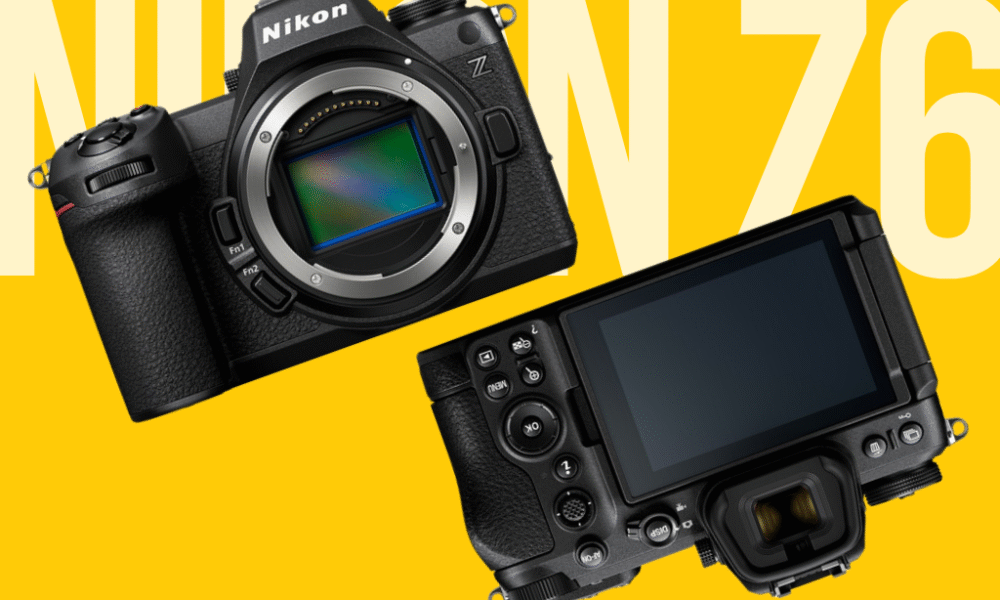
The introduction of the Nikon Z6 III has sent ripples through the mirrorless camera market, signaling a fierce new phase in the battle for the mid-range hybrid crown. Positioned as the successor to the highly regarded Z6 II, the Z6 III doesn’t simply offer iterative improvements; it integrates groundbreaking technology inherited from its high-end siblings, the Z8 and Z9, most notably the world’s first partially-stacked CMOS sensor and a class-leading electronic viewfinder (EVF).
This comprehensive review explores how Nikon has managed to blend professional-grade speed and video capability into a compact, accessible chassis, effectively setting a new benchmark for what a sub-flagship, full-frame camera should deliver for both still photographers and cinematographers.
1. Introduction: A New Hybrid Standard
For years, the mid-range full-frame market has been characterized by trade-offs: faster burst rates meant sacrificing resolution, and high-end video often came with heavy crop factors or external recorder requirements. The Nikon Z6 III, however, arrives with a clear mandate to minimize those compromises.
Nikon’s design philosophy here is evident: to leverage the speed benefits of stacked sensor technology—previously exclusive to flagship models—and democratize them for a broader audience. The result is a camera that feels less like a step up from the Z6 II and more like a scaled-down, highly optimized Z8, delivering blistering speed, exceptional autofocus, and robust video specifications that significantly outperform its direct competition at launch. The Z6 III is engineered for the modern hybrid shooter—the professional second-shooter, the advanced enthusiast, and the content creator who demands uncompromising performance in a manageable package.
2. Design, Build, and Ergonomics
Nikon has maintained the familiar, trusted body design of the Z-series, a choice that will comfort existing users while remaining highly competitive ergonomically.
2.1. Body and Weather Sealing
The Z6 III utilizes a robust construction featuring magnesium alloy elements, providing both durability and a reassuring heft. The camera feels solid and capable, built to withstand the rigors of professional use. Crucially, Nikon has significantly enhanced the weather sealing compared to its predecessor, adopting a level of dust and drip resistance comparable to the Z8. This confidence-inspiring sealing extends across all seams, ports, and battery doors, making it a reliable tool for shooting in adverse conditions—a vital characteristic for wedding, landscape, and documentary photographers.
2.2. Handling and Grip
The deep, sculpted grip remains a Nikon hallmark. It is sufficiently deep and textured to provide a secure hold, even with long telephoto lenses attached, ensuring minimal hand fatigue during extended sessions. The button layout is intuitive, prioritizing access to key functions like ISO, exposure compensation, and AF-ON. Nikon has smartly retained the familiar command dial positions and function button placement, allowing photographers coming from DSLRs or earlier Z bodies to feel immediately at home. The dual card slot configuration—one high-speed CFexpress Type B slot and one versatile SD UHS-II slot—is an essential professional inclusion, offering both speed and data redundancy.
3. The Revolutionary Partially-Stacked Sensor
The core innovation of the Z6 III is its 24.5-megapixel BSI (Backside-Illuminated) CMOS sensor, featuring a partially-stacked design. This is a critical distinction from traditional BSI sensors and the fully-stacked chips found in the Z8 and Z9.
3.1. Understanding the Technology
A fully-stacked sensor integrates the image area and high-speed processing circuitry into a single physical stack, offering maximum speed but higher complexity and cost. The Z6 III’s partially-stacked design selectively integrates critical high-speed read-out circuitry around the top and bottom of the imaging area, leaving the bulk of the BSI structure intact.
The result is a sensor that achieves exceptionally fast read speeds—significantly faster than the Z6 II or its direct competitors—while managing costs and heat generation more effectively than a fully-stacked design. For the end-user, this translates into two profound benefits:
- Reduced Rolling Shutter: The accelerated read-out minimizes the ‘jello’ effect common with electronic shutters, making the Z6 III far more practical for high-speed action, video panning, and using the silent shutter.
- Faster Continuous Shooting: It enables the camera’s blistering burst speeds, backed by the EXPEED 7 processor.
3.2. Image Quality and Dynamic Range
Despite the focus on speed, the sensor delivers superb image quality. At 24.5MP, it strikes a near-perfect balance, offering files that are large enough for significant cropping yet manageable for storage and processing.
- Low Light: Nikon’s color science and noise reduction algorithms shine. The camera produces exceptionally clean files up to ISO 6400, and even ISO 12800 remains highly usable for journalistic or documentary work. The BSI architecture ensures efficient light capture, giving it a marginal advantage in low-light dynamic range compared to older non-BSI designs.
- Dynamic Range: The dynamic range is excellent, allowing for significant recovery of highlight detail and deep, clean shadows, particularly in the base ISO of 100. This flexibility is invaluable for landscape and interior architecture photographers.
4. Performance: Speed and Autofocus
The Z6 III pairs its new sensor with the flagship-level EXPEED 7 image processor—the same engine powering the Z8 and Z9. This synergy defines the camera’s speed profile and overall responsiveness.
4.1. Continuous Shooting
The burst rates are transformative for this class:
- 14 fps (Mechanical Shutter): A robust speed using the reliable mechanical shutter.
- 20 fps (Electronic Shutter – Full Resolution RAW): This is a standout feature, allowing full-quality capture at high speed silently.
- 120 fps (Electronic Shutter – JPEG, 11MP): For fleeting moments, the 120 fps mode offers incredible coverage, albeit at a reduced resolution, making it perfect for capturing the precise peak of action.
Crucially, the buffer depth is significantly improved, allowing for extended bursts without debilitating slowdowns, a direct benefit of the fast sensor read-out and the EXPEED 7’s power.
4.2. Autofocus System: The Flagship Legacy
The Z6 III inherits the Z8/Z9’s sophisticated 3D Tracking and subject detection algorithms, instantly elevating its AF game above its competition.
- Subject Detection: The system features deep learning-based subject detection, capable of recognizing and tracking nine distinct subject types: people (eyes, face, body), animals (dogs, cats, birds), and vehicles (cars, motorcycles, bicycles, airplanes, trains). The speed and tenacity of the tracking are remarkable; once locked on, the camera sticks to the subject with Z9-like tenacity, even in challenging environments with intermittent obstruction.
- Low-Light Sensitivity: The AF system works reliably down to -10 EV (with a wide-aperture lens), making it highly effective for wedding receptions, concerts, and astrophotography focusing.
- Reliability: For years, Canon and Sony led in mid-range AF performance. The Z6 III definitively closes that gap, offering a system that is consistently reliable, intuitive to configure, and rapid in acquisition.
5. Video Specifications and Functionality
The Z6 III is not just a stills camera with video tacked on; it is a professional-grade cinema tool in a small body.
5.1. Internal RAW and Oversampling
The headline feature is the ability to record 6K/60p N-RAW internally and 6K/30p ProRes RAW internal—no external recorder required. This capability is unprecedented in this camera class and offers filmmakers unparalleled post-production flexibility and dynamic range retention.
The standard video output is equally impressive:
- 4K/60p: The Z6 III records stunning 4K video by oversampling from the full 6K sensor width, resulting in exceptionally sharp, detailed, and clean footage.
- 10-bit H.265/N-Log/HLG: Professional codecs and profiles are available internally, providing the necessary color grading latitude for serious video projects.
5.2. Heat Management and Usability
Heat management has been a significant concern for high-resolution, high-frame-rate video in compact bodies. Nikon has addressed this with improved thermal dissipation. While high-bitrate 6K recording will eventually lead to heat warnings, the camera delivers respectable recording times, particularly in the critical 4K/30p and 4K/60p modes, making it a reliable workhorse for run-and-gun shooting and interviews.
Key video features like waveform monitors, focus peaking, and a dedicated video interface complete the package, solidifying its standing as a serious video tool.
6. Viewfinder and Display: A Visual Feast
The Z6 III introduces another segment-leading feature: a drastically improved Electronic Viewfinder (EVF).
6.1. The EVF: A Game Changer
The 5.76 million-dot Quad-VGA OLED EVF is spectacular, boasting an unprecedented 4000-nit peak brightness. This brightness, combined with the high resolution and wide color gamut (DCI-P3 coverage), creates a viewing experience that is remarkably close to an optical viewfinder. Shooting in bright sunlight—the traditional Achilles’ heel of EVFs—is no longer an issue. The clarity and color accuracy of the Z6 III’s EVF are genuinely transformative, allowing for more precise manual focus and composition.
6.2. The Rear LCD
The rear monitor is a 2.1 million-dot, 3.2-inch, fully articulating vari-angle screen. This is a crucial upgrade from the tilting screen of the Z6 II, offering maximum flexibility for high-angle, low-angle, and selfie-style shooting. The articulation is fluid and robust, satisfying the demands of both video loggers and stills photographers working at awkward angles.
7. Connectivity and Battery Life
The Z6 III is powered by the popular EN-EL15c battery. While official CIPA ratings are modest (typical for mirrorless), real-world performance is respectable, often exceeding 700 shots in power-saving mode or during moderate, intermittent use. Heavy video use or sustained high-speed burst shooting will, of course, necessitate spares, but the power efficiency of the EXPEED 7 chip keeps the camera competitive. USB-C Power Delivery allows for in-camera charging and continuous power while shooting, which is essential for studio or time-lapse work.
The camera offers excellent connectivity, featuring full-size HDMI, a USB-C port, and microphone/headphone jacks.
8. Conclusion: A Triumph of Technology and Value
The Nikon Z6 III is arguably the most significant camera launch in the mid-range segment in several years. It successfully leverages flagship technology—the EXPEED 7 processor and advanced AF algorithms—and combines it with a revolutionary partially-stacked sensor and a class-leading EVF.
The Z6 III’s unique selling proposition lies in its ability to offer near-flagship speed and internal 6K RAW video capability in a body that remains lightweight and competitively priced. It eliminates the traditional compromises of the mid-range: the AF is flawless, the burst rate is exceptional, and the video specifications rival cameras costing thousands more.
Who is this camera for?
- The Serious Hybrid Shooter: If you shoot high-stakes events (weddings, journalism) that require both stunning stills and professional-grade video, the Z6 III is the best tool available in this price bracket.
- The Nikon Upgrade: Owners of the Z6, Z6 II, or even older DSLRs (like the D750 or D850) will find the Z6 III to be a monumental leap in performance, especially in AF speed and low-light video capability.
- The Content Creator/Videographer: The internal 6K RAW recording makes this an instant favorite for filmmakers looking for maximum quality and flexibility without the bulk or expense of cinema cameras.
The Nikon Z6 III has not just entered the market; it has forcefully raised the bar, providing compelling reasons for photographers and videographers alike to choose Nikon’s Z ecosystem. It is a brilliant piece of engineering that delivers exceptional value and uncompromising performance.
9. Pros and Cons Chart
| Feature | Pros | Cons |
|---|---|---|
| Sensor/Processor | World’s first partially-stacked 24.5MP sensor provides high-speed readout. | Resolution (24.5MP) may be low for heavy cropping compared to 33MP+ rivals. |
| Speed | Blistering 20 fps RAW and 120 fps reduced-resolution burst rates. | Mechanical shutter limited to 14 fps. |
| Autofocus | Flagship EXPEED 7 processor enables Z8/Z9-level subject detection (9 types). | Requires high-speed CFexpress card to fully utilize extreme burst buffer depth. |
| Video | Unprecedented internal 6K/60p N-RAW and 6K/30p ProRes RAW recording. | Video heat management, while improved, can still limit runtime for sustained 6K recording. |
| Viewfinder | Class-leading 5.76M-dot, 4000-nit EVF (highest brightness in the world). | Battery life remains competitive but is not class-leading compared to rivals. |
| Ergonomics | Robust, weather-sealed magnesium alloy build and deep, comfortable grip. | Single CFexpress Type B slot (paired with one SD) might limit capacity for dual-CFexpress users. |
10. Competitor Comparison Chart
The Nikon Z6 III competes directly against the mid-to-high-end hybrid models from Canon and Sony. Below is a comparison of key specifications against the Canon EOS R6 Mark II and the Sony a7 IV.
| Feature | Nikon Z6 III | Canon EOS R6 Mark II | Sony a7 IV |
|---|---|---|---|
| Sensor Type | 24.5MP Partially-Stacked BSI CMOS | 24.2MP Standard BSI CMOS | 33MP Standard BSI CMOS |
| Processor | EXPEED 7 (Flagship) | DIGIC X | BIONZ XR |
| Max Still FPS (Elec.) | 120 fps (11MP JPEG) / 20 fps (Full RAW) | 40 fps (Electronic) | 10 fps (Compressed RAW) |
| EVF Resolution | 5.76M-dot (4000 nits) | 3.69M-dot | 3.69M-dot |
| Max Internal Video | 6K/60p N-RAW / 6K/30p ProRes RAW | 4K/60p (Oversampled, slight crop) | 4K/60p (Super 35mm/APS-C crop) |
| Max 4K Video FPS | 120p (with crop) / 60p (Oversampled, no crop) | 60p (Oversampled, slight crop) | 60p (with crop) / 30p (Full width) |
| AF Subject Detection | 9 Types (Deep Learning) | People, Animals, Vehicles | People, Animals, Birds |
| Card Slots | 1x CFexpress Type B, 1x SD UHS-II | 2x SD UHS-II | 1x CF-A / SD, 1x SD UHS-II |
| LCD | Fully Articulating | Fully Articulating | Fully Articulating |
The Deep Dive: Technology, Implementation, and User Experience
The Z6 III’s launch is significant because it represents a clear instance of technology trickle-down that challenges the established market hierarchy. Historically, speed (high frame rates, fast sensor readout) was the exclusive domain of flagship cameras. By introducing the partially-stacked sensor, Nikon has fundamentally reshaped the Z6 line from a capable all-rounder into a true speed demon.
The Engineering Feat: Partial Stacking and EXPEED 7
The partially-stacked sensor is not just a marketing term; it’s an engineering solution to a pricing problem. Full stacking is expensive and power-hungry. The Z6 III’s implementation focuses the fast circuitry where it is needed most—around the data channels—allowing the camera to achieve crucial speed milestones, such as the 120 fps burst, without the thermal and cost overhead of the Z8. This allows for a real-world, practical electronic shutter. While the Z6 II’s electronic shutter was often unusable due to rolling shutter distortion, the Z6 III’s low distortion rate means photographers can rely on the silent shutter in demanding situations, like capturing decisive moments during a golf swing or during silent performances.
The processor, the EXPEED 7, is the other half of this equation. It provides the computational muscle for simultaneous tasks: running the advanced AF algorithm, processing 6K video streams, and buffering large volumes of 14-bit RAW data at high speed. The synergy between the fast sensor and the powerful processor results in near-instantaneous camera response, minimal operational lag, and a user experience that feels genuinely professional.
Autofocus: The Game Changer for Nikon Users
For years, the Z6 and Z7 series, while capable, lagged behind the equivalent Sony and Canon models in pure AF tracking reliability, especially with fast-moving or erratic subjects. The Z6 III closes this performance gap entirely.
The adoption of the Z8/Z9 AF system means the camera now uses deep learning for highly accurate subject detection. The system doesn’t just find a face; it intelligently tracks the eye through obstructions (like hands or hair) and anticipates movement. In tests against the R6 II and a7 IV, the Z6 III demonstrates superior ‘stickiness’ in tracking, particularly with small or fast-moving subjects like distant birds. The dedicated modes for different vehicles are also a boon for motorsport and aviation photographers, allowing the system to lock onto the cockpit or the grille, ignoring background clutter. This AF system is perhaps the single greatest improvement for existing Nikon users.
Video Workflow: The RAW Advantage
For professional videographers, the internal 6K RAW recording is a monumental feature. Shooting in 12-bit N-RAW or ProRes RAW preserves the maximum possible dynamic range and color information, providing maximum flexibility in post-production, especially when dealing with high-contrast scenes or complex color grading. The fact that the Z6 III delivers this internally—eliminating the need for an expensive external recorder (like an Atomos Ninja or Shogun) to achieve the highest quality—makes it an immediate market disruptor.
Furthermore, the 4K quality is outstanding. The Z6 III oversamples 4K/30p and 4K/60p from the full 6K image area, resulting in visibly sharper footage compared to line-skipped or binned 4K streams from competitors. This high-quality base 4K, combined with the 10-bit N-Log profiles, makes the Z6 III an elite B-cam for Z8/Z9 owners or a highly competent A-cam for independent filmmakers.
The EVF Experience: Clarity and Comfort
While often overlooked, the Electronic Viewfinder is a critical interface, especially for stills photographers. The Z6 III’s 5.76 million-dot, 4000-nit EVF is genuinely a luxury feature.
The extreme brightness (4000 nits) allows the photographer to accurately preview exposure and color saturation even when shooting under harsh midday sun, where most rival EVFs wash out and become difficult to use. The high resolution is paired with a wide color gamut, which means the EVF displays a rich, accurate representation of the final image. This improvement reduces eye strain and increases confidence, making the Z6 III a joy to compose with in any lighting condition. It’s an example of Nikon focusing on the core user experience detail that truly differentiates a camera during long hours of use.
Final Thoughts on Market Positioning
The Nikon Z6 III is aggressively positioned as the “professional’s entry point” to high-speed mirrorless technology. It doesn’t just compete on price; it competes on feature parity with higher-end cameras. While the 33MP of the Sony a7 IV might appeal to pixel-peepers and the ergonomic excellence of the R6 II offers familiarity, the Z6 III’s distinct advantages in speed, internal 6K RAW video, and the best-in-class EVF make it the more technologically advanced, future-proof, and overall more compelling hybrid choice in this bracket.
It is a camera that not only meets the current expectations of the hybrid market but substantially exceeds them, forcing the competition to play catch-up. For the discerning user who prioritizes speed, best-in-class video flexibility, and professional ergonomics, the Z6 III represents a superb investment and a formidable creative tool.


Read all our amazing Photography Gear Reviews here