
Wearables
Bowers & Wilkins Pi8 McLaren Edition Review: A Supercar for Your Ears?

Bowers & Wilkins Pi8 McLaren Edition
In the world of high-performance audio and automotive engineering, few collaborations resonate with as much gravitas as that between Bowers & Wilkins and McLaren. It’s a partnership built on a shared obsession with precision, cutting-edge materials, and an uncompromising pursuit of performance. When these two British titans join forces on a product, expectations aren’t just high; they’re stratospheric. The Bowers & Wilkins Pi8 McLaren Edition True Wireless Noise Cancelling Earbuds are the latest fruit of this union, promising to distill the essence of a McLaren supercar into a device that fits in your pocket.
But with a price tag that rivals some mid-fi desktop audio setups, the question is stark: are these earbuds a true feat of audio engineering, or are they a masterclass in brand marketing? Do they deliver a pole-position performance, or are they merely coasting on the fumes of a famous name? We spent weeks with the Pi8 McLaren Edition, subjecting them to everything from transatlantic flights to critical listening sessions, to find out if they truly earn their place on the podium.
First Impressions: Unboxing a Piece of Woking
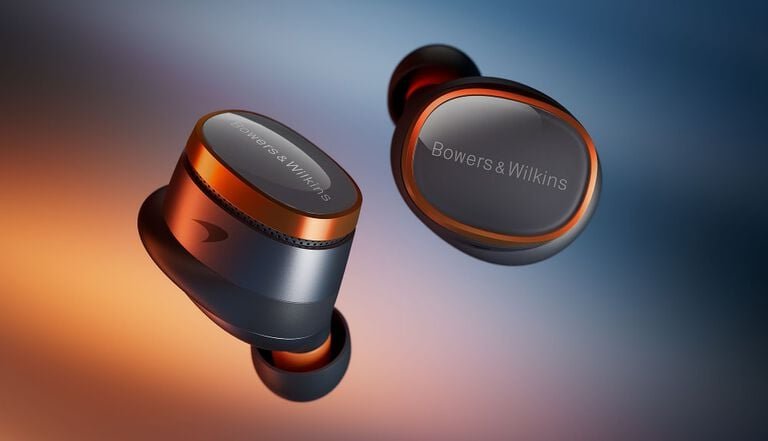
The premium experience begins before you even hear a note. The packaging for the Pi8 McLaren Edition is suitably luxurious. A sturdy, dark grey box with subtle branding slides open to reveal the earbuds and their case nestled in dense foam. The immediate visual impact comes from the signature McLaren colorway: a sophisticated dark grey chassis accented with bold, unmistakable Papaya Orange highlights. It’s the same hue that has graced McLaren’s most iconic Formula 1 and road cars, and it’s used here with tasteful restraint.
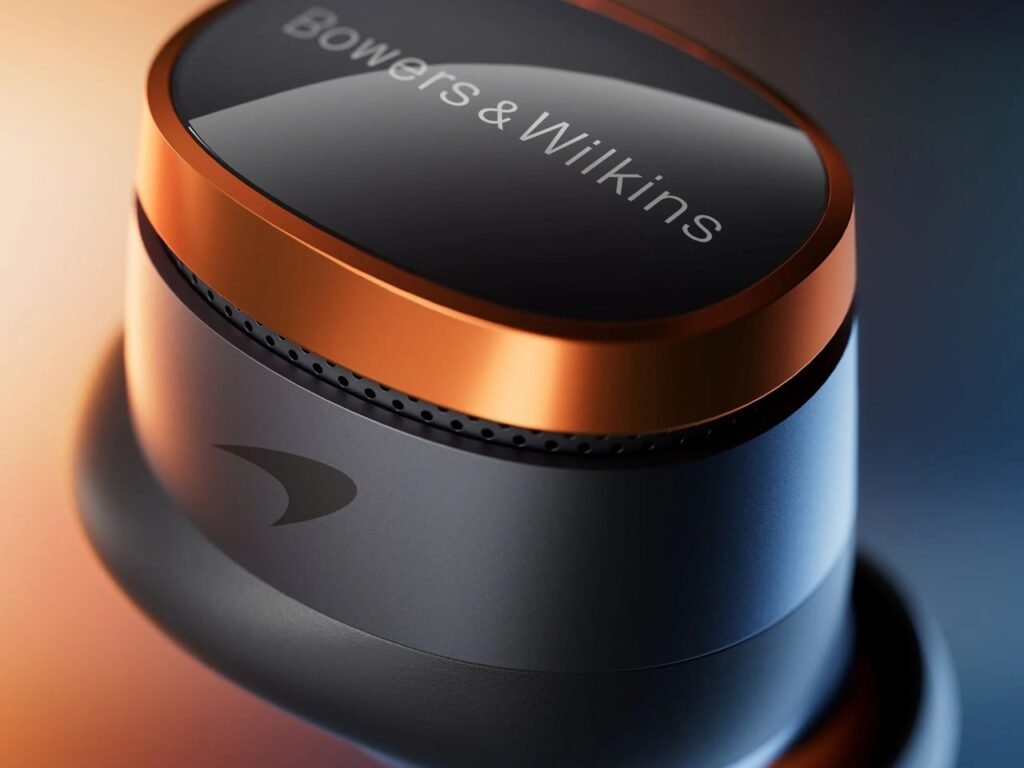
Lifting the charging case from its cradle, the quality is immediately apparent. It’s constructed from a high-grade polymer that feels dense and substantial, with a matte finish that resists fingerprints. The top lid features the iconic McLaren “Speedmark” logo, while the Bowers & Wilkins wordmark sits elegantly on the front. It’s larger and heavier than an AirPods Pro case, but it feels robust and protective, like it’s housing something special.
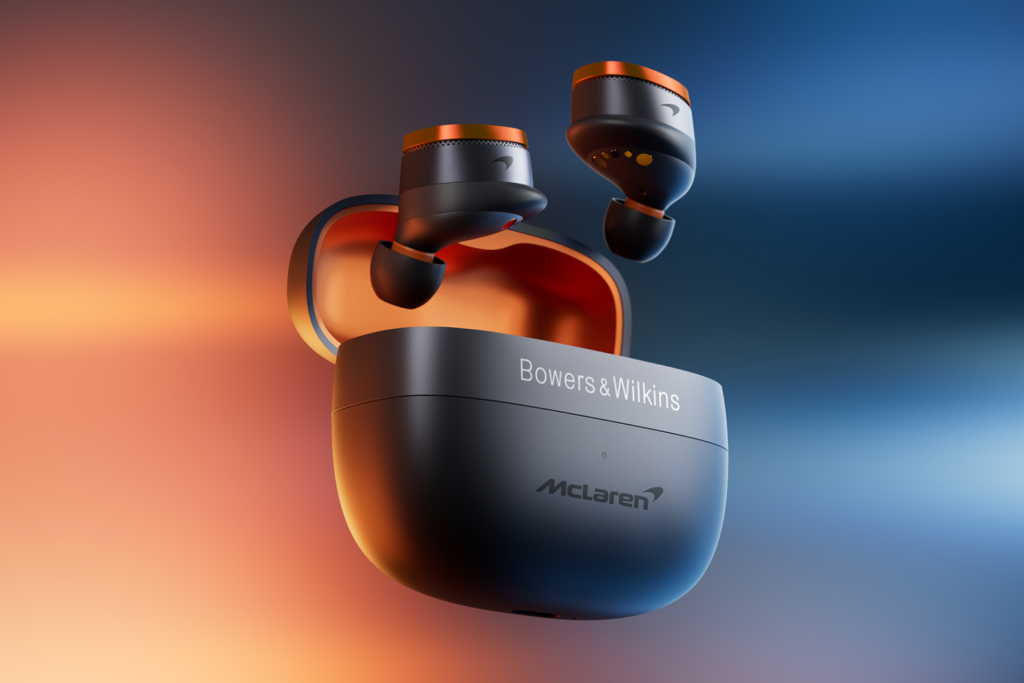
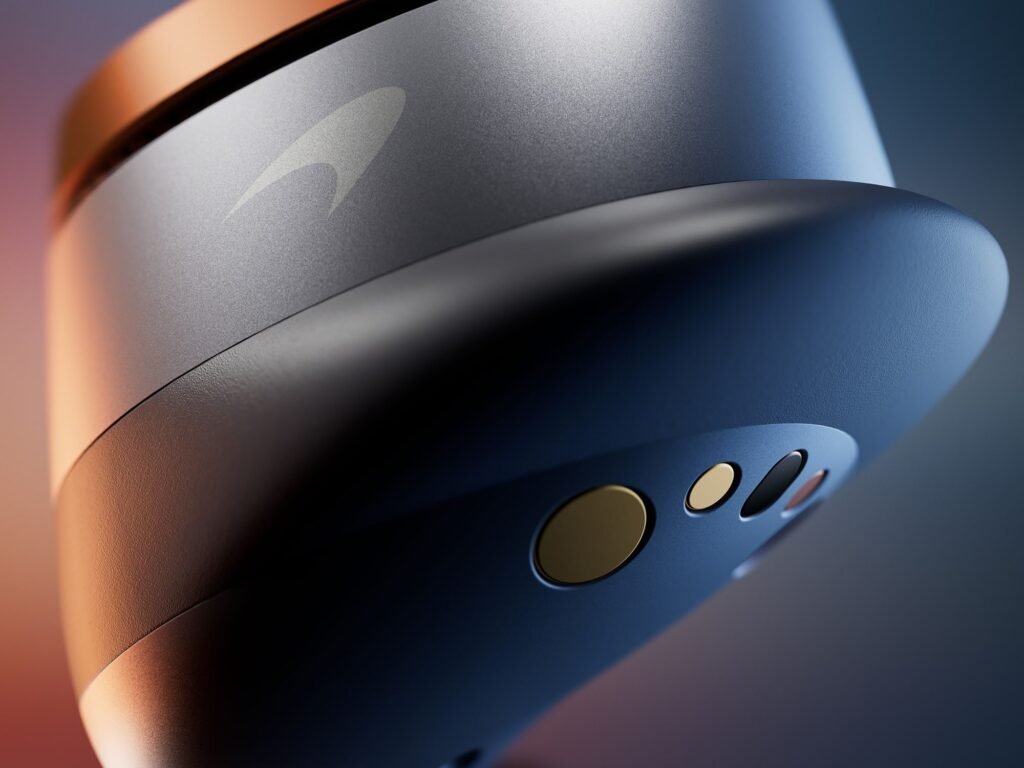
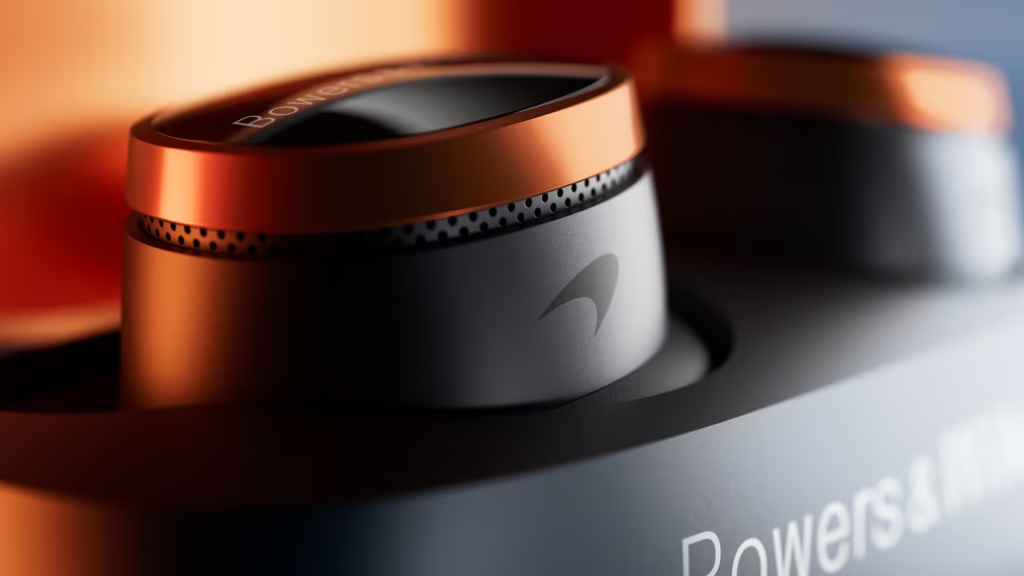
The earbuds themselves continue the theme. The main housing is a smooth, dark grey, but the circular, multifunction touch surface is a disc of spun aluminum, echoing the design language of B&W’s high-end speakers. The Papaya Orange accent appears on a subtle ring and on the inner acoustic tube, a flash of color that’s both a nod to the partnership and a statement of intent. These are not earbuds designed to disappear; they are designed to be noticed.
Inside the box, you’ll find a generous selection of accessories: three sizes of silicone ear tips (S, M, L), a USB-C to USB-C charging cable, and, most interestingly, a 3.5mm to USB-C audio cable. This last item is a critical component of the Pi8’s most unique feature, which we’ll explore in detail later.
Core Specifications and Features: The Engineering Under the Hood
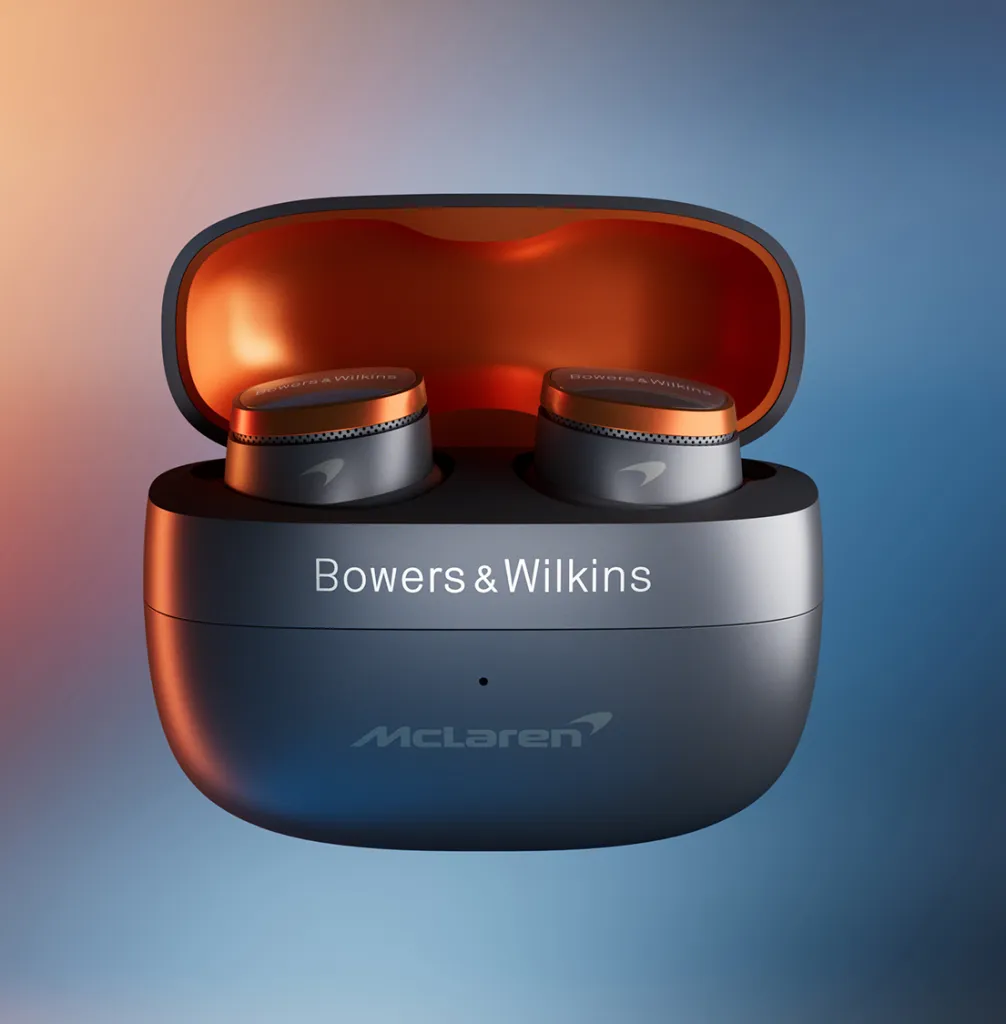
Beneath the McLaren livery lies a formidable array of audio technology, much of it inherited from B&W’s flagship Pi7 S2 earbuds, but no less impressive.
- Driver Technology: Dual Hybrid Drive Units with individual amplifiers per earbud. This is the heart of the Pi8. A 9.2mm dynamic driver, developed by the same team behind the legendary 800 Series Diamond speakers, handles the bass and mid-range frequencies. A separate, high-precision balanced armature driver is dedicated solely to the high frequencies. This two-way design is akin to a high-end loudspeaker, promising greater clarity, detail, and control across the entire frequency spectrum.
- High-Resolution Audio: Support for 24-bit/48kHz wireless audio transmission. This ensures a high-fidelity connection between your source device and the earbuds, preserving more of the original recording’s detail.
- Wireless Codecs: Qualcomm aptX™ Adaptive, aptX HD, aptX, AAC, and SBC. The inclusion of aptX Adaptive is a massive win for Android users, as it dynamically adjusts the bitrate to optimize for audio quality or connection stability, ensuring the best possible sound in any environment. iPhone users will benefit from the high-quality AAC codec.
- Active Noise Cancellation (ANC): Adaptive ANC that continuously monitors and adjusts to the surrounding environment. Six microphones (three in each earbud) work in concert to measure ambient noise and generate anti-noise, while also ensuring crystal-clear voice calls.
- Wireless Audio Retransmission Case: The charging case doubles as a Bluetooth transmitter. By connecting the case to an external audio source (like an in-flight entertainment system, a Nintendo Switch, or a turntable with a phono preamp) via the included 3.5mm-to-USB-C cable, the case can stream that audio directly to the Pi8 earbuds.
- Call Quality: The six-mic array with cVc2 (Clear Voice Communication) technology is designed to isolate your voice and suppress background noise during phone and video calls.
- Durability: IP54 rating for dust and water resistance, making them safe from sweat and light splashes.
- Battery Life:
- Up to 5 hours of listening time per charge (with ANC off).
- An additional 19 hours from the charging case, for a total of 24 hours.
- 15-minute fast charge provides 2 hours of listening time.
- Connectivity: Bluetooth 5.0 with Multipoint support, allowing connection to two devices simultaneously.
- Companion App: The Bowers & Wilkins Music app (iOS and Android) allows for ANC mode selection (On, Off, Passthrough), connection management, and wear sensor adjustments.
Performance Deep Dive: Audio Quality
Let’s cut to the chase: the Bowers & Wilkins Pi8 McLaren Edition sound phenomenal. They deliver a sonic signature that is rich, detailed, and unapologetically engaging. This is not a flat, neutral, “studio monitor” sound. It’s a sound with character and life, engineered to make music exciting.
Bass: The 9.2mm dynamic driver is a masterpiece. The bass is deep, powerful, and incredibly well-controlled. Listening to Hans Zimmer’s “Time,” the low-frequency rumbles that build throughout the track are rendered with a physical presence without ever becoming muddy or bloated. In electronic tracks like Bicep’s “Glue,” the sub-bass has a visceral texture that you can feel, yet the kick drums remain punchy and distinct. It’s a sophisticated bass response that prioritizes quality and texture over raw, boomy quantity.
Mid-range: This is where the dual-driver setup truly shines. The handover from the dynamic driver to the balanced armature is seamless. Vocals are pushed slightly forward in the mix, rendered with exceptional clarity and emotion. On tracks like Adele’s “Easy on Me,” her voice is intimate and detailed, capturing the subtle inflections and breathiness of her performance. Guitars, pianos, and strings have a natural timbre and are well-separated, preventing the mid-range from ever feeling congested, even on complex rock tracks like Queen’s “Bohemian Rhapsody.”
Treble: The dedicated balanced armature driver delivers a treble that is crisp, airy, and full of detail. Cymbals and hi-hats in jazz recordings, like Dave Brubeck’s “Take Five,” shimmer with realistic decay without a hint of harshness or sibilance. The high-end extension provides a wonderful sense of space and atmosphere to recordings. It unearths micro-details in familiar tracks that lesser earbuds often smear over.
Soundstage and Imaging: The soundstage is impressively wide for an in-ear monitor. It extends well beyond the confines of your head, creating an immersive, speaker-like presentation. Imaging is precise and stable. You can easily pinpoint the location of individual instruments within the stereo field, from the placement of a cello in an orchestra to the panning of synthesizers in an electronic mix.
The overall sound signature is one of controlled power and refined excitement. It’s a sound that will please audiophiles with its technical prowess while captivating casual listeners with its sheer musicality.
Performance Deep Dive: ANC and Call Quality
Active Noise Cancellation: The adaptive ANC on the Pi8 is very, very good, but it doesn’t quite dethrone the reigning champions from Bose and Sony. It does an excellent job of attenuating low-frequency drones, making them a fantastic companion for flights, train commutes, and noisy cafes. The roar of a jet engine is reduced to a distant, unobtrusive hum.
Where it’s slightly less effective is with higher-frequency, unpredictable sounds like office chatter or keyboard clicks. It dampens them significantly, but doesn’t erase them with the almost magical silence of the Bose QuietComfort Ultra Earbuds. Importantly, enabling the ANC has a minimal impact on the audio signature, a testament to B&W’s careful tuning. The Passthrough (transparency) mode is also well-implemented, allowing you to hear your surroundings clearly without sounding overly processed or artificial.
Call Quality: Call quality is a strong point. The six-microphone array does a commendable job of isolating your voice. In moderately noisy environments, callers reported that my voice came through clearly, with most background distractions being effectively suppressed. In very windy conditions, some noise did creep in, but my voice remained intelligible. They are more than reliable for work calls, video conferences, and personal chats.
The Killer Feature: The Wireless Audio Retransmission Case
This is the Pi8’s ace in the hole. For frequent flyers, this feature alone could justify the price of admission. The ability to plug the charging case into an in-flight entertainment system’s 3.5mm headphone jack and have it stream high-quality audio wirelessly to your earbuds is nothing short of revolutionary. No more fumbling with flimsy airline headphones or dangling dongles. It works flawlessly and is incredibly easy to set up.
But its utility extends far beyond the airplane cabin. Gamers can plug it into their Nintendo Switch or Steam Deck. Fitness enthusiasts can connect it to a treadmill at the gym. Vinyl lovers can even hook it up to their turntable’s phono-out. This single feature transforms the Pi8 from a simple pair of wireless earbuds into a versatile personal audio system, solving a major pain point for wireless audio users. It’s a genius innovation that sets Bowers & Wilkins apart from every single one of its competitors.
Who Are These Earbuds For?
The Mobile Audiophile: The person who demands uncompromising sound quality and is willing to pay for it. They value technical excellence, high-resolution codecs, and a musical, engaging sound signature.- The Luxury Tech Enthusiast: This user appreciates premium materials, sophisticated design, and the cachet of a high-end brand collaboration. For them, the McLaren branding and Papaya Orange accents are a feature, not a gimmick.
- The Frequent Traveler: The audio retransmission case is a game-changer for anyone who spends significant time on planes. The combination of great sound, effective ANC, and this unique feature makes the Pi8 an ultimate travel companion.
- The McLaren Superfan: For a devoted fan of the automotive brand, these are the ultimate accessory. They offer a tangible, daily-use connection to the McLaren ethos of performance and design.
Who Should Look Elsewhere?
- The Budget-Conscious Buyer: At an MSRP of $499, these are firmly in the ultra-premium category. There are excellent earbuds available for half the price that will satisfy most users.
- The ANC Absolutist: If your one and only priority is blocking out the maximum amount of external noise, the Bose QuietComfort Ultra Earbuds still hold a slight edge in overall noise cancellation performance.
- The Hardcore Athlete: While the IP54 rating is sufficient for light workouts and resisting sweat, dedicated sports earbuds often offer a more secure fit with wingtips and a higher IP rating for true waterproof protection.
- The User Seeking Simplicity: While not complicated, the Pi8 are a feature-rich product. Users who just want a simple, no-fuss experience might be better served by something like the Apple AirPods Pro, especially if they are already in the Apple ecosystem.
The Competition: A Crowded Starting Grid

The premium TWS market is fiercely competitive. Here’s how the Pi8 McLaren Edition stacks up against the other top contenders.
- Sony WF-1000XM5 ($299): The tech-packed all-rounder. Sony offers arguably better ANC, a more customizable EQ via its excellent app, and industry-leading features like DSEE Extreme upscaling. The sound is fantastic, though perhaps a bit more clinical than the B&W’s rich musicality.
- Bose QuietComfort Ultra Earbuds ($299): The undisputed king of noise cancellation. If silence is golden, these are the gold standard. They also feature immersive audio for a more spatial sound. Their sound quality is very good, but audiophiles may prefer the detail and precision of the Pi8.
- Sennheiser Momentum True Wireless 4 ($299): The audiophile’s choice. Sennheiser prioritizes sound fidelity above all else. The MTW4 offers a beautifully balanced and detailed sound signature. The competition here is tight, with the choice likely coming down to a preference for Sennheiser’s neutrality versus B&W’s warmer, more dynamic presentation.
- Apple AirPods Pro 2 ($249): The benchmark for ecosystem integration. For iPhone users, the seamless pairing, spatial audio with head tracking, and “Find My” integration are killer features. Their sound quality and ANC are excellent, making them a formidable and much more affordable competitor, though they lack the high-end material feel and the audio retransmission feature of the Pi8.
Competitive Breakdown Chart
| Feature | Bowers & Wilkins Pi8 McLaren | Sony WF-1000XM5 | Bose QC Ultra Earbuds | Sennheiser MTW4 | Apple AirPods Pro 2 |
|---|---|---|---|---|---|
| Price (MSRP) | $499 | $299 | $299 | $299 | $249 |
| Drivers | 9.2mm Dynamic + Balanced Armature | 8.4mm Dynamic Driver X | Custom Dynamic Driver | 7mm TrueResponse Dynamic | Custom High-Excursion Driver |
| Key Codecs | aptX Adaptive, AAC | LDAC, AAC | aptX Adaptive, AAC | aptX Lossless, aptX Adaptive, AAC | AAC |
| ANC | Adaptive ANC | Industry-Leading Adaptive ANC | Class-Leading Adaptive ANC | Adaptive Hybrid ANC | Excellent Adaptive ANC |
| Unique Feature | Wireless Audio Retransmission Case | DSEE Extreme, Speak-to-Chat | Bose Immersive Audio | Auracast, Lossless Audio | Seamless Apple Ecosystem Integration |
| Battery (Buds) | ~5 Hours | ~8 Hours | ~6 Hours | ~7.5 Hours | ~6 Hours |
| Battery (Total) | ~24 Hours | ~24 Hours | ~24 Hours | ~30 Hours | ~30 Hours |
| IP Rating | IP54 | IPX4 | IPX4 | IP54 | IP54 |
| Call Mics | 6 Mics | 6 Mics + Bone Conduction | 4 Mics per earbud | 6 Mics | 6 Mics |
Q&A
Q: Are the Pi8 McLaren Edition worth the $200 premium over the standard B&W Pi7 S2, which they are based on? A: From a pure audio technology standpoint, the core components are very similar. The premium for the McLaren Edition is for the exclusive design, the signature Papaya Orange colorway, the McLaren branding, and the prestige of the collaboration. If you are not a McLaren fan or don’t place a high value on this specific aesthetic, the Pi7 S2 offers a nearly identical audio experience for less money.
Q: I’m an iPhone user. Do I lose out by not being able to use aptX Adaptive? A: While aptX Adaptive is a fantastic codec for Android, the Pi8’s implementation of AAC for Apple devices is excellent. You will still experience high-quality, detailed, and rich audio. You won’t be missing a dramatic amount of performance, and the fundamental character and quality of the drivers will still shine through.
Q: How comfortable are they for long listening sessions? A: Comfort is subjective, but the Pi8 are generally very comfortable. They are slightly larger and heavier than some competitors, so users with very small ears might want to try them first. However, for most, the ergonomic shape and selection of tips provide a secure and comfortable seal for hours of listening without fatigue.
Q: Is the audio retransmission case difficult to use? A: Not at all. It’s incredibly intuitive. You plug the cable into your audio source and the case, press and hold the button on the case for a second, and it automatically pairs and starts streaming to the earbuds. There’s no complicated app or pairing process required.
Q: Can you customize the sound with an equalizer (EQ)? A: As of the latest firmware, the Bowers & Wilkins Music app does not offer a user-adjustable graphic EQ. You are reliant on B&W’s factory tuning. While that tuning is exceptional, users who love to tweak their sound profile to their exact preference might find this omission disappointing.
The Verdict: The Checkered Flag
The Bowers & Wilkins Pi8 McLaren Edition are a stunning pair of true wireless earbuds that largely deliver on their ultra-premium promise. They offer a class-leading audio experience, with a sound that is as exciting and dynamic as the supercars that inspired them. The build quality is impeccable, the design is striking, and the innovative audio retransmission case is a genuinely brilliant feature that solves a real-world problem.
However, they are not without their caveats. The price is undeniably steep, placing them in a category of their own. The ANC, while very good, is a half-step behind the absolute best in the business, and the battery life is merely adequate compared to the competition.
So, are they a supercar for your ears? Yes. They offer blistering audio performance and a design that will turn heads. But like a real McLaren, they come with a supercar price tag and a focus so sharp on performance that they make a few practical compromises.
If sound quality is your absolute monarch, you are a frequent traveler, and you appreciate the fusion of luxury design and high-performance engineering, the Pi8 McLaren Edition are an endgame product. They are an audacious, uncompromising, and deeply impressive piece of audio engineering. For those who can justify the cost, the listening experience is pure pole position.
Final Score: 8.8/10




Wearables
⛰️🌊 The Ultimate Companion: A Deep Dive into the Apple Watch Ultra 3 for Outdoor Adventures
The world of adventure watches has long been dominated by specialized names, but with the introduction of the Apple Watch Ultra series, Apple dramatically shifted the landscape. Now, with the launch of the Apple Watch Ultra 3, the company solidifies its claim to the title of “ultimate adventure companion.” This isn’t just a smartwatch with a tougher shell; it’s a meticulously engineered tool designed to thrive where the pavement ends, whether you are scaling mountain peaks, charting remote trails, or exploring the deep blue.
The Ultra 3 represents a significant, though often subtle, refinement of an already formidable platform. While visually similar to its predecessor, its enhancements in materials, GPS accuracy, and, most importantly, battery endurance, make it a powerhouse for serious outdoor enthusiasts. For those whose activities demand reliability, precision, and the ability to stay connected when it truly counts, the Ultra 3 is more than a gadget—it’s an essential piece of gear.
💪 Forged for Extremes: Design, Durability, and the Action Button
The first impression of the Apple Watch Ultra 3 is one of uncompromising toughness. Built with a 49mm aerospace-grade titanium case, it strikes a perfect balance between ruggedness and wearability. The choice of titanium, now utilizing a percentage of recycled material in the Ultra 3, provides superior strength-to-weight ratio, ensuring the watch can handle impacts and abrasions without feeling cumbersome on the wrist. This case is fortified by a flat sapphire crystal display, which is incredibly resistant to scratches—a critical feature when scrambling over rocks or navigating tight brush.
The watch is tested to the rigorous MIL-STD 810H military standard, certifying its resilience against altitude, high/low temperatures, shock, and vibration. Its 100-meter water resistance rating and EN13319 certification mean it’s not just splash-proof, but a true instrument for watersports, including recreational scuba diving down to 40 meters.
The Customizable Command Center
A standout physical feature for the adventurer is the bright orange, customizable Action Button. This button is a game-changer for gloved hands or moments when fine motor control is limited. Unlike the Digital Crown, which requires some dexterity, the Action Button offers a single, large, tactile control.
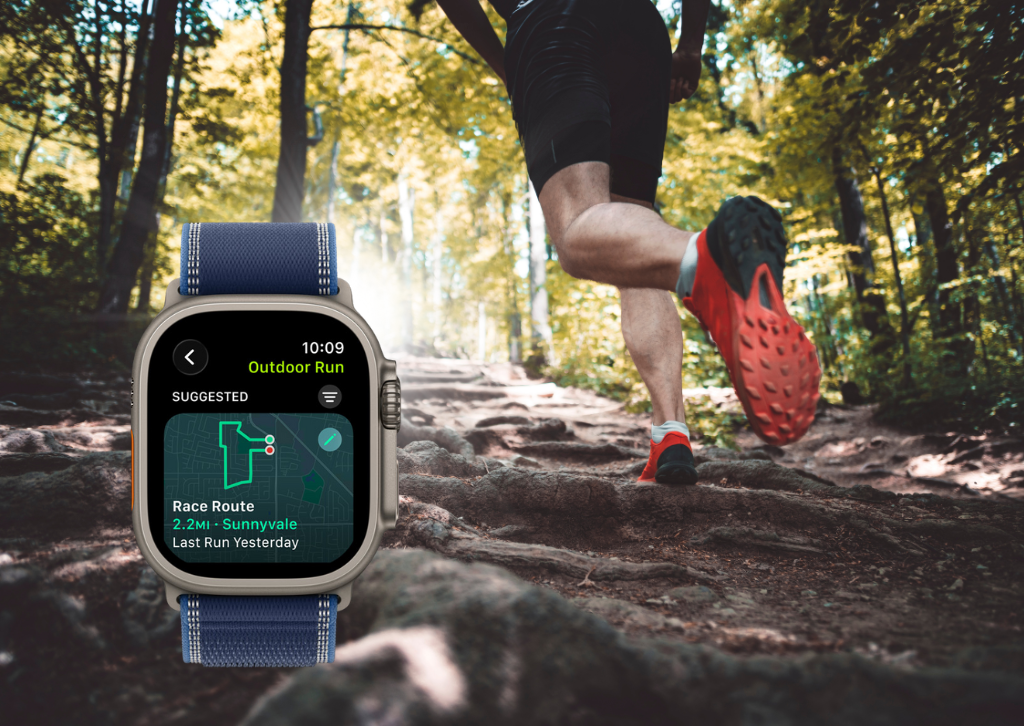
- For Runners and Triathletes: It can be configured for a Precision Start to instantly begin a workout once a full GPS lock is achieved, eliminating the frustration of an accidental early start or poor initial tracking. It also serves as a quick lap marker.
- For Divers: It can initiate the Oceanic+ dive computer app (a full dive computer for recreational scuba, developed with Huish Outdoors).
- For Hikers: It can drop a Compass Waypoint or instantly engage the Backtrack feature.
- For Emergencies: It can be programmed to instantly trigger the powerful 86-decibel Siren, a pulsing sound designed to attract attention up to 600 feet away.
This ability to re-map a physical control to the most urgent function for a given activity transforms the Ultra 3 from a general-purpose device into a specialized tool for any given outing.
🔋 The Long Game: Powering Multi-Day Expedition
Perhaps the most significant upgrade for the outdoor community is the enhanced battery performance. In an adventure watch, battery life isn’t a luxury; it’s a safety feature. The Ultra 3 is rated for an impressive 42 hours of typical use, which includes workouts, health tracking, and notifications. More importantly for expeditions, it can achieve up to 72 hours in Low Power Mode.
For continuous, high-intensity GPS tracking—the true test of any sports watch—the Ultra 3 excels. Apple’s figures suggest up to 20 hours of outdoor workout in Low Power Mode with full GPS and heart rate readings. This is a critical metric for ultra-marathon runners, long-distance cyclists, or multi-day backpackers. Real-world testing suggests that users running ultra-distances or multi-day hikes can confidently rely on the Ultra 3, especially when optimizing settings like disabling cellular and the Always-On display. The ability to charge to 80% in about 45 minutes also means a quick stop at a power source (or a few minutes with a power bank) can dramatically extend its active life. While still trailing the multi-week battery life of some dedicated sports watches, the Ultra 3 provides a compelling compromise for users who want the full-featured, connected smartwatch experience for 99% of their lives, while still having sufficient battery for most serious weekend adventures.
🗺️ Know Your World: Precision GPS and Navigation
For hikers, trail runners, and backcountry explorers, the Ultra 3’s location services are paramount. The watch features L1 and L5 precision dual-frequency GPS, a sophisticated system that significantly improves accuracy in challenging environments. Traditional GPS can struggle in deep canyons, beneath heavy tree cover, or amidst towering city skyscrapers (the so-called “urban canyon”). The dual-band system works to filter out multi-path errors and provide a cleaner, more reliable track.
The Compass App: Your Backcountry Lifeline
The native Compass app has become a surprisingly powerful navigational tool. It’s no longer just a digital pointer; it’s an essential backcountry lifeline:
- Waypoints: Users can easily drop Waypoints to mark a campsite, a trailhead, or a water source, viewing them as both a bearing and distance on the watch face. The Ultra 3 can even automatically generate a Waypoint for the last place your watch had cellular connectivity, a crucial piece of information before heading deeper off-grid.
- Backtrack: This safety feature is arguably the most important for off-trail exploration. Backtrack automatically records your route, even without cellular service. If you get disoriented, a tap on the Action Button can initiate Backtrack, guiding you back along your exact path to your starting point.
- Offline Maps: Leveraging watchOS 26, the Ultra 3 allows users to download and store detailed topographic maps directly onto the watch. This means turn-by-turn navigation and detailed trail information for thousands of national and regional parks (especially in the U.S.) are accessible even when completely offline. This eliminates the need to constantly pull out a phone or rely on a third-party app for basic navigation.
🏃♀️ Dive Deep and Run Far: Dedicated Activity Tracking
The software is optimized to provide a first-class experience for a variety of demanding sports.
Trail and Ultra Running
For runners, the Ultra 3 tracks a comprehensive suite of advanced running dynamics: vertical oscillation, ground contact time, stride length, and running power. The customizability of the workout view is nearly limitless, allowing users to see their Heart Rate Zones, Pacer, or training load at a glance. While some high-end competitors still hold an edge in deep, proprietary recovery metrics and suggested workouts, the Ultra 3 offers scientific-level accuracy and a platform for excellent third-party running apps like WorkOutDoors to fill any feature gaps. The expanded battery life makes it a viable option for even 100km races when running in Low Power Mode.
Diving and Water Sports
The Ultra 3 is a fully certified dive watch. The Depth app automatically launches when you descend and measures underwater duration, current depth, and water temperature. More advanced recreational divers will utilize the Oceanic+ app, which turns the watch into a fully functional dive computer, calculating decompression limits, displaying No-Deco time, and logging dive data directly on the wrist. For swimmers, it features automatic stroke detection, SWOLF score, and customizable pool swim workouts complete with haptic cues.
📡 The Ultimate Safety Net: Satellite Connectivity
The most significant peace of mind upgrade is the built-in satellite communication capability. When you find yourself far beyond the reach of cellular or Wi-Fi, this feature provides a critical safety net.
- Emergency SOS via Satellite: In a life-threatening scenario, this feature allows you to connect directly to emergency services via satellite, guiding you through a short questionnaire to quickly relay your location and situation.
- Satellite Messaging and Find My: Beyond emergencies, the Ultra 3 enables users to send and receive text messages to friends and family, and share their location via Find My, all while completely off-grid. This is invaluable for coordinating logistics in remote areas, informing loved ones of delays, or simply checking in.
Combined with Fall Detection and Crash Detection—which leverage advanced sensors to automatically call emergency services if a serious fall or car crash is detected and the user is unresponsive—the Ultra 3 is arguably the most comprehensive personal safety device on the market.
✅ Conclusion: The Smart Choice for the Serious Adventurer
The Apple Watch Ultra 3 is a testament to Apple’s commitment to the serious adventurer. It’s a watch that seamlessly integrates the full power of the Apple ecosystem—from music streaming to Apple Pay—with the core competencies of a high-end sports watch. Its refined titanium build, 3,000-nit brightest display for unparalleled outdoor visibility, and improved dual-band GPS are substantial refinements.
While dedicated, single-sport devices may still offer a longer overall battery life, the Ultra 3’s multi-day performance, best-in-class safety features, and the indispensable power of satellite communication and offline mapping make it a unique and compelling choice. It’s for the user who demands a single, accurate, rugged, and connected device for their day-to-day life that can transition, without compromise, to the extremes of a multi-day hike, a marathon, or a recreational dive. The Apple Watch Ultra 3 is more than a watch; it’s a sophisticated tool that empowers exploration while ensuring a route back to safety is always within reach.

Before buying your next wearable, be sure to read all our smart watch tech reviews
Wearables
Sennheiser HD 630VB Headphones Review
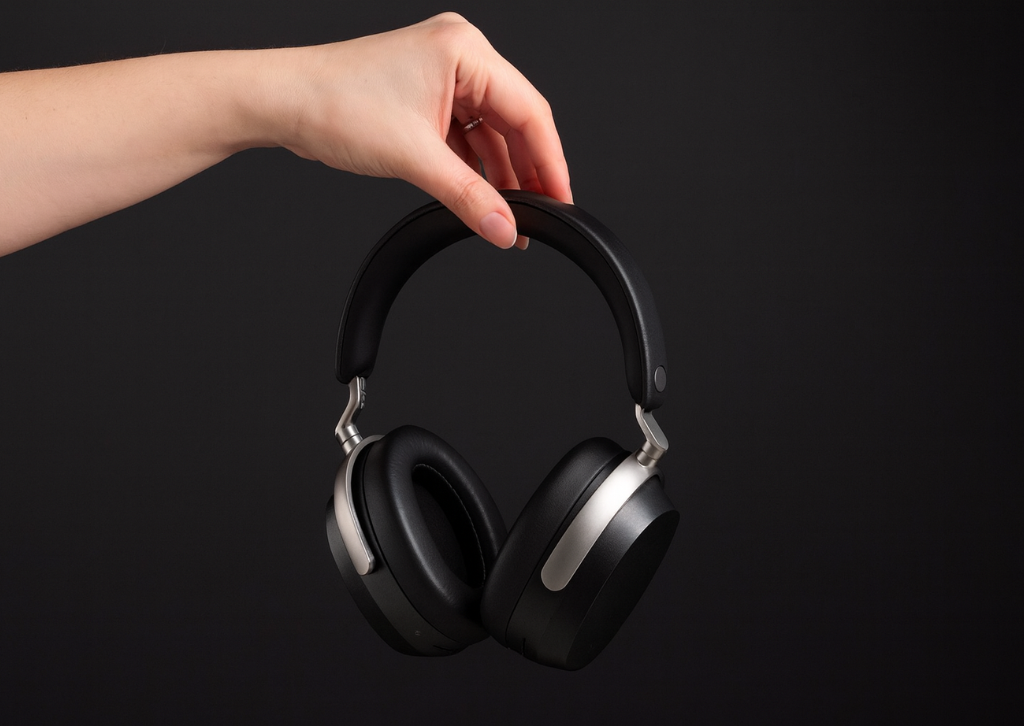
The Sennheiser HD 630VB represents an ambitious attempt to bridge the gap between audiophile-grade sound quality and customizable bass response. With its innovative variable bass control and premium build quality, these closed-back headphones aim to satisfy both purists and bass enthusiasts alike.
Design and Build Quality
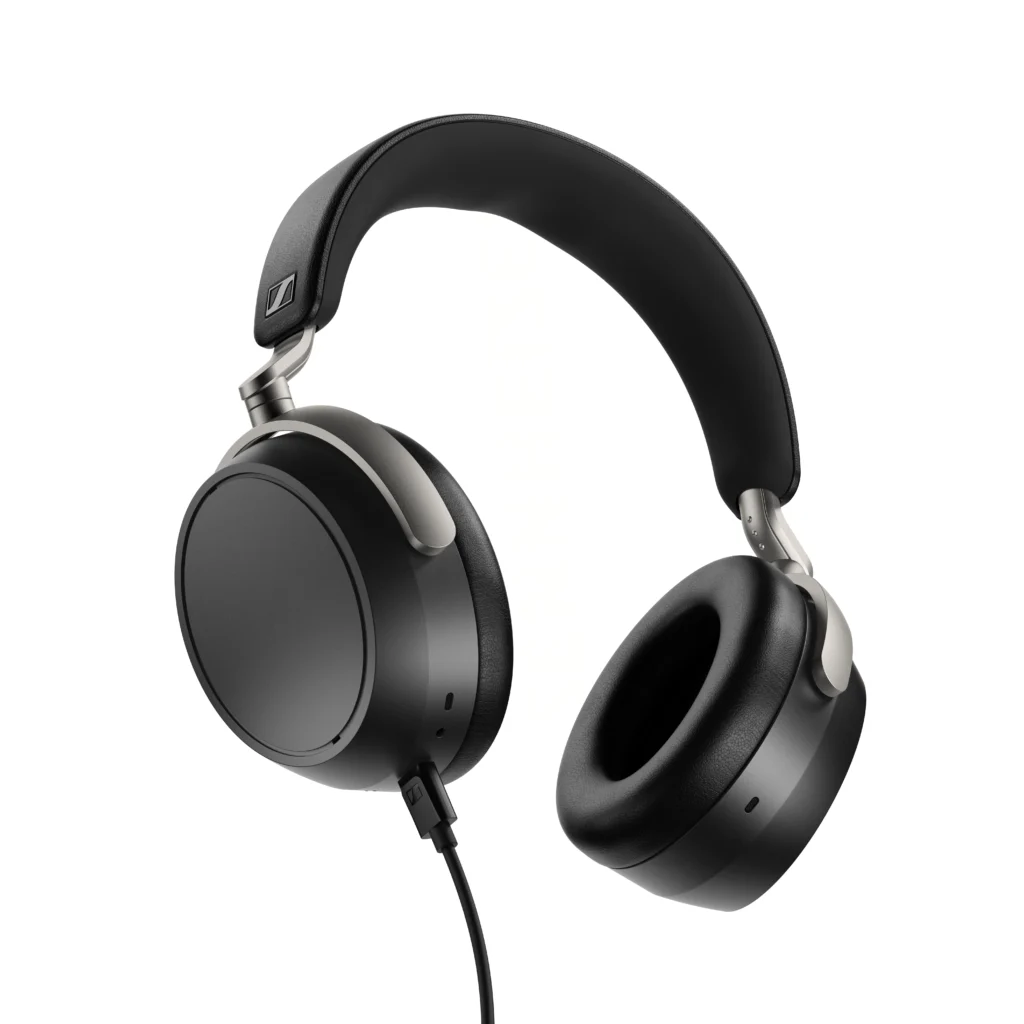
The HD 630VB immediately impresses with its robust construction and premium materials. The headphones feature a mix of metal and high-quality plastic components that feel substantial without being overly heavy. The matte black finish with subtle red accents gives them a sophisticated, understated look that works equally well in the studio or on the street.
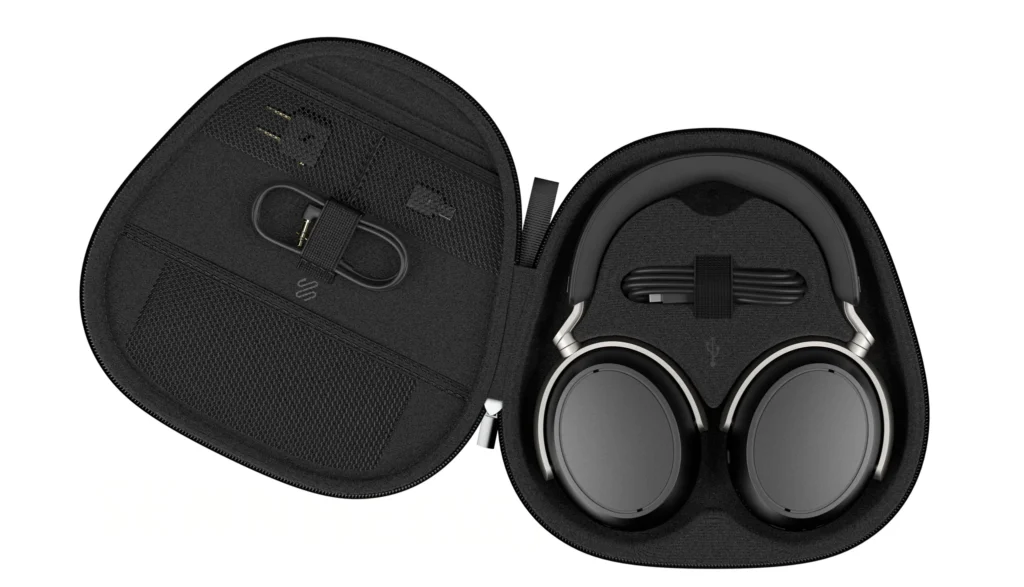
The folding mechanism is well-engineered, allowing the headphones to collapse into a compact form factor for travel. The included hard-shell carrying case is a welcome addition that protects your investment during transport.
Comfort
Comfort is where the HD 630VB truly shines. The plush memory foam ear pads are covered in soft leatherette that creates an excellent seal without causing hotspots during extended listening sessions. The headband padding is equally generous, and the clamping force is perfectly balanced—secure enough to stay in place but not so tight as to cause fatigue.
I wore these for 4-hour sessions without discomfort, which is impressive for a closed-back design that typically runs warmer than open-back alternatives.
Sound Quality
This is where things get interesting. The HD 630VB’s party trick is its variable bass dial, which allows you to adjust the low-end response on the fly.
Bass Response: The adjustable bass control ranges from neutral to enhanced, offering genuine versatility. At the minimum setting, the bass is tight, controlled, and well-integrated—perfect for critical listening and mixing work. Dial it up, and you get progressively more low-end presence without the bloat or muddiness that plagues many bass-boosted headphones. Even at maximum, the bass remains relatively clean, though it does start to overshadow the midrange slightly.
Midrange: The mids are clear and detailed with good presence. Vocals come through with natural timbre and texture. There’s occasionally a slight veil compared to Sennheiser’s open-back flagships, but this is typical of closed-back designs and not specific to the HD 630VB.
Treble: The high end is smooth and refined, never harsh or sibilant. Detail retrieval is excellent, though the top-end extension isn’t quite as airy as some competing models. This makes them forgiving with poorly recorded material while still revealing enough detail for critical listening.
Soundstage: For closed-back headphones, the soundstage is respectably wide with decent imaging. Don’t expect the expansive presentation of open-back models, but within the constraints of the design, Sennheiser has done admirable work.
The Variable Bass Feature
The adjustable bass is more than a gimmick—it’s genuinely useful. Whether you’re switching between analytical listening for music production and casual enjoyment, or simply want more thump for electronic music and less for classical, the dial provides meaningful customization. The adjustment is smooth and immediate, with no clicking or detents, allowing for precise tuning.
Isolation and Leakage
The closed-back design provides solid passive isolation, blocking out a good amount of ambient noise. They’re suitable for office use or commuting, though dedicated noise-cancelling headphones will perform better in extremely noisy environments. Sound leakage is minimal at moderate volumes, so you won’t disturb those around you.
Cable and Connectivity
The HD 630VB comes with a detachable cable system using Sennheiser’s proprietary two-pin connector. The included cable is of good quality with minimal microphonics. The 3.5mm termination includes a 6.35mm adapter for use with home audio equipment.
One minor complaint: the cable connector feels slightly fragile, and I’d be cautious about repeatedly connecting and disconnecting it.
Who Should Buy These?
The HD 630VB is ideal for:
- Music producers and audio engineers who want the option to check mixes with variable bass response
- Listeners who enjoy multiple genres with different bass requirements
- Commuters wanting audiophile sound quality with good isolation
- Anyone seeking versatile, premium headphones with excellent build quality

Who Should Look Elsewhere?
These might not be for you if:
- You’re a bass purist who never wants enhanced low end (the HD 600 series would be better)
- You need active noise cancellation for travel
- You prefer the more spacious sound of open-back designs
- You’re on a tight budget (these are premium-priced)
Verdict
The Sennheiser HD 630VB successfully executes a challenging concept: high-quality sound with user-adjustable bass. The build quality, comfort, and sound performance all meet the high standards expected from Sennheiser’s upper-tier products. While they may not replace dedicated reference monitors for critical work, they offer impressive versatility and consistently engaging performance across a wide range of music and use cases.
The variable bass feature elevates these from “just another closed-back headphone” to something genuinely unique in the market. If you value flexibility alongside sonic excellence, the HD 630VB deserves serious consideration.
Pros:
- Excellent build quality and comfort
- Genuinely useful variable bass control
- Clear, detailed sound across the frequency spectrum
- Good passive isolation
- Premium accessories and carrying case
Cons:
- Proprietary cable connector feels slightly fragile
- Premium pricing
- Closed-back design lacks the airiness of open-back alternatives
- Slight midrange veil at maximum bass settings
Final Score: 4/5 Stars – A well-executed concept that delivers versatility without compromising on quality.
All the best headphone reviews in one place
Wearables
TAG Heuer Connected Calibre E5: The Swiss Watchmaker’s Bold Digital Evolution
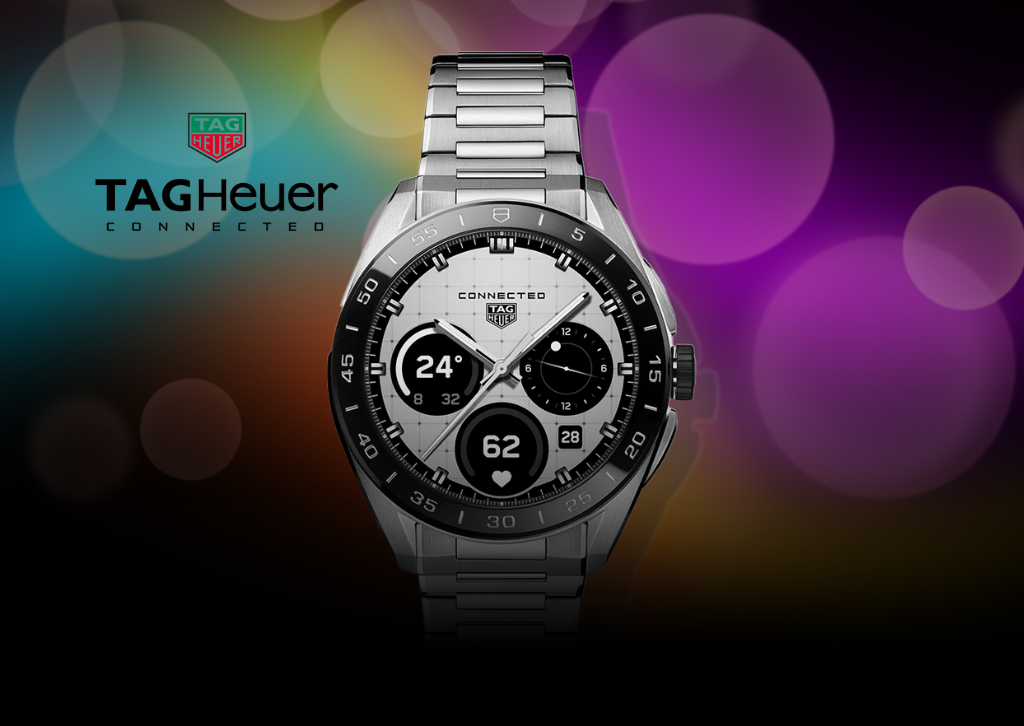
In the rarefied world of Swiss luxury watchmaking, where tradition and mechanical precision have reigned supreme for centuries, TAG Heuer has consistently positioned itself as the maverick willing to embrace innovation. The brand’s latest iteration in its smartwatch lineage, the TAG Heuer Connected Calibre E5, represents not just an incremental update but a sophisticated reimagining of what a luxury connected timepiece can be. This is a watch that boldly straddles two worlds—honoring the heritage of haute horlogerie while delivering cutting-edge digital functionality that today’s discerning consumer demands.
A Legacy of Innovation
To understand the significance of the Calibre E5, one must first appreciate TAG Heuer’s unique position in the luxury smartwatch arena. Unlike many heritage brands that have approached wearable technology with skepticism or outright disdain, TAG Heuer embraced the digital revolution early. The original TAG Heuer Connected, launched in 2015, was a watershed moment—a genuine Swiss luxury brand daring to compete directly with Silicon Valley’s finest. Since then, the Connected line has evolved through multiple generations, each iteration refining the delicate balance between traditional watchmaking aesthetics and modern technological capability.
The Calibre E5 arrives at a moment when the smartwatch market has matured considerably. Early adopters have become sophisticated users with clear expectations, and the novelty of notification delivery has given way to demands for genuine utility, refined design, and seamless integration into daily life. TAG Heuer has listened, and the result is their most accomplished connected timepiece to date.
Design Philosophy: Where Tradition Meets Tomorrow
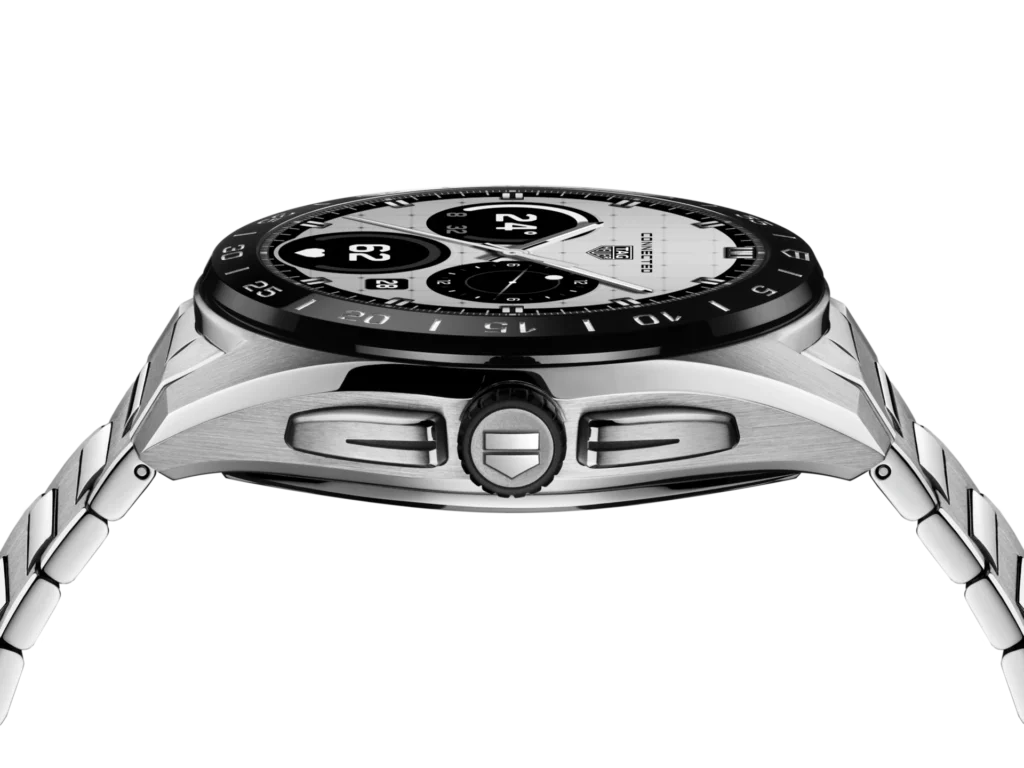
The first thing you notice about the Calibre E5 is how unapologetically watchlike it is. This isn’t a tech device masquerading as a timepiece—it’s a genuine TAG Heuer that happens to be smart. The case, available in both 42mm and 45mm variants, features the brand’s signature sporty-elegant design language with bold lugs, polished and brushed surfaces, and that unmistakable TAG Heuer presence on the wrist.
The attention to detail is extraordinary. The pushers offer satisfying tactile feedback, reminiscent of chronograph buttons on mechanical watches. The crown, adorned with the TAG Heuer shield, rotates with precision to navigate menus—a small touch that makes interaction feel more like winding a traditional watch than operating a computer. The case construction utilizes premium materials including titanium and grade 2 titanium options, keeping weight manageable while ensuring durability that befits the TAG Heuer name.
Perhaps most impressively, TAG Heuer hasn’t compromised on water resistance. The Calibre E5 maintains a robust 50-meter water resistance rating, making it suitable for swimming and water sports—a crucial feature for a brand with deep connections to motorsports and athletic performance.
The display represents a significant leap forward. TAG Heuer has equipped the Calibre E5 with a brilliant OLED screen that delivers exceptional brightness, deep blacks, and vibrant colors. The resolution ensures that watch faces—whether digital interpretations or faithful recreations of classic TAG Heuer dials—appear sharp and legible in all lighting conditions. The always-on display functionality means you’re never stuck with a blank wrist, maintaining that essential characteristic of a traditional watch: the ability to check the time at a glance without gesture or button press.
The Strap Story
Understanding that personalization is paramount in luxury goods, TAG Heuer offers an extensive array of strap options for the Calibre E5. The quick-release system allows owners to effortlessly switch between sporty rubber straps perfect for the gym or golf course, sophisticated leather options ideal for the boardroom, and elegant bracelet designs that elevate the watch for formal occasions.
The rubber straps deserve special mention—they’re not the generic silicone affairs found on many smartwatches. Instead, TAG Heuer has developed proprietary rubber compounds that resist wear, repel water and sweat, and maintain their appearance over extended use. The leather options showcase the brand’s commitment to quality, with supple calfskin and exotic leather choices that develop character with age, much like straps on traditional luxury watches.
The bracelet options are where TAG Heuer’s watchmaking heritage truly shines. Whether opting for the sporty three-link design or the more refined five-link option, the bracelets feature solid links, beautifully finished surfaces, and micro-adjustment clasps that ensure perfect fit. These aren’t afterthoughts—they’re engineered with the same precision as bracelets on TAG Heuer’s mechanical timepieces.
Software and User Experience
The Calibre E5 runs on Wear OS 3, representing a significant partnership between TAG Heuer and Google. This latest version of Wear OS delivers improved performance, better battery optimization, and enhanced integration with both Android smartphones and, importantly, iPhones. While Android users naturally enjoy deeper integration, TAG Heuer has worked to ensure iPhone owners don’t feel like second-class citizens—a common complaint in the broader smartwatch landscape.
Navigation through the interface is intuitive, leveraging the rotating crown, responsive touchscreen, and strategically placed pushers. TAG Heuer has developed a custom launcher that maintains visual consistency with their brand identity while providing quick access to frequently used functions. The learning curve is minimal, even for those new to smartwatches.
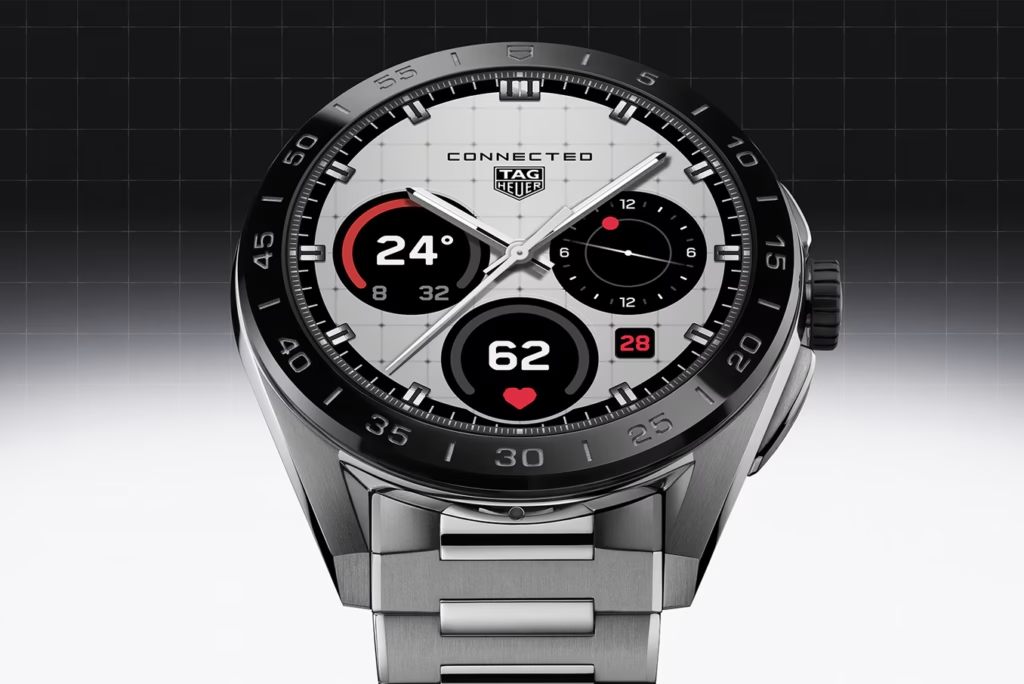
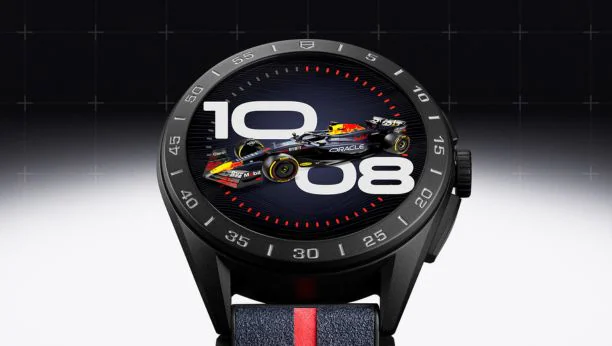
Where the Calibre E5 truly distinguishes itself is in the watch face library. TAG Heuer has meticulously recreated many of their most iconic dial designs, from the racing-inspired Carrera to the sophisticated Monaco square case aesthetic, adapted for the round display. These aren’t simple photos of watch dials—they’re carefully crafted digital interpretations that respect the original designs while taking advantage of the medium. Animated elements, like sweeping chronograph hands or rotating bezels, add life without feeling gimmicky.
Beyond the official TAG Heuer faces, the Wear OS ecosystem provides access to thousands of third-party options, though discerning owners will likely gravitate toward the brand’s curated selection that maintains the luxury aesthetic they paid for.
Health and Fitness Capabilities
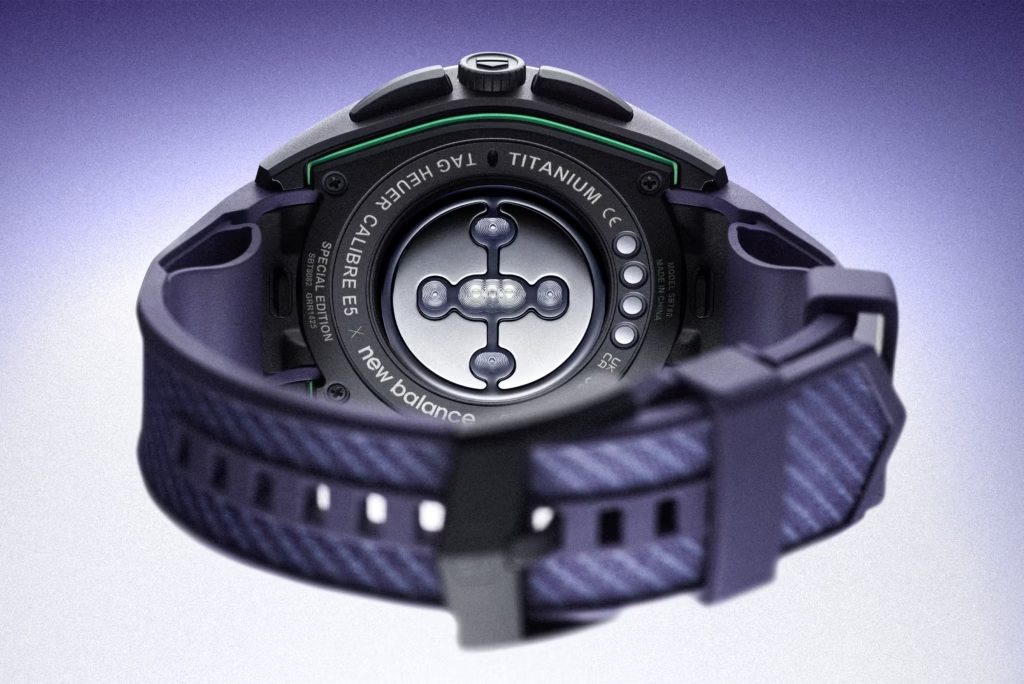
A luxury smartwatch in 2025 must deliver comprehensive health and fitness tracking, and the Calibre E5 doesn’t disappoint. The sensor array on the caseback includes an advanced optical heart rate monitor, blood oxygen saturation sensor, and accelerometer. Together, these enable continuous health monitoring throughout the day and night.
Heart rate tracking provides real-time data during workouts and can alert users to unusual patterns. Sleep tracking has been refined to offer detailed insights into sleep stages, quality, and recommendations for improvement. The stress monitoring feature uses heart rate variability to gauge stress levels and prompt breathing exercises when needed.
For fitness enthusiasts, the Calibre E5 offers an impressive suite of workout tracking options. Whether you’re running, cycling, swimming, playing golf, or engaging in strength training, dedicated modes provide relevant metrics and post-workout analysis. GPS functionality is built-in, ensuring accurate route tracking and pace data without needing your phone. The watch can even suggest recovery times based on workout intensity and your fitness level.
TAG Heuer’s partnership with premium fitness apps means seamless data synchronization with platforms like Strava, allowing athletes to maintain their established ecosystems while enjoying the luxury experience of the Calibre E5.
Everyday Utility
Beyond health and fitness, the Calibre E5 serves as a capable daily companion. Notification management is customizable and non-intrusive—you control which apps can interrupt your day and how prominently alerts appear. Reading messages, emails, and app notifications on the crisp display is effortless, and quick replies via voice dictation or preset messages keep you connected without constantly reaching for your phone.
Contactless payments via Google Pay transform the watch into a wallet replacement. A quick tap of your wrist at payment terminals worldwide completes transactions securely and conveniently—particularly useful during workouts or when traveling light.
Music control is seamless, whether you’re managing playback from your phone or streaming directly from the watch via built-in storage and LTE connectivity on equipped models. The LTE option, available on select configurations, provides genuine independence from your smartphone for calls, messages, and data—perfect for running errands or exercising without the bulk of a phone.
Voice assistant integration brings Google Assistant to your wrist, enabling voice commands for everything from setting timers and reminders to controlling smart home devices and searching for information.
Battery Life: The Eternal Compromise
Battery life remains the Achilles’ heel of virtually every smartwatch, and the Calibre E5 is no exception. TAG Heuer claims up to a full day of use with typical activity, which in practice means you’ll need to charge nightly. Heavy users who engage GPS workouts, stream music, and use LTE connectivity aggressively may find themselves reaching for the charger before bedtime.
However, TAG Heuer has implemented several power management strategies. Battery saver modes extend runtime by limiting background processes and reducing display brightness. The watch can be configured to disable certain power-hungry features during specific hours, optimizing longevity when you need it most.
The charging solution is elegant—a magnetic puck that snaps securely to the caseback and delivers relatively fast charging. A full charge typically takes about 90 minutes, and a quick 30-minute top-up provides several hours of additional use.
For those who find nightly charging unacceptable, TAG Heuer offers a unique program: purchasers of the Calibre E5 can, after two years, exchange their smartwatch for a mechanical TAG Heuer timepiece from select collections, with a portion of the original purchase price credited. This innovative approach acknowledges that smartwatch obsolescence differs from traditional timepieces while providing a pathway to Swiss mechanical watchmaking.
The Luxury Proposition
At its core, the TAG Heuer Connected Calibre E5 poses a fascinating question: what is luxury in the digital age? The watch commands a premium price—ranging from approximately $1,800 to $2,600 depending on configuration—placing it firmly in luxury territory and well above mainstream smartwatch offerings.
This pricing reflects more than specifications. You’re paying for Swiss design heritage, premium materials, exceptional build quality, and the cachet of wearing a genuine luxury brand. The Calibre E5 makes a statement that generic smartwatches cannot—it signals taste, appreciation for quality, and an unwillingness to compromise on either technology or style.
For TAG Heuer loyalists who own mechanical pieces from the brand, the Calibre E5 offers a compelling companion watch—perfect for workouts, travel, or situations where a connected device proves more practical than a mechanical timepiece, without forcing a departure from the brand ecosystem.
The Verdict
The TAG Heuer Connected Calibre E5 succeeds in a challenge that has confounded many luxury watchmakers: creating a smartwatch that doesn’t feel like a compromise. It’s unmistakably a TAG Heuer, with all the design sophistication and quality that implies, while delivering modern connected functionality that genuinely enhances daily life.
Is it perfect? No. Battery life remains a daily consideration, and the price will give many potential buyers pause when capable smartwatches exist at a fraction of the cost. But those criticisms miss the point. The Calibre E5 isn’t competing on specifications or value—it’s offering something intangible that only a true luxury brand can provide.
For the person who appreciates fine watchmaking but lives in the modern world, who wants their technology to be beautiful, who refuses to accept that connected devices must be disposable commodities—the TAG Heuer Connected Calibre E5 makes a compelling argument. It’s a watch for people who wear watches, reimagined for an era where staying connected matters but doing so with style matters more.
In bridging the historic divide between Swiss watchmaking tradition and Silicon Valley innovation, TAG Heuer has created not just a product, but a vision of how luxury and technology can coexist harmoniously on the wrist. The Calibre E5 isn’t the future of watchmaking—it’s the sophisticated present, for those bold enough to embrace it.
Before buying your next wearable, be sure to read all our smart watch tech reviews


DeleteMe: Your Digital Privacy Guardian in an Age of Data Exploitation

The Mid-Range Redefined: A Comprehensive Review of the Nikon Z6 III

The Canon PowerShot ELPH 360 HS: A Deep Dive into the Pocket-Sized Powerhouse

Sony FE 16mm f/1.8 G Review: The Ultra-Wide Prime for the Modern Creator

Clash of the Titans: 13″ iPad Pro M4 vs. Samsung Galaxy Tab S10 Ultra – Which Premium Tablet Reigns Supreme?

The Guardian of Your Threshold: An In-Depth Review of the Google Nest Doorbell
-
 Photography1 year ago
Sony FE 16mm f/1.8 G Review: The Ultra-Wide Prime for the Modern Creator
-
 Tablets1 year ago
Clash of the Titans: 13″ iPad Pro M4 vs. Samsung Galaxy Tab S10 Ultra – Which Premium Tablet Reigns Supreme?
-
 Home Tech1 year ago
The Guardian of Your Threshold: An In-Depth Review of the Google Nest Doorbell
-

 Computers1 year ago
Asus ProArt Display 6K PA32QCV Review: A Visual Feast for Professionals
-

 Computers1 year ago
ASUS Zenbook Duo: A Pretty Awesome Dual-Screen Laptop
-

 Photography1 year ago
Adobe’s “Project Indigo” is the iPhone Camera App We’ve Been Waiting For, and It’s Awesome
-

 Home Tech1 year ago
Revolution R180 Connect Plus Smart Toaster: More Than Just Toast?
-

 Photography1 year ago
DJI Osmo 360 go: The Next Generation of Immersive Storytelling?
-

 Health Tech1 year ago
Lumen Metabolism Tracker: A Deep Dive into Your Metabolic Health
-

 Computers1 year ago
Apple Mac Studio Review: A Desktop Powerhouse Redefined
-

 Computers1 year ago
Samsung 15.6” Galaxy Book5 360 Copilot AI Laptop: A Deep Dive into the Future of Productivity
-

 Health Tech1 year ago
Review: Withings Blood Pressure Monitor – Smart Health, Simplified